To get accurate, doctor-verified information, we reached out to Dr Tanushree Mukherjee, Senior Consultant Pediatrician and Neonatologist at Cloudnine Group of Hospitals, Mumbai, Malad.
When Do Babies Start Smiling?
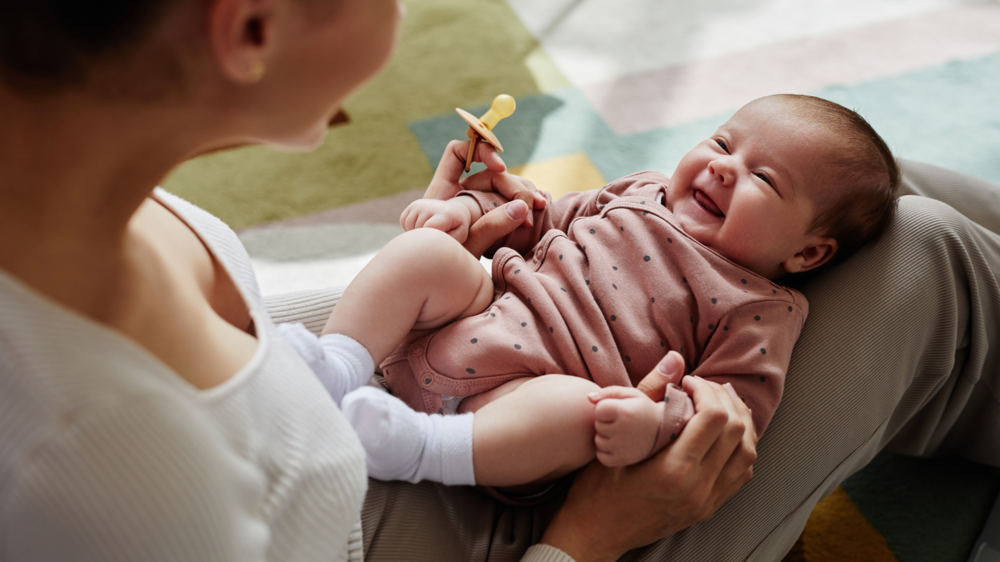
Most babies show a social smile around the end of the second month. Around this age, they become more alert, spend longer periods awake, and start paying attention to faces and voices.The CDC lists smiling at a caregiver’s face or voice as a 2-month milestone.
| Age | Type of smile |
| Birth to 6 weeks | Reflex smiles, often in sleep |
| 6 to 8 weeks | First social smile |
| 3 to 4 months | Frequent smiling, cooing |
| 4 to 6 months | Laughing |
Reflex Smile vs Social Smile: What Is the Difference?
Newborns may smile within the first few days or weeks after birth. However, these early expressions are usually reflex smiles rather than intentional social responses.| Reflex smile | Social smile |
| Can appear from birth | Usually appears around 6–8 weeks |
| Often occurs during sleep or when the baby is drowsy | Usually occurs when the baby is awake and alert |
| Happens involuntarily | Occurs in response to social interaction |
| Does not necessarily indicate recognition | Shows an emerging response to faces and voices |
What Does Your Baby’s First Social Smile Mean?
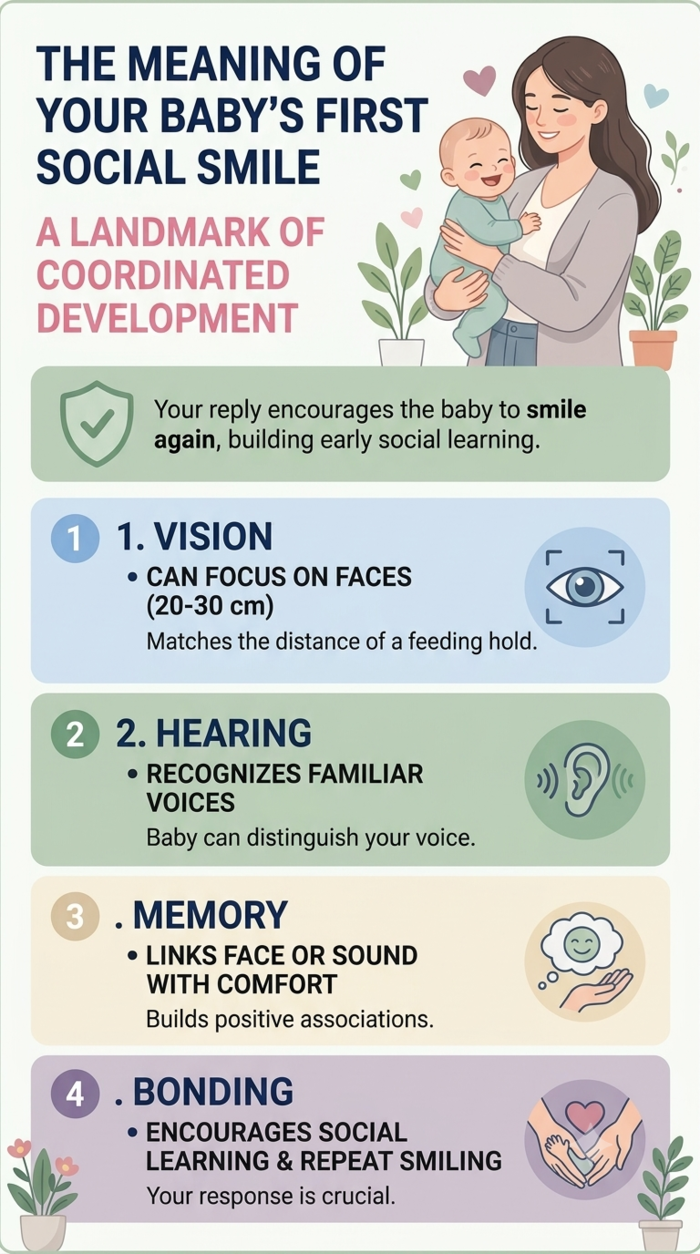
The social smile shows that several skills have developed together:- Vision: Babies can focus on faces at about 20 to 30 cm, roughly the distance of a feeding hold.
- Hearing: The baby recognises familiar voices.
- Memory and attention: The baby links a face or sound with comfort.
- Bonding: Your reply encourages the baby to smile again, which builds early social learning.
A social smile is more than a cute expression; it is an early step in communication and bonding. Responding warmly to your baby's expressions helps build connection, while routine developmental check-ups provide opportunities to discuss progress and concerns.
Why Is the First Social Smile Important for Baby Development?
A social smile is more than a facial expression. It is one of the earliest ways babies begin communicating with other people.This milestone indicates:
- Developing social awareness: Babies gradually learn to pay attention to the people around them. Smiling in response to a familiar face indicates that they are beginning to engage with their surroundings.
- Early communication skills: Before babies can speak, they communicate through facial expressions, sounds, and body movements. A social smile is one of their first ways of responding to another person.
- Emotional development: Smiling during interactions helps babies participate in early emotional exchanges. When parents respond with smiles, gentle voices, and affection, these interactions support the development of early relationships.
- Growing visual attention: Babies begin paying more attention to faces and tracking people with their eyes. Looking at a caregiver and smiling during interaction reflects developing visual and social skills.
How to Encourage Your Baby to Smile
Everyday interactions provide opportunities for babies to respond to faces, voices, and expressions.- Hold your face 20 to 30 cm from the baby during alert, calm periods.
- Make eye contact and smile slowly. Wait for a response.
- Talk, sing, or hum. Lullabies in your home language work.
- Respond when the baby coos or smiles, so the exchange continues.
- Keep screens away. Babies learn social cues from live faces, not videos.
When Should You Worry If Your Baby Is Not Smiling?
Many healthy babies smile a little later. Preterm babies follow adjusted age.Speak to a paediatrician if:
- There is no social smile by about 3 months.
- The baby does not make eye contact or follow faces by 2 to 3 months.
- The baby does not react to loud sounds.
- The baby seems unusually stiff or floppy.
- Previously acquired skills are lost.
FAQs on Baby’s First Social Smile: When It Appears and What It Means
- Do babies recognise their mothers when they first smile?
Babies begin becoming familiar with their caregivers' faces and voices during the early weeks. A social smile may be a response to these familiar interactions. - Does a late smile mean autism?
No. A late smile alone is not a sign of autism. Doctors assess smiling together with eye contact, babbling, response to name, and other skills over time.