In this article:
We spoke with Dr Shanujeet Kaur, Associate Director, Department of Fertility, Cloudnine Group of Hospitals, Chandigarh, to understand what hematosalpinx is, what can cause blood to collect in the fallopian tubes, how it may affect fertility, and the available treatment options.
What Is Hematosalpinx?
Hematosalpinx means that blood has collected inside a fallopian tube, causing the tube to become enlarged or distended. The word comes from “hemato,” meaning blood, and “salpinx,” meaning fallopian tube.The appearance and severity can vary from person to person. In some cases, the affected tube may also have inflammation, scarring, blockage, or other structural changes.
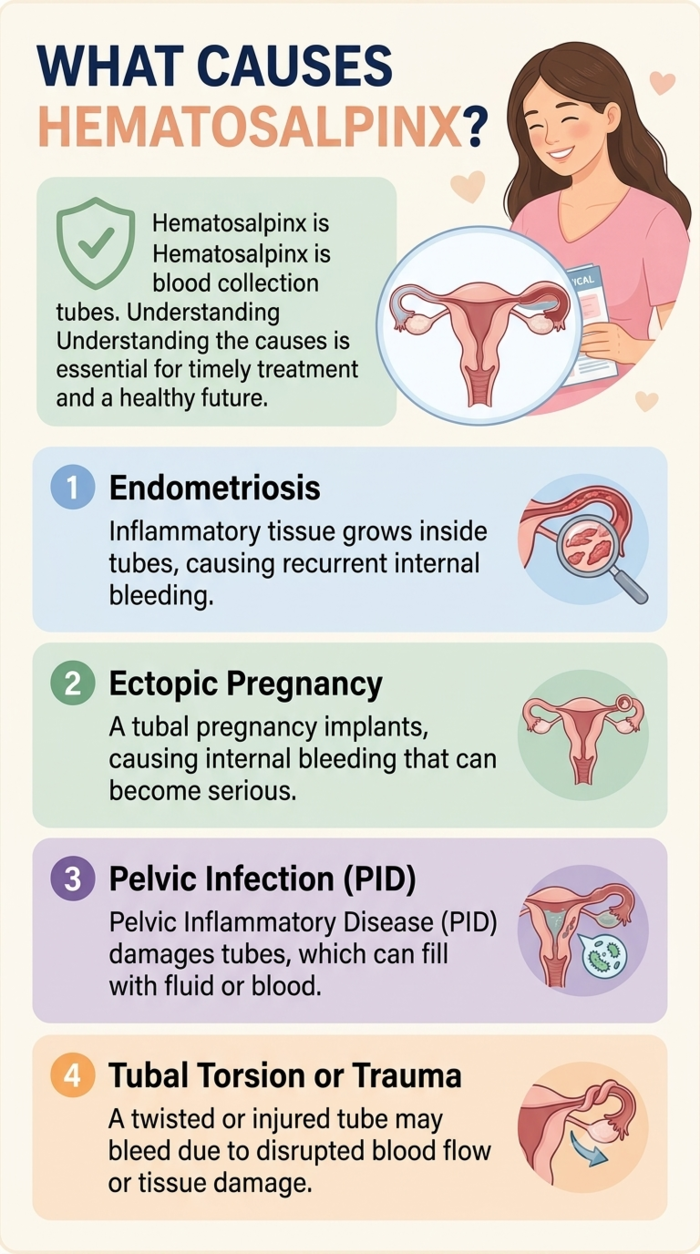
What Causes Hematosalpinx?
Common causes include:- Endometriosis: It may affect the tube, causing recurrent bleeding and inflammation.
- Ectopic Pregnancy: A tubal ectopic pregnancy can cause bleeding inside the tube and, if ruptured, serious internal bleeding.
- Pelvic Infection: PID can damage the tubes and sometimes contribute to abnormal fluid or blood collection.
- Tubal Torsion or Trauma: A twisted or injured tube may bleed due to disrupted blood flow or tissue damage.
Common Symptoms of Hematosalpinx
Some people may not have obvious symptoms.When symptoms occur, you may notice:
- Pelvic or lower abdominal pain
- Pain that is stronger on one side
- Painful periods, particularly when endometriosis is involved
- Abnormal vaginal bleeding
- Pain during sexual intercourse
- Difficulty becoming pregnant
How Is Hematosalpinx Diagnosed?
Your doctor may use imaging tests and, in some cases, surgery to identify hematosalpinx.Diagnosis may include:
- Ultrasound: May show an enlarged fallopian tube containing blood or fluid.
- MRI: Provides clearer images when ultrasound findings are unclear or endometriosis is suspected.
- Laparoscopy: Allows direct examination of the fallopian tubes and surrounding tissues.
Can Hematosalpinx Affect Fertility?
Yes, hematosalpinx can affect fertility, but the impact is not the same for everyone.If a tube becomes blocked, scarred, distorted, or surrounded by adhesions, this process can be disrupted. If only one tube is affected and the other tube is healthy, natural pregnancy may still be possible. If both tubes are severely damaged or blocked, however, conception without fertility treatment may become more difficult.
A blood-filled tube is not automatically synonymous with infertility. The effect on fertility depends on the underlying cause and the condition of the fallopian tubes overall.
Does Hematosalpinx Increase the Risk of Ectopic Pregnancy?
Yes. A damaged or abnormal fallopian tube can make it harder for an embryo to travel normally toward the uterus. This is why tubal disease is associated with a higher risk of ectopic pregnancy. Having a hematosalpinx does not automatically mean that you may have an ectopic pregnancy.How Is Hematosalpinx Treated?
Treatment depends on the cause, symptoms, tubal damage, and your pregnancy plans.Your doctor may recommend:
- Treating the cause: Endometriosis, infection, or ectopic pregnancy is treated according to the specific condition.
- Surgery: If the tube is severely damaged, painful, or enlarged, surgery may be considered. In some cases, the affected tube may need to be removed (salpingectomy).
- Fertility treatment: If tubal damage affects natural conception, treatments such as IVF may be discussed.
Hematosalpinx vs Hydrosalpinx: What Is the Difference?
Both conditions involve an enlarged fallopian tube, but the contents differ.This table shows key differences between hematosalpinx and hydrosalpinx:
| Feature | Hematosalpinx | Hydrosalpinx |
| What collects inside the tube? | Blood | Clear or watery fluid |
| Common associations | Endometriosis, ectopic pregnancy, tubal problems | Previous infection, inflammation, adhesions |
| Can affect fertility? | Yes, depending on tubal damage and cause | Yes, particularly when significant |
| Main concern | Underlying bleeding and tubal damage | Tubal blockage and effects on fertility |
Can You Get Pregnant After Hematosalpinx?
Yes, pregnancy may still be possible after hematosalpinx.Your chances depend on whether one or both tubes are affected, whether the tubes remain open and functional, the condition of the ovaries and uterus, your age, and the underlying cause.
For some women, treating the cause and preserving a healthy tube may allow natural conception. Others may benefit from fertility treatment, particularly when both tubes are significantly damaged.
When Should You See a Doctor?
You should also seek urgent medical care if you develop:- Sudden or severe pelvic pain
- Heavy vaginal bleeding
- Fainting or marked dizziness
- Shoulder-tip pain with abdominal discomfort
- Severe pain after a positive pregnancy test
FAQs on Hematosalpinx: Can Blood-Filled Fallopian Tubes Affect Fertility?
- Can hematosalpinx come and go on its own?
It may persist until the underlying problem is addressed. Follow-up imaging can help your doctor check whether the condition is changing. - Can hematosalpinx cause changes in your menstrual cycle?
Hematosalpinx itself does not usually change your menstrual cycle. Any changes may be related to the condition causing the tubal bleeding. - Can both fallopian tubes develop hematosalpinx?
Yes, although involvement of both tubes is less common. The effect on fertility depends on the condition and function of each tube.