What Is a Food Allergy in a Baby?
A food allergy happens when your baby's immune system mistakenly treats a harmless food protein as a threat. It sends out antibodies to fight it, and that fight is what causes the symptoms you see.
This is different from a food intolerance. An intolerance (difficulty digesting lactose) is a digestive issue, not an immune reaction. Allergies can be much more serious and, in rare cases, life-threatening.
The most common food allergens globally include: cow's milk, eggs, peanuts, tree nuts, wheat, soy, fish, shellfish, and sesame. Of these, cow's milk is by far the most common trigger in infants.
In India, several foods such as cow's milk (estimated to affect between 2% and 3% of infants) and milk-based products like curd, paneer, and ghee, eggs, peanuts, sesame seeds (til), wheat (found in roti and suji), and lentils/legumes are among the most frequent culprits. Many of these foods are introduced to babies as traditional healthy foods.
The Early Signs
One of the trickiest things about food allergies in babies is that their symptoms can look very different from those in older children or adults.Here's what to look for:
Skin Reactions: The Most Visible Clue
Skin changes are often the first thing parents notice, and they're the most common allergic symptom in infants. In a four-year follow-up study of infants diagnosed with cow's milk allergy, skin rash was the second most common presenting symptom, found in 31% of cases, after gastrointestinal involvement at 74%.- Hives (urticaria / pitti): raised, red, itchy welts that appear on the skin, often around the mouth or spreading across the body
- Swelling: particularly of the lips, eyelids, or face
- Eczema flare-ups: patches of dry, red, itchy skin that worsen after feeding
- Redness or rash: around the mouth shortly after eating
Gut and Digestive Symptoms: Easy to Dismiss
Digestive troubles in babies, including loose motions, gas, and vomiting, are often blamed on too much heat, teething, or a new food being too heavy.Gut-related allergy symptoms can appear hours or even days after the food was consumed. If your baby consistently gets loose motions after drinking cow's milk or eating a particular dal, don't keep trying; speak to your paediatrician.
Breathing and Nose Symptoms
Respiratory signs in babies with food allergies are less common than skin signs, but they are important, especially because they can escalate quickly.Look out for:
- Runny or blocked nose appearing shortly after eating
- Sneezing
- Wheezing or a whistling sound when breathing
- Coughing that starts after a meal
If your baby develops any difficulty breathing, even mild wheezing, after eating a new food, seek medical help immediately.
Baby-Specific Behaviour Signs
Babies may show allergy-related distress through:- Excessive or inconsolable crying, especially after a specific food, not just colic
- Arching the back during or after feeding
- Eye rubbing or repeatedly sticking out the tongue
- Becoming unusually limp or floppy
- Extreme irritability after eating a particular food
In many households, a baby who cries excessively after feeds is given gripe water, hing (asafoetida), massages, or other home remedies. While these may soothe ordinary gas, they won't address an allergic reaction, and the food will keep triggering a response every time it is given.
Practical Tips for Introducing Solids
Here are a few tips and tricks that you can rely on before you begin solids for your baby:
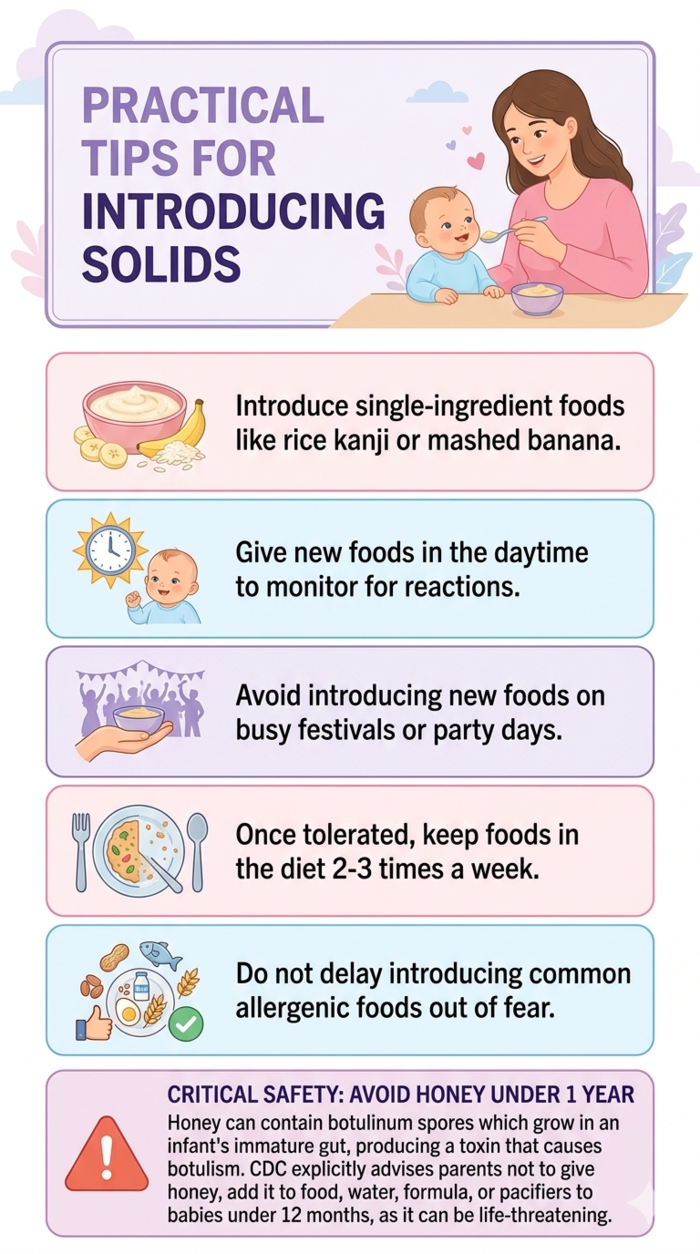
- Start with single-ingredient foods: rice kanji, moong dal water, or mashed banana before moving to mixed dishes.
- Introduce new foods during daytime: give them in the morning or afternoon, not before a nap or at night, so that you can watch your baby for 1–2 hours.
- Don't give a new food on a festival day: when the family is busy, or there's a crowd, you should be calm and watchful.
- Avoid giving honey to babies under 1 year: Honey is traditionally given to newborns in many Indian practices, as part of a birth ritual, or as a home remedy for coughs, colic, or soothing teething discomfort. Honey can contain Clostridium botulinum spores. In adults, these pass through harmlessly, but a baby's immature gut allows them to germinate and produce botulinum toxin, which can cause muscle weakness, breathing difficulties, and be life-threatening. The CDC explicitly advises that honey given to children under 12 months may cause a severe food poisoning called botulism, and warns parents not to add honey to a baby's food, water, infant formula, or pacifier.
- Once a food is tolerated, keep it in the diet: giving it 2–3 times a week helps build and maintain tolerance.
- Don't delay introducing allergenic foods out of fear: current evidence shows early introduction prevents allergies.
It can feel overwhelming when a food that your family has eaten for generations causes a reaction in your baby. You may face scepticism from elders: "Hum sabne yeh khaya, kuch nahi hua" (We all ate this, nothing happened), or feel caught between medical advice and tradition.
Most first-time reactions are mild. A small rash around the mouth, a little fussiness are manageable.
Many food allergies, particularly to milk, egg, wheat, and soy, are often outgrown by early childhood. Others, like peanut and tree nut allergies, may be lifelong. Either way, with the right diagnosis and management plan from your paediatrician or allergist, most food-allergic babies grow up happy, healthy, and well-nourished.
Whether you’re pregnant, a new mom, or navigating postpartum, you don’t have to do it alone. Join our support group to connect, share, and support one another.
FAQs on Food Allergies in Babies: Early Signs Parents Should Recognise
- Can babies be allergic to dal, ghee, or curd?
Yes. While these are traditional staple foods, some babies do react to them. Cow's milk allergy, which includes reactions to curd, paneer, ghee, and butter, is one of the most common infant food allergies. Lentils and legumes can occasionally trigger reactions, too. - Can a breastfed baby have a food allergy?
Yes. Allergens from the mother's diet, especially cow's milk protein from dahi, paneer, or milk tea, can pass into breast milk and trigger reactions in sensitive infants. Signs include blood in the stool, persistent eczema, or excessive crying after feeds. - At what age should I start introducing allergenic foods to my baby?
Current guidelines recommend introducing allergenic foods, including eggs, peanuts, and cow's milk products, from around 6 months, alongside other first solids. Introduce one new food at a time with a 2–3 day gap, during the day, and in small amounts.