In this article:
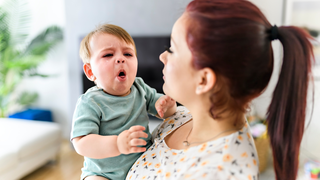
A newborn's sweat glands and skin barrier are still maturing, making them prone to rashes in high humidity. Their immune system has not yet built defences against common seasonal pathogens, so mild infections that an adult would shrug off can affect a baby more noticeably.
Waterlogging around homes, from open drains to overflowing coolers and flowerpots, also raises the risk of mosquito-borne diseases such as dengue, malaria, and chikungunya.
Sudden shifts between humid days and cooler, rain-soaked evenings can also trigger coughs, colds, and chest congestion, since a newborn's respiratory system reacts quickly to temperature changes. Contaminated water and damp surfaces further raise the risk of stomach infections and fungal growth on skin and household items.
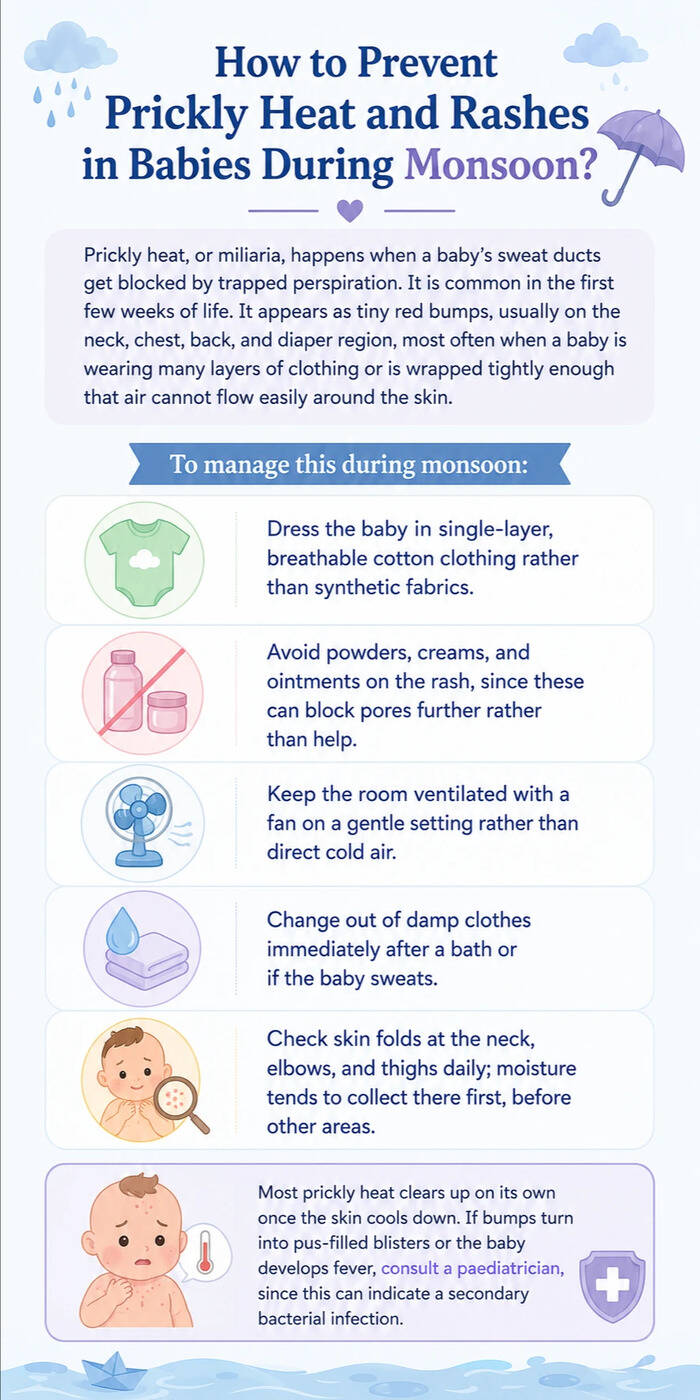
How to Prevent Prickly Heat and Rashes in Babies During Monsoon?
Prickly heat, or miliaria, happens when a baby's sweat ducts get blocked by trapped perspiration. It is common in the first few weeks of life. It appears as tiny red bumps, usually on the neck, chest, back, and diaper region, most often when a baby is wearing many layers of clothing or is wrapped tightly enough that air cannot flow easily around the skin.To manage this during monsoon:
- Dress the baby in single-layer, breathable cotton clothing rather than synthetic fabrics.
- Avoid powders, creams, and ointments on the rash, since these can block pores further rather than help.
- Keep the room ventilated with a fan on a gentle setting rather than direct cold air.
- Change out of damp clothes immediately after a bath or if the baby sweats.
- Check skin folds at the neck, elbows, and thighs daily; moisture tends to collect there first, before other areas.
How to Protect Newborns From Malaria and Dengue in Monsoon?
Mosquito protection is a priority through the monsoon months, particularly for dengue, which is transmitted by the Aedes mosquito that breeds in small amounts of clean, stagnant water rather than ponds. India recorded over 2.3 lakh dengue cases in 2024, with 297 reported deaths, and most cases concentrated around the monsoon months. Also, malaria incidence in most parts of the country peaks during the rainy season, from July to November.Physical protection works best:
- Use a mosquito net over the crib or cot at all times, including during daytime naps.
- Fit doors and windows with mesh screens, and keep them shut during early morning and evening, when mosquitoes are most active.
- Empty stagnant water weekly from coolers, flowerpot trays, and any containers around the home.
- Dress the baby in light-coloured, full-sleeved, breathable clothing when stepping outdoors.
- Never use mosquito coils, vaporisers, or chemical sprays in a newborn's room, as the smoke can irritate developing lungs.
- Use a baby-safe repellent only if your paediatrician recommends one, and apply it to clothing rather than skin.
How to Keep Diaper Area Dry and Infection-Free in Humid Weather?
Humidity keeps skin damp for longer, which raises the risk of diaper rash and fungal infections in the diaper area. To manage this:- Change diapers more frequently than usual, since damp diapers stay wet longer in humid air.
- Pat the area completely dry before putting on a fresh diaper; do not rub.
- Give the baby some nappy-free time daily to let the skin breathe.
- Use a breathable diaper and switch brands if rashes persist, as trapped heat under the diaper can worsen irritation.
- If redness spreads beyond the diaper line or blisters appear, consult a paediatrician to rule out a fungal infection.
How to Prevent Cough, Cold, and Chest Congestion in Babies During Rainy Season?
Sudden temperature drops between rain showers and indoor cooling can trigger respiratory symptoms in newborns. Preventive steps include:- Avoid moving the baby directly from a warm room into strong air conditioning.
- Keep the baby's head and feet covered lightly indoors, since heat loss happens quickly from these areas.
- Continue exclusive breastfeeding, since breast milk provides antibodies that support the baby's immune response.
- Avoid taking the baby out in the rain or into crowded, poorly ventilated spaces unless necessary.
- Watch for persistent cough, noisy breathing, or feeding difficulty, which need prompt paediatric evaluation.
What Hygiene Practices Matter Most For Newborn Care in Monsoon?
Household hygiene has a direct link to infection risk during monsoon:- Boil or use RO-treated water for anything that touches the baby, including bottle cleaning and mixing formula.
- Wash hands with soap before handling the baby, feeding, or changing diapers, since increased humidity supports germ survival on surfaces.
- Dry baby clothes completely before use; damp clothing indoors due to reduced sun exposure can harbour fungal spores.
- Sanitise feeding bottles and pacifiers more frequently, since bacteria multiply faster in humid conditions.
- Keep the umbilical cord stump (if not yet healed) dry and exposed to air rather than covered.
FAQs on Monsoon Baby Care: Keeping Your Newborn Safe in the Rainy Season
- Can newborns go out in the rain?
Newborns should avoid direct exposure to rain. If they do get wet, change into dry clothes immediately, dry the hair and skin thoroughly, and avoid placing them straight under a fan or air conditioner. - Is it safe to use mosquito repellent on a newborn?
Most repellents, including natural oils, are not recommended directly on newborn skin. Physical barriers such as mosquito nets and full-sleeved clothing are safer; any repellent use should be limited to clothing and only after a paediatrician's advice. - Should I bathe my newborn less often during monsoon?
No. Regular bathing should continue as usual, since it removes sweat and bacteria from skin folds. The key is to dry the baby completely and dress them in dry, breathable clothing right after.