BPD is actually quite simple to understand once it is explained clearly. Knowing what this measurement means can help you feel more confident that your baby’s growth is being tracked properly.
What Is Biparietal Diameter (BPD)?
When your ultrasound report mentions biparietal diameter (BPD), it’s simply talking about the width of your baby’s head. Doctors measure the straight-line distance from one parietal bone to the other, across the widest part of the skull. During the scan, this is taken from the outer edge of the near bone to the inner edge of the far bone, so it’s a very precise side-to-side measurement.
This is different from head circumference, which measures all the way around the head.
BPD is useful because it helps estimate:
- Gestational age
- Monitor head growth
- Assess overall foetal size
When Can Biparietal Diameter (BPD) Be Measured?
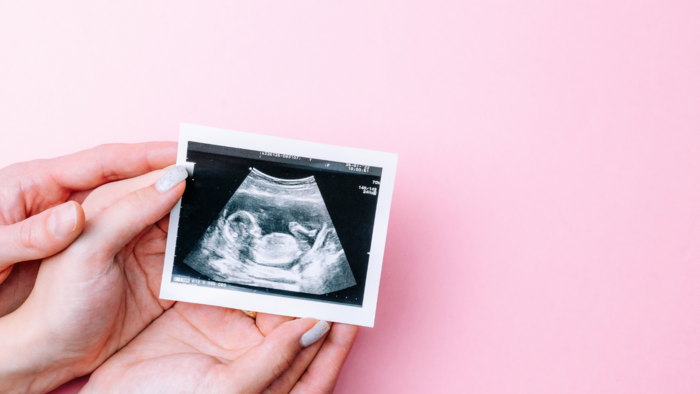
BPD measurements usually start from around 13 weeks of pregnancy, when the baby’s head is formed enough to be measured clearly. The most accurate and reliable readings are taken between 13 and 20 weeks, because this is when the head is growing fast, and the skull bones show up sharply on the ultrasound screen. After this window, results can still be taken, but they tend to lose some precision.
In many pregnancies, BPD appears during:
- First-trimester dating scan (around 12 to 14 weeks)
- Detailed anatomy scan (18 to 22 weeks)
- Growth checks (28 to 32 weeks)
- Later scans after 36 weeks (if there are any concerns)
Why Is Biparietal Diameter (BPD) Measurement Important During Pregnancy?
This measurement gives doctors useful clues about your baby’s growth and overall well-being:- Helps confirm gestational age: If periods are irregular or dates are uncertain, BPD can give a reliable estimate of how far along the pregnancy is and help set the due date.
- Monitors healthy head growth: Regular increases in BPD show that the baby’s brain and skull are developing steadily, which is a good sign of overall growth.
- Spot unusual growth patterns early: If the head is growing too slowly or too quickly, it may point to concerns like foetal growth restriction or conditions linked to extra fluid around the brain.
How Biparietal Diameter (BPD) Is Measured During Ultrasound
A standard transabdominal ultrasound is used for this. The sonographer applies gel to the abdomen and moves the probe until they get a clear side view of the baby’s head. They look for specific landmarks like the thalami and the cavum septum pellucidum, because these confirm that the scan is taken at the correct level. At this point, the head should appear oval rather than rounded or stretched.Next, they place digital callipers across the widest part of the head, measuring from the outer edge of the nearer parietal bone to the inner edge of the opposite bone, and record the value in millimetres. The entire process remains quick, safe, and painless.
What Factors Can Affect Biparietal Diameter (BPD) Measurements on Ultrasound?
Several factors can affect how easily and accurately BPD is measured on an ultrasound:- Baby’s position: If the head is tilted, low in the pelvis, or facing away, it can be harder to get the correct angle.
- Foetal movements: Active movement during the scan may blur the image or delay an accurate reading.
- Amniotic fluid levels: Very low or very high fluid can affect how clearly the head is seen.
- Tilted uterus: The shape or position of the uterus can make the standard head view difficult to obtain.
- Later stage of pregnancy: As space becomes limited, getting a perfect cross-section of the head is harder.
- Maternal obesity: Extra tissue can slightly reduce image clarity on ultrasound.
- Ultrasound equipment quality: Older or lower-resolution machines may give less sharp images.
- Multiple pregnancy: Twins or triplets can influence readings as they grow differently from single babies.
- Head shape variations: Conditions like dolicocephaly (longer, narrower head) can slightly change BPD values.
What Is the Normal Biparietal Diameter (BPD) Range by Week of Pregnancy?
Normal BPD values change week by week as the baby develops. Typical ranges look like this for a single baby:- At 13 weeks: 21 to 28 mm
- At 20 weeks: 40 to 58 mm
- At 28 weeks: 65 to 81 mm
- At 40 weeks: 86 to 102 mm
Biparietal diameter (BPD) is one of the important measurements doctors use to keep track of how your baby is growing during pregnancy. When the numbers stay within the expected range and increase steadily over time, it’s a reassuring sign that head and brain development are moving along well.
Whether you’re pregnant, a new mom, or navigating postpartum, you don’t have to do it alone. Join our support group to connect, share, and support one another.
FAQs on Biparietal Diameter (BPD) in Pregnancy: How Doctors Measure Your Baby’s Head Width
- Can biparietal diameter predict how the baby will be delivered (normal vs C-section)?
Yes, a higher BPD can suggest a greater chance of C-section if the baby’s head seems large compared to the mother’s pelvis. - Does a higher biparietal diameter always mean a big baby?
Not. A baby can have a slightly larger head but average body weight. That’s why weight estimates use multiple measurements, not just BPD.