However, don't worry because most of the time, this condition is nothing serious. There is no fixed age for children to grow their teeth; thus, by being aware of the proper timeline and when to seek help from professionals, you can rest assured about the decisions you make regarding the well-being of your child.
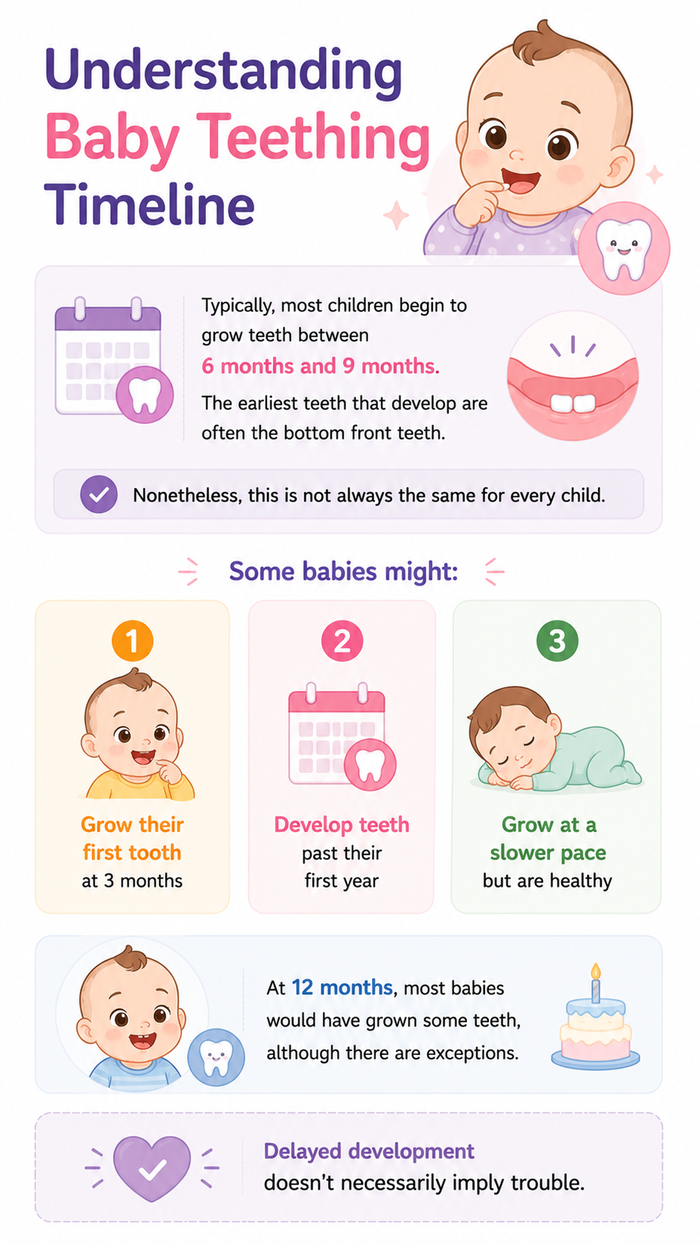
Understanding Baby Teething Timeline
Typically, most children begin to grow teeth between 6 months and 9 months. The earliest teeth that develop are often the bottom front teeth. Nonetheless, this is not always the same for every child.Some babies might:
- Grow their first tooth at 3 months
- Develop teeth past their first year
- Grow at a slower pace but are healthy
12 Months Without Teeth: Is That Okay?
Most likely yes, because it is common for some children to have absolutely no teeth at 12 months. Some children take longer to develop than others. Genetics typically have a huge influence on this; if you or your partner had late teething when you were a baby, then most likely you will have the same thing happen for your child.Other reasons for delayed teething can include the following:
- Natural differences in development
- Nutritional differences
- Being born prematurely
Indications Your Baby Is Getting Ready for Teething
Even though your child may not have teeth yet, his body might be getting ready for it. Pay attention to the following signs:- Excessive drooling
- Gnawing at objects
- Swollen and tender gums
- Irritability
- Sleep disturbances
When Should You Worry?
Though late teething occurs normally in children, there are situations where you will require professional assistance. It is necessary because the general health condition of your child is a major issue concerning his or her well-being.You will need to visit a doctor if your child:
- Has not grown any teeth by the age of 18 months
- Exhibits developmental delay
- Struggles with feeding on solid food
- Has strange gums
The Role of Nutrition in Teeth Development
For proper teeth development, your kid should have all required nutrients:- The function of calcium is creating healthy bones and teeth
- Vitamin D assists in calcium absorption
- The work of phosphorus complements the effect of calcium on the development of healthy teeth
- Milk/formula
- Cheese/yoghurt
- Green leafy vegetables
- Lentils/grains
Gum Care Before the Emergence of Teeth
Although your child hasn't grown any teeth, it is necessary to maintain your child’s oral hygiene. Cleaning your child’s gums will make sure that he/she has healthy teeth in the future.Here are certain things that you can do:
- You should clean your child’s gums with a wet cloth
- Your child shouldn't consume any sugary liquids before going to bed
- Give your child clean teething toys
- Make sure that your feeding area is clean
Emotional Support for Parents
It is natural to get worried if your baby fails to meet the milestones. However, every child is special. Trying to compare your baby with other children will only cause more worry without providing any help.Stay calm by:
- Monitoring your baby's development and milestones
- Visiting a paediatric dentist regularly
- Asking questions whenever you are confused
What the Paediatric Dentist May Do
In case of seeing a paediatric dentist about teething problems, he/she may do the following:- Analyse the medical history of your child
- Look at the gums and jaws
- Check how your baby grows and develops
- Recommend testing if necessary
Just be patient and keep taking care of your baby. In case you have doubts, then don't think twice about contacting a paediatric dentist.
Whether you’re pregnant, a new mom, or navigating postpartum, you don’t have to do it alone. Join our support group to connect, share, and support one another.
FAQs on My Baby Has No Teeth at 12 Months: Is This Normal?
- Does late teething cause problems in speech development?
It is unlikely that late teething affects speech development. Speech development involves more brain and muscle coordination than teeth development. - Is it necessary to use teething medications if there are no teeth yet?
No. Medications should be used only if the child shows some discomfort. It is better to see a dental specialist. - Can babies eat solids if they have no teeth yet?
Yes. Babies can cope with solid foods by means of their gums. You should give soft foods that are easy to chew.