In this article:
Why Do Newborns Get Hiccups So Frequently?
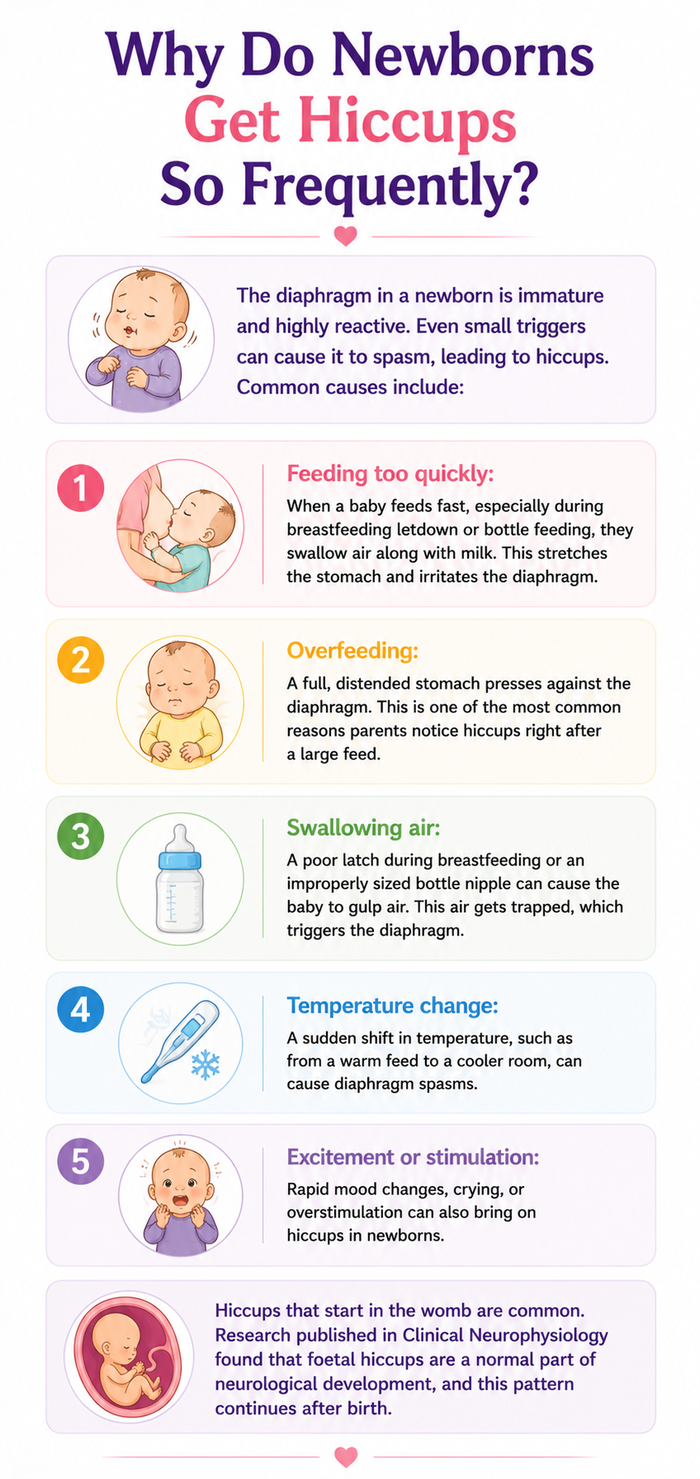
The diaphragm in a newborn is immature and highly reactive. Even small triggers can cause it to spasm, leading to hiccups. Common causes include:
- Feeding too quickly: When a baby feeds fast, especially during breastfeeding letdown or bottle feeding, they swallow air along with milk. This stretches the stomach and irritates the diaphragm.
- Overfeeding: A full, distended stomach presses against the diaphragm. This is one of the most common reasons parents notice hiccups right after a large feed.
- Swallowing air: A poor latch during breastfeeding or an improperly sized bottle nipple can cause the baby to gulp air. This air gets trapped, which triggers the diaphragm.
- Temperature change: A sudden shift in temperature, such as from a warm feed to a cooler room, can cause diaphragm spasms.
- Excitement or stimulation: Rapid mood changes, crying, or overstimulation can also bring on hiccups in newborns.
Hiccups that start in the womb are common. Research published in Clinical Neurophysiology found that foetal hiccups are a normal part of neurological development, and this pattern continues after birth.
Do Hiccups Bother Newborns?
Hiccups do not cause discomfort in most newborns. Unlike adults, babies rarely show signs of distress during a hiccup episode.
A baby who continues to feed, maintain eye contact, or sleep through hiccups is not in any discomfort. Hiccups are sometimes interpreted as hunger or cold, but neither is necessarily true. Hiccups are a reflex, not a symptom of hunger or temperature discomfort.
How to Stop Newborn Hiccups
There is no single method that stops hiccups instantly, but the following approaches can help reduce their frequency:
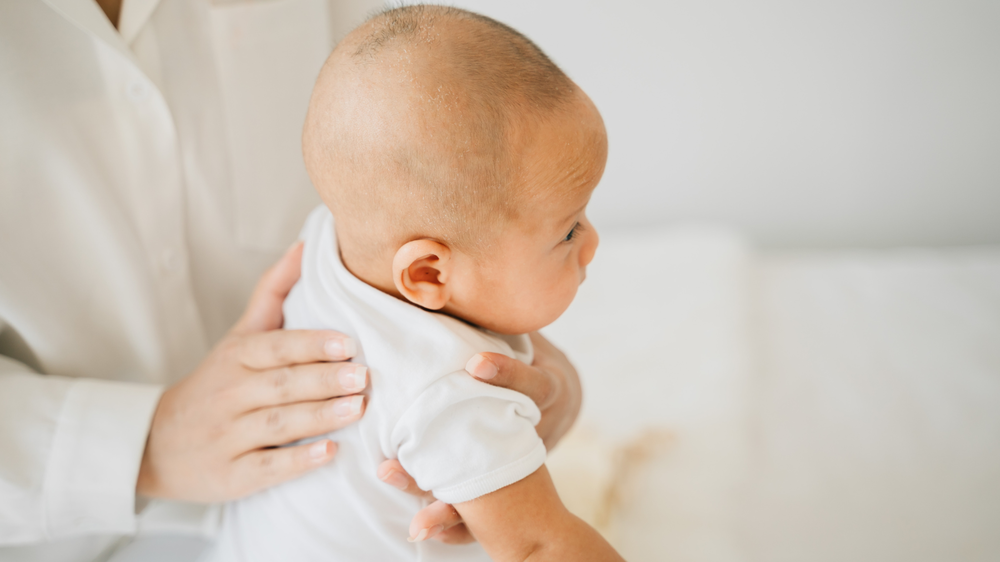
- Pause and burp during feeds: Stop midway through a feed to burp the baby. For breastfed babies, burp when switching sides. For bottle-fed babies, burp every 60–90 ml.
- Check the latch: Ensure the baby has a deep latch during breastfeeding so they are not drawing in excess air. A lactation consultant can help if latch issues are recurring.
- Feed in an upright position: Holding the baby at a 45-degree angle during bottle feeding reduces air intake.
- Use a slower-flow nipple: In bottle-fed babies, a fast-flow nipple causes overfeeding and air ingestion.
- Wait it out: Most hiccup episodes resolve on their own within 5–10 minutes. There is no need to intervene every time.
Avoid holding the baby upside down, pressing on the fontanelle, giving water to babies under 6 months, or applying any oil or ghee to the tongue; these are common home remedies with no clinical evidence supporting them.
When Should You Be Concerned About Newborn Hiccups?
In most cases, hiccups in newborns are harmless. However, visit a paediatrician if:- Hiccups last more than 30 minutes consistently and occur multiple times a day
- The baby seems distressed, arches their back, or cries during or after feeds, alongside hiccups
- There is visible spitting up that appears forceful or happens frequently after feeds
- The baby is not gaining weight adequately
The combination of persistent hiccups with arching, crying, and poor weight gain can sometimes point to infant reflux (GERD), which requires a clinical assessment. The Indian Academy of Paediatrics (IAP) recommends evaluation if reflux symptoms are frequent and affecting feeding or growth.
Newborn hiccups are a normal, temporary part of early development and almost always resolve on their own as the diaphragm matures, usually by the time the baby is 3 to 4 months old.
Whether you’re pregnant, a new mom, or navigating postpartum, you don’t have to do it alone. Join our support group to connect, share, and support one another.
FAQs on Is It Normal for a Newborn to Have Hiccups Often?
- Do hiccups affect a baby's sleep?
Newborns can and do sleep through hiccups. The hiccup reflex does not disrupt sleep in the way it would in an adult. If a baby wakes up hiccupping, gently pick them up, burp them, and let the hiccups subside naturally before laying them back down. - Can hiccups hurt my baby?
No. Hiccups do not cause pain in newborns. They are a normal reflex, and most babies remain calm and unaffected during an episode. - Should I give water to stop my newborn's hiccups?
No. Babies under six months should not be given water; it is unsafe and unnecessary. Hiccups resolve on their own and do not require water or any other remedy.