In this article:
It is responsible for maintaining essential body functions, such as:
- Growth
- Metabolism
- Heartbeat
- Maintenance of body temperature
If timely care is not received, your baby may suffer serious complications.
The condition is rare, but if detected and treated early, most infants recover well.
What Are The Causes of Neonatal Hyperthyroidism?
The most common cause of neonatal hyperthyroidism is Graves' disease during pregnancy. If you have Graves' disease, your body may produce thyroid-stimulating antibodies. These antibodies can cross the placenta and temporarily overstimulate your baby's thyroid gland. However, it may also occur because of inherited genetic changes that affect thyroid function. But such instances are rare.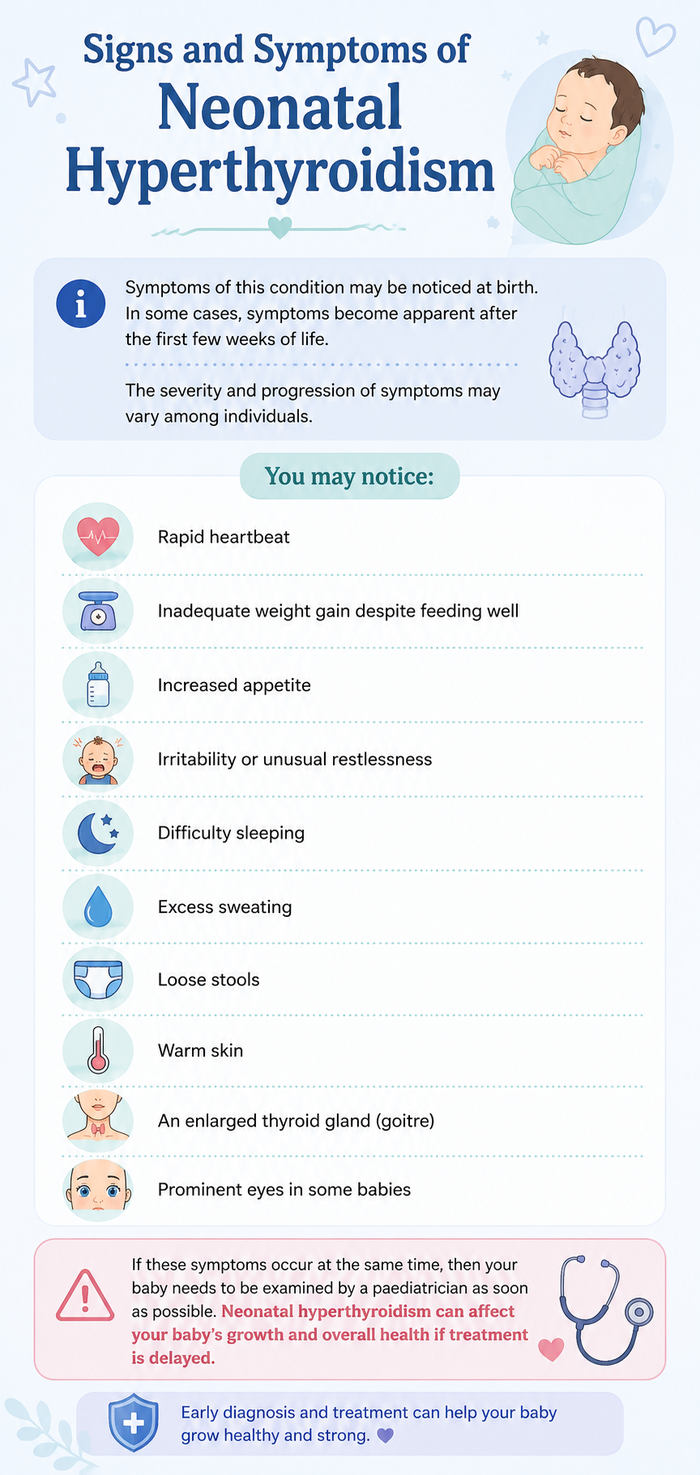
Signs and Symptoms of Neonatal Hyperthyroidism
Symptoms of this condition may be noticed at birth. In some cases, symptoms become apparent after the first few weeks of life.The severity and progression of symptoms may vary among individuals.
You may notice:
- Rapid heartbeat
- Inadequate weight gain despite feeding well
- Increased appetite
- Irritability or unusual restlessness
- Difficulty sleeping
- Excess sweating
- Loose stools
- Warm skin
- An enlarged thyroid gland (goitre)
- Prominent eyes in some babies
Neonatal hyperthyroidism can affect your baby's growth and overall health if treatment is delayed.
How Is Neonatal Hyperthyroidism Diagnosed?
Your doctor will examine your baby and ask about your pregnancy, especially any history of thyroid disease.The following tests help to confirm the diagnosis and guide treatment.
- Blood tests to measure thyroid hormone levels
- Thyroid-stimulating hormone (TSH) test
- Thyroid antibody tests
- Heart assessment
What Are The Treatment Options For Neonatal Hyperthyroidism?
Treatment of neonatal hyperthyroidism depends on the severity of your baby's symptoms.Your baby's healthcare team may advise the following:
- Medicines that reduce excess thyroid hormone production
- Medicines to slow a very fast heart rate, if needed
- Regular blood tests to monitor hormone levels
- Follow-up visits until thyroid function returns to normal
Treatment Goals
| Treatment Objectives | Importance |
| Control thyroid hormone levels | Helps protect normal growth and development |
| Manage symptoms | Improves feeding, sleep, and heart function |
| Monitor recovery | Ensures treatment can be adjusted when needed |
Can Neonatal Hyperthyroidism Cause Complications?
Without treatment, excess thyroid hormone can affect several organs.Possible complications include:
- Poor weight gain
- Heart failure
- High blood pressure
- Dehydration
- Developmental concerns if the condition remains untreated for long
When Should You Consult A Doctor?
Reach out for immediate medical attention if your newborn has:- A very fast heartbeat
- Difficulty feeding
- Poor weight gain
- Persistent irritability
- Breathing difficulty
- Fever without a clear cause
If you have any history of thyroid conditions, discuss with your doctor thoroughly.
This way, you can take proactive steps to prevent or manage such complications in your baby as early as possible.
Whether you’re pregnant, a new mom, or navigating postpartum, you don’t have to do it alone. Join our support group to connect, share, and support one another.
FAQs on What Is Neonatal Hyperthyroidism? Symptoms & Causes
- Is neonatal hyperthyroidism permanent?
Usually not. Most cases are temporary because the maternal antibodies gradually clear from your baby's body over the first few months of life. However, regular follow-up is important until thyroid hormone levels return to normal. - Can a baby develop neonatal hyperthyroidism if the parent was treated for Graves' disease?
Yes. Even after successful treatment, thyroid-stimulating antibodies may remain in the bloodstream and cross the placenta during pregnancy. Your doctor may recommend monitoring your baby after birth if you have a history of Graves' disease. - Is neonatal hyperthyroidism different from congenital hypothyroidism?
These are different conditions and require different treatment approaches. Neonatal hyperthyroidism occurs when the thyroid produces too much hormone, whereas congenital hypothyroidism develops when the thyroid produces too little.