In this article:
Why Does Excessive Drooling Occur During Sleep in Pregnancy?
Excessive saliva production is called ptyalism or hypersalivation. You produce saliva all through the day; however, when awake, you swallow it automatically and regularly. When asleep, the process of swallowing is greatly reduced. The saliva which is supposed to be swallowed without any conscious effort collects in the mouth and eventually overflows into drooling, which is experienced by many expectant mothers upon waking up.This is due to the fact that, during pregnancy, the secretion of saliva increases. Increased saliva production, along with decreased frequency of swallowing when asleep, sets the stage for drooling.
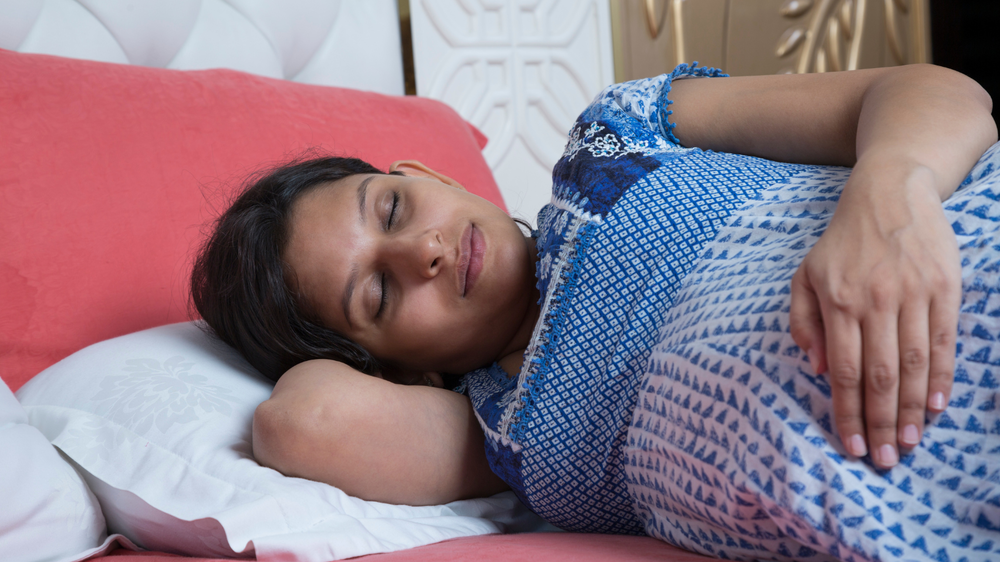
The position of sleeping also matters in this case. If you sleep sideways, which is advised from the second trimester onwards, the saliva will collect in the corner of your mouth and come out more easily than if you were lying on your back. This explains why drooling is experienced mostly when pregnant women lie on their sides.
When Drooling During Pregnancy Is Not Just a Hormonal Issue
In the majority of cases, excess salivation during pregnancy is just a hormonal issue and is easily overcome as the first trimester passes. But if drooling is so strong that it impacts your sleep negatively and your ability to consume water, your healthcare provider will recommend additional measures. In rare cases when the condition persists beyond the first trimester, additional evaluation may be needed to exclude other causes, including gastro-oesophageal reflux disease, which stimulates salivation and heartburn that gets worse in the evening. Suddenly developed or worsened drooling in the second or third trimesters without any apparent link to nausea should be discussed with your healthcare provider, especially if it is combined with heartburn, difficulties with swallowing or oral discomfort.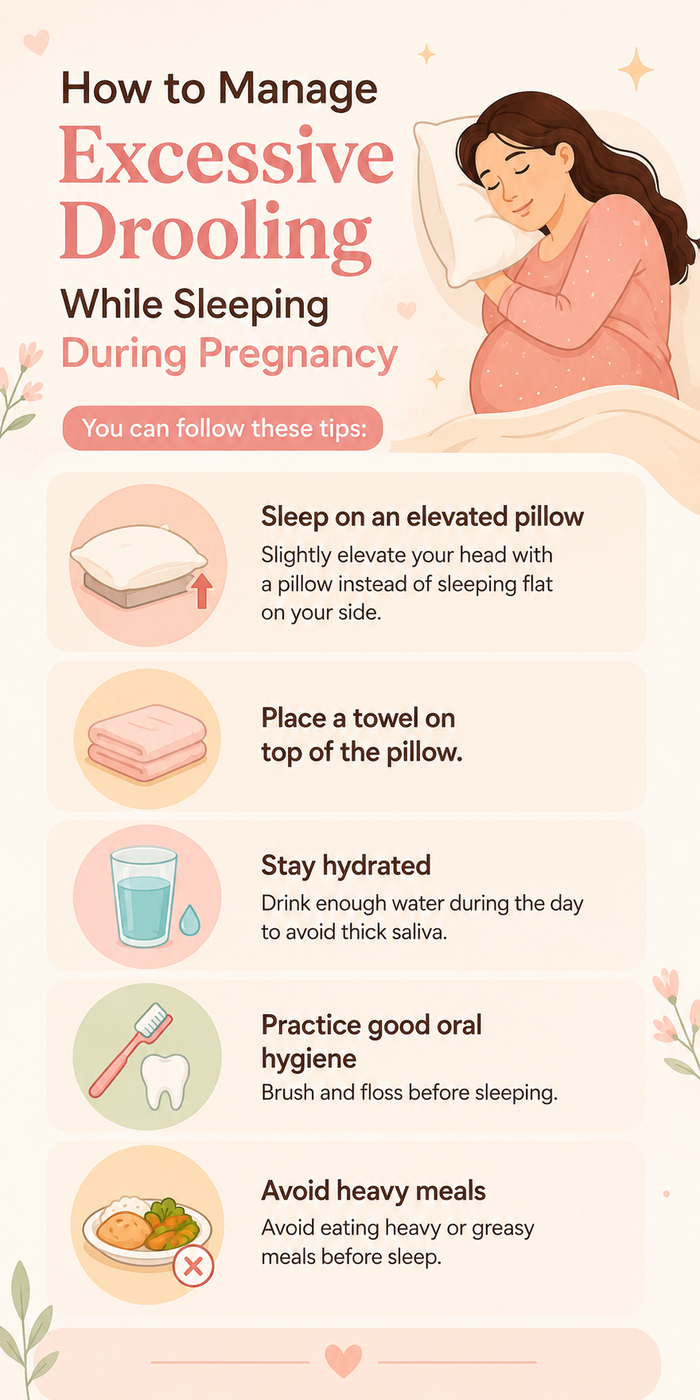
How to Manage Excessive Drooling While Sleeping
You can follow these tips:- Sleep on an elevated pillow (slight elevation of the pillow) rather than sleeping flat on one's side.
- Place a towel on top of the pillow.
- Stay hydrated throughout the day in order not to have too thick saliva.
- Practice good oral hygiene before sleeping.
- Avoid having heavy meals before sleep.
When Should You Contact Your Doctor?
An excess of saliva production in pregnancy is not often a sign of anything dangerous. Consult with your doctor in one of the following situations.- If the salivation is severe enough to worsen the problem of nausea, thus hindering eating and drinking properly.
- If excessive saliva persists past the first trimester without any change.
- If mouth ulcers or any other changes to the mouth occur together with excessive salivation.
- If salivation interferes so much with sleep that you are experiencing fatigue.
Whether you’re pregnant, a new mom, or navigating postpartum, you don’t have to do it alone. Join our support group to connect, share, and support one another.
FAQs on Drooling in Your Sleep During Pregnancy: Is It Normal?
- When does excessive drooling during pregnancy stop?
Excess salivation usually improves in most women between weeks 12 and 16 when hCG concentrations peak and the sensation of nausea subsides. A few even continue experiencing this through all nine months of their pregnancy. - When does excessive drooling during sleep start in pregnancy?
Excessive drooling may be experienced as early as the first trimester, but is most frequently seen during the second and third trimesters of pregnancy. Some women experience excessive drooling throughout their pregnancy, while others find that they only drool when sleeping or reclining.