In this article:
Why Do You Need to Wear a Seat Belt During Pregnancy?
Wearing a seat belt greatly decreases the probability of sustaining an injury in a car accident for you and your baby. The forces acting on a person during a car accident are much greater than those exerted by a correctly worn seat belt onto the abdomen. This makes the danger of being injured without wearing a seat belt much higher than the fear that it may hurt you.A placenta is especially prone to injuries because of its low elasticity compared to the uterine wall. Wearing a seat belt will considerably lower the risks of such an injury.
What Is the Basic Rule of Wearing the Seat Belt While Pregnant?
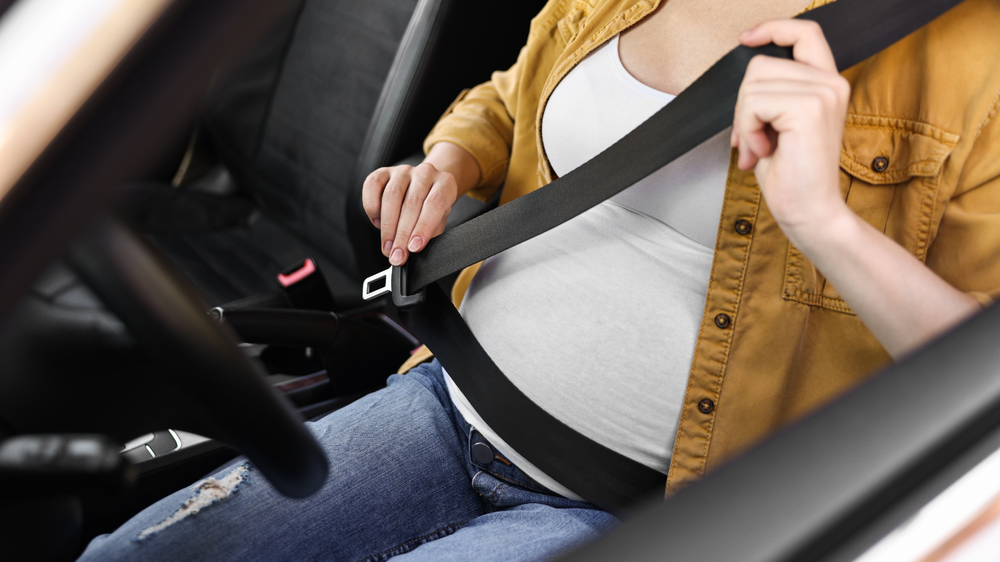
The basic rule is common throughout all three trimesters is that the lap belt should be worn under and across the belly, not over it; while the shoulder belt should be worn across the breasts and on the side of the bump.This means that in case of an accident, the impact force will be distributed to the bony parts of the body, that is, the pelvis and chest, but not to the soft abdominal tissue.
How to Wear Your Seat Belt During the First Trimester
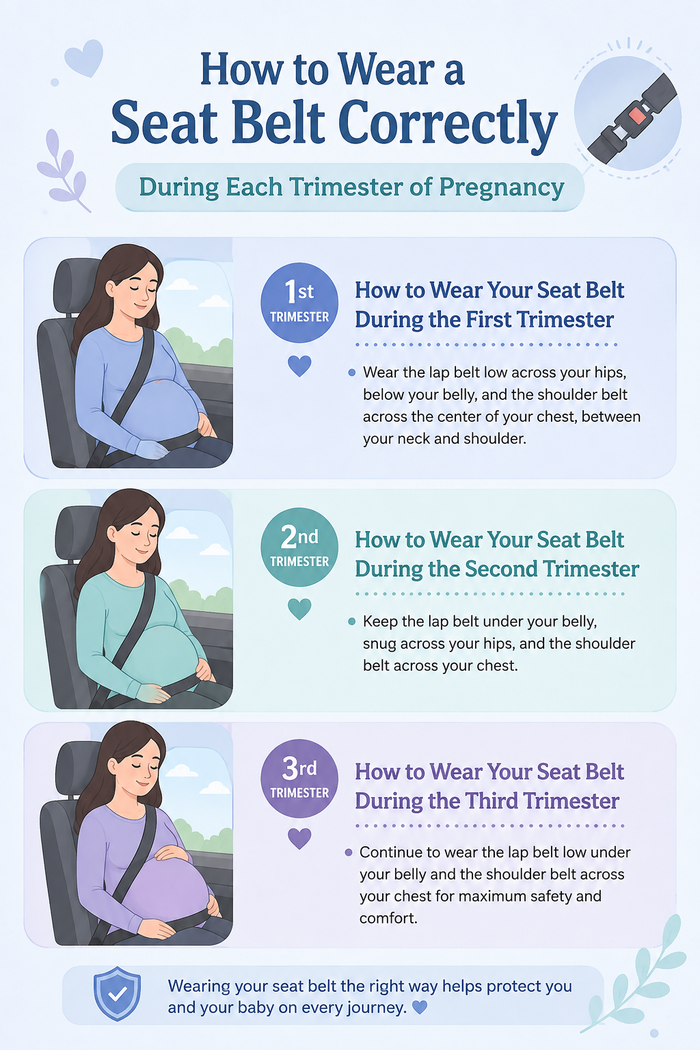
During the first trimester, the uterus is located in the pelvic bone cavity, and the bump has not yet developed. Wearing seat belts during the first trimester will be very similar to wearing seat belts before pregnancy except for one minor adjustment.Position your lap belt as low as you can on the hips, placing it on top of your thighs and pelvic bone, not across your abdomen. It is better to develop this right practice from the start so that your seat belt is always placed below your uterus and not above it.
Your shoulder belt needs to be placed over the middle of your chest and collarbone area and must not be tucked under your arm or behind your back because such placement will be considerably less effective in the event of an accident.
How to Wear Your Seat Belt During the Second Trimester
During the second trimester, you will have a larger bump as well as an ascending uterus out of the pelvic region. Therefore, at this point, proper positioning of your seat belt will become much more essential.The bottom belt needs to go low down over the hips, beneath the bump, over the top of the thighs and the pelvis. It should never go over or above the bump. If it moves up over the abdomen each time, then you need to make sure that you readjust it each time you climb into your car.
The diagonal seat belt goes across the chest between the breasts and over the side of the bump. It should not run over the bump itself. Moreover, do not place the shoulder strap beneath the arm.
One trick for proper seat belt positioning might be the adjustment of your seat. Try sitting further away from the dashboard, which will give you more distance between the bump and the dashboard or steering wheel.
How to Wear Your Seat Belt During the Second Trimester
In the third trimester, the bump will be at its biggest size, and wearing the seat belt will be most uncomfortable. It will be tempting not to wear the belt at all or to position it incorrectly; however, it is most important to wear the seat belt correctly during this period.The rules stay the same: the lap belt must be positioned low over the hips and thighs, and the shoulder belt should rest on the chest, away from the bump. Several additional tips include the following.
- Use a seat belt adjuster or pregnancy seat belt cushion
- Tilt your seat a little back if you experience discomfort
What Not to Do While Wearing a Seat Belt While Pregnant?
Here are a few things that you should avoid regardless of your stage of pregnancy.- Lying the lap belt over your belly or the bump
- Keeping the shoulder belt under your arm
- Lying the shoulder belt behind your back
- Avoiding wearing a seat belt out of discomfort
When to Contact Your Doctor
You can seek help if you experience the following:- Stomach pains or cramping after travel.
- Bleeding from the vagina or unusual discharge after impact.
- Less movement by the baby after the road accident.
- Bruises on the abdomen caused by the seat belt after an accident.
Whether you’re pregnant, a new mom, or navigating postpartum, you don’t have to do it alone. Join our support group to connect, share, and support one another.
FAQs on How to Wear a Seat Belt Correctly During Each Trimester?
- Can a seat belt harm the baby during a car accident?
If the seatbelt is used properly, it will protect both the mother and her baby from sustaining injuries in case of an accident. - Should I stop wearing a seat belt if I feel discomfort?
No, discomfort is easily sorted out by readjusting the seat belt or repositioning yourself. It is never wise to go without a seat belt, despite any discomfort it causes. - Are there special seat belt positioners designed for pregnant women?
Yes, there are specially made seat belt positioners for pregnant women to provide additional comfort and protection by keeping the belt away from your stomach area.