

According to Dr Amritha Shetty, Consultant, Obstetrics & Gynaecology, MBBS, DGO, DNB (Obstetrics & Gynaecology), Birthright by Rainbow Children’s Hospital, it is vital to maintain balanced iron levels when good reproductive health matters. Both iron deficiency and excessive iron amounts can be harmful to health in general and to normal hormonal balance and sperm quality.
Excess iron can increase oxidative stress in the testes, potentially damaging sperm cells and affecting sperm production, quality and overall male fertility.
Understanding Iron Overload in Men
Iron is a mineral required for haemoglobin production, oxygen transport, and several cellular functions. However, the body has limited ways to eliminate excess iron. When the body takes in more iron than it can regulate, it may accumulate in organs and tissues. This condition is known as iron overload.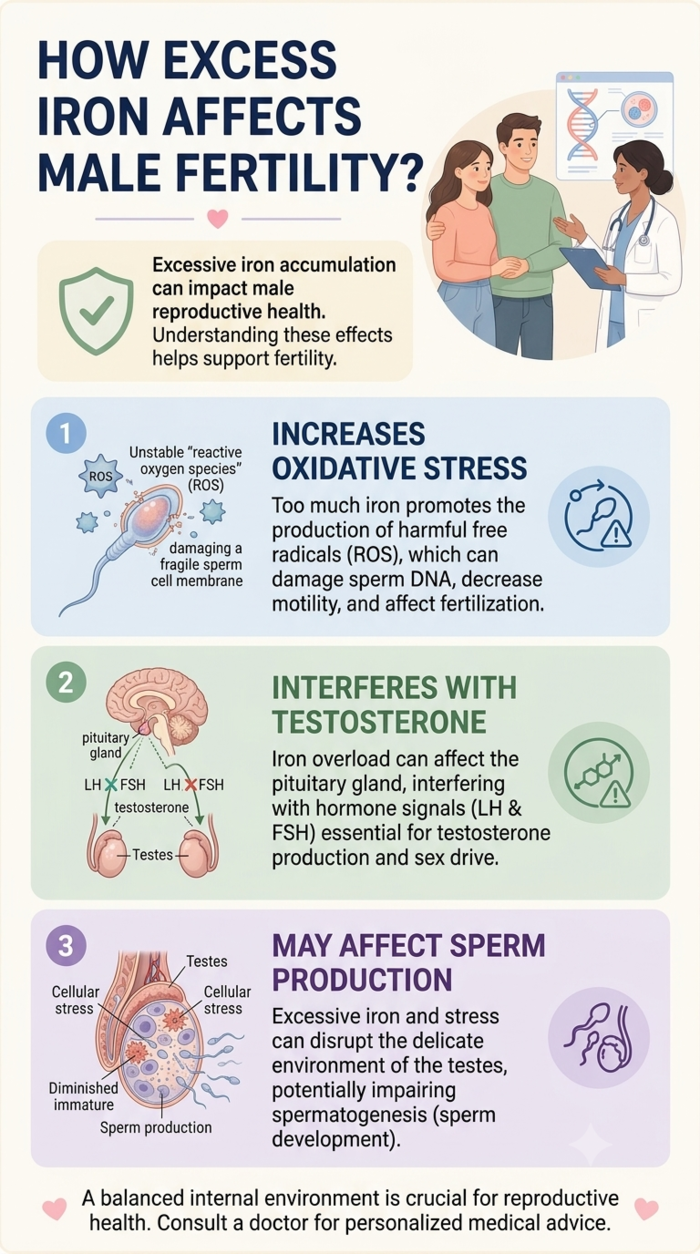
How Excess Iron Affects Male Fertility
Excessive iron accumulation can affect male reproductive health through oxidative stress, hormonal disturbances, and damage to reproductive tissues.Increases Oxidative Stress
Excess iron can promote the production of reactive oxygen species (ROS), which are unstable molecules that damage cells when present in excessive amounts. Sperm cells are particularly vulnerable to oxidative stress because their cell membranes contain high levels of polyunsaturated fatty acids.
Excessive oxidative damage may:
- Affect sperm movement and motility
- Damage sperm cell membranes
- Interfere with sperm function
- Increase sperm DNA damage
Interferes With Testosterone Production
Iron overload can affect the pituitary gland, which regulates hormones responsible for reproductive function. Excessive iron deposition in this gland may interfere with the release of luteinising hormone (LH) and follicle-stimulating hormone (FSH).
These hormones are essential for testosterone production and sperm development. According to Dr Amritha Shetty, hormonal disturbances associated with iron overload may affect sexual health and reproductive function. Some men may experience reduced testosterone levels, decreased sexual desire, and fertility difficulties.
May Affect Sperm Production
The testes require a balanced internal environment to support normal sperm production. Excessive iron accumulation and oxidative stress may interfere with the functioning of testicular cells.
This can potentially affect spermatogenesis, the process through which sperm cells develop and mature. In severe cases, iron-related damage may contribute to impaired sperm production and reduced fertility.
Symptoms That May Indicate Iron Overload
Iron overload may develop gradually, and some men may not experience noticeable symptoms initially.However, possible signs include:
- Persistent fatigue and weakness
- Joint pain, particularly in the hands
- Reduced sexual desire
- Erectile difficulties
- Abdominal discomfort
- Unexplained changes in liver function
How is Iron Overload Diagnosed?
Common diagnostic investigations include the following:- Serum ferritin: Measures the amount of stored iron in the body. However, ferritin can also increase due to inflammation, infection, or liver disease
- Transferrin saturation: Estimates how much iron is attached to the protein responsible for transporting it through the bloodstream
- Genetic testing: May be recommended when hereditary haemochromatosis (a genetic condition in which the body absorbs more iron from food than it needs) is suspected
- Liver function tests: Help identify possible liver involvement
Managing Iron Overload to Protect Male Fertility
Controlling iron overload necessitates recognising and treating the root problem. The therapy applied is dependent upon the degree of iron buildup and the patient's health.Dr Amritha Shetty suggests the following options:
- Therapeutic phlebotomy: This treatment involves blood extraction for an individual to reduce iron deposits in the body, as in cases of hereditary haemochromatosis
- Iron chelation therapy: This therapy entails taking medications for iron removal by patients who are not suitable for phlebotomy
- Monitoring iron levels: Blood tests are done to monitor a response to treatment provided
- Avoiding unnecessary supplements: Iron supplements should only be taken when necessary and when prescribed by a doctor
FAQs on Can Too Much Iron Harm Male Fertility?
- Can iron overload cause premature ejaculation in men?
There is no strong scientific evidence directly linking iron overload to premature ejaculation. However, excessive iron accumulation can affect hormonal balance and overall reproductive health. Men experiencing premature ejaculation should consult a doctor to identify possible underlying physical or psychological causes. - Is iron overload reversible in men?
Iron overload can often be managed effectively, particularly when diagnosed early. Therapeutic phlebotomy helps remove excess iron from the body and prevent further accumulation. However, complications such as testicular damage, liver disease or hormonal disturbances may not always be completely reversible. - Can iron overload affect fertility treatment outcomes?
Iron overload may indirectly influence fertility treatment outcomes by affecting sperm quality, hormonal balance, and reproductive function. However, direct evidence linking iron accumulation to IVF or ICSI success rates remains limited. Men with iron overload should undergo appropriate evaluation before starting fertility treatment.