

In this article:
Why Is Cataract Surgery Usually Delayed During Pregnancy?
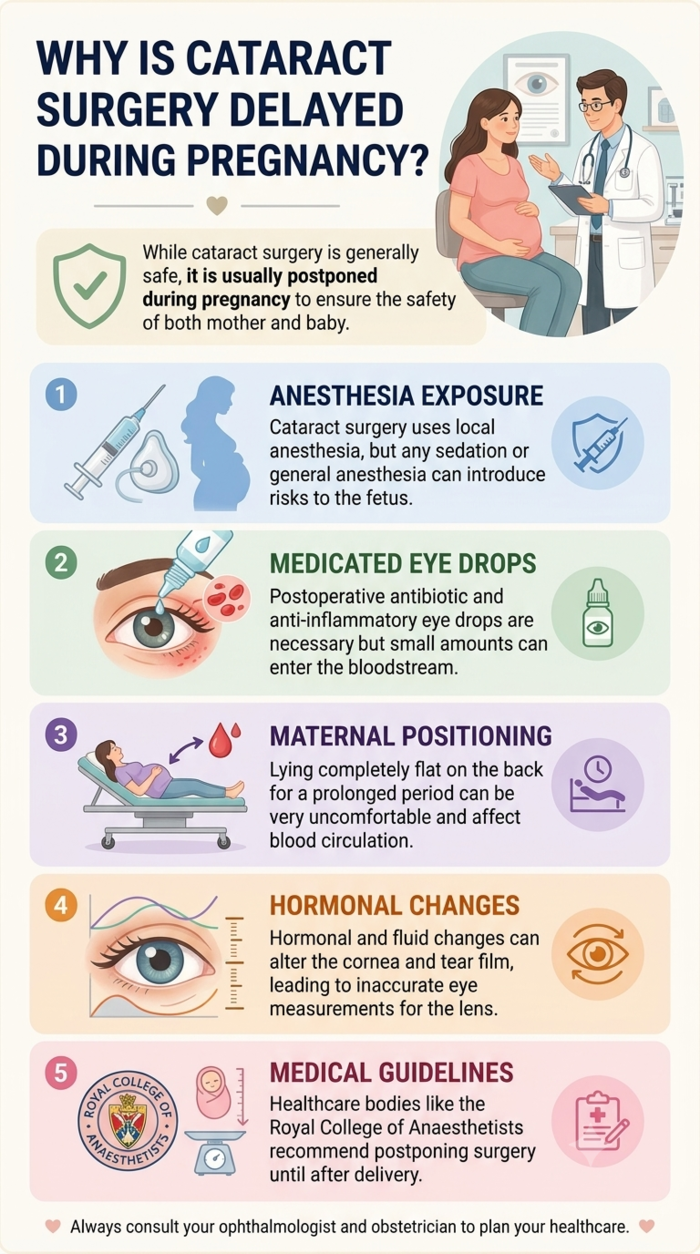
Cataract surgery is a planned procedure in which the cloudy natural lens is removed and replaced with an artificial intraocular lens (IOL).Although modern cataract surgery is safe, pregnancy introduces additional considerations:
- Anaesthesia exposure: Cataract surgery commonly uses local anaesthesia, but some patients may need sedation or general anaesthesia.
- Postoperative eye drops: After surgery, antibiotic and anti-inflammatory eye drops are prescribed. Small amounts can enter the bloodstream.
- Maternal positioning: Lying flat for a prolonged period may become uncomfortable or affect blood circulation, particularly during later pregnancy.
- Pregnancy-related changes: Hormonal and fluid changes can affect the eyes, including the cornea and tear film. Such changes can alter the eye measurements used to plan surgery and select the lens implant.
When Is Cataract Surgery Necessary During Pregnancy?
Most cataracts progress slowly and do not require immediate surgery. However, delaying treatment is not always appropriate.An ophthalmologist may consider surgery during pregnancy when:
- The cataract causes severe vision impairment that interferes with essential daily activities.
- The cloudy lens prevents doctors from examining or treating another serious eye condition.
- The cataract contributes to complications, such as increased eye pressure, that threaten vision.
- In some cases, delaying surgery can risk permanent vision loss.
Ideally, cataract surgery should be postponed until after delivery whenever the mother's eye condition allows it. Cataracts usually progress gradually, and delaying surgery for a few months may not cause significant harm in most cases. However, if the cataract severely affects daily activities or prevents doctors from examining or treating another underlying eye condition, surgery may need to be considered.
Which Trimester Is Safest for Cataract Surgery?
No single trimester is universally recommended for cataract surgery. Timing depends on whether the surgery is necessary and whether it can safely wait.The following considerations help doctors assess the timing:
- First trimester: This is an important period of foetal organ development. Elective cataract surgery is generally postponed to avoid unnecessary exposure to anaesthesia and other medications.
- Second trimester: If a non-urgent but necessary procedure cannot wait until delivery, the second trimester is often preferred for surgery because some pregnancy-related risks are lower than in the first and third trimesters.
- Third trimester: Doctors consider the possibility of preterm labour, maternal discomfort, and difficulties with positioning. If the cataract is not urgent, surgeons generally prefer to operate after delivery.
When to Wait Until After Delivery
Waiting is usually advised in these situations:- Vision is adequate: The cataract is early, and glasses still give workable sight.
- First trimester: The baby's organs are forming, and the risk of harm from drugs is highest before 10 weeks.
- Third trimester: Lying flat for surgery can be uncomfortable, and the risk of preterm labour is higher.
- Eye measurements are unstable: The cornea can become thicker and more curved in late pregnancy, and it may take until breastfeeding ends to return to its earlier shape. This affects the measurements used to choose the lens implant.
FAQs on Cataract Surgery in Pregnancy: When It Is Safe and When to Wait
- Can cataracts get worse during pregnancy?
Pregnancy-related hormonal and fluid changes can affect vision, but there is limited evidence that pregnancy directly accelerates cataract progression. - Can cataract surgery be performed while breastfeeding?
Yes. Cataract surgery can generally be performed while breastfeeding. However, the doctor should review the anaesthesia, antibiotics, and postoperative eye drops to determine whether any precautions are necessary. - How long should I wait after delivery for cataract surgery?
There is no fixed waiting period for every woman. Some ophthalmic guidance recommends waiting six weeks after delivery for non-urgent surgery, but the ophthalmologist will determine the appropriate timing.