

In this article:
How Can Infections Lead to Miscarriage?
Diseases can affect the course and outcome of a normal pregnancy. Some pathogens can cause inflammation, destroy reproductive tissues and affect the placenta (organ supplying oxygen and nutrients for the foetus).Some infections can lead to high fever or an active inflammatory process in the mother's body. In certain cases, such transformation changes may influence pregnancy development in its early stages and make miscarriage more probable.
However, it is necessary to know that infection does not necessarily mean pregnancy loss. The probability varies according to the disease and its intensity.
Most infections do not lead to miscarriage, but diagnosis, appropriate treatment and preventive care can reduce avoidable risks during pregnancy.
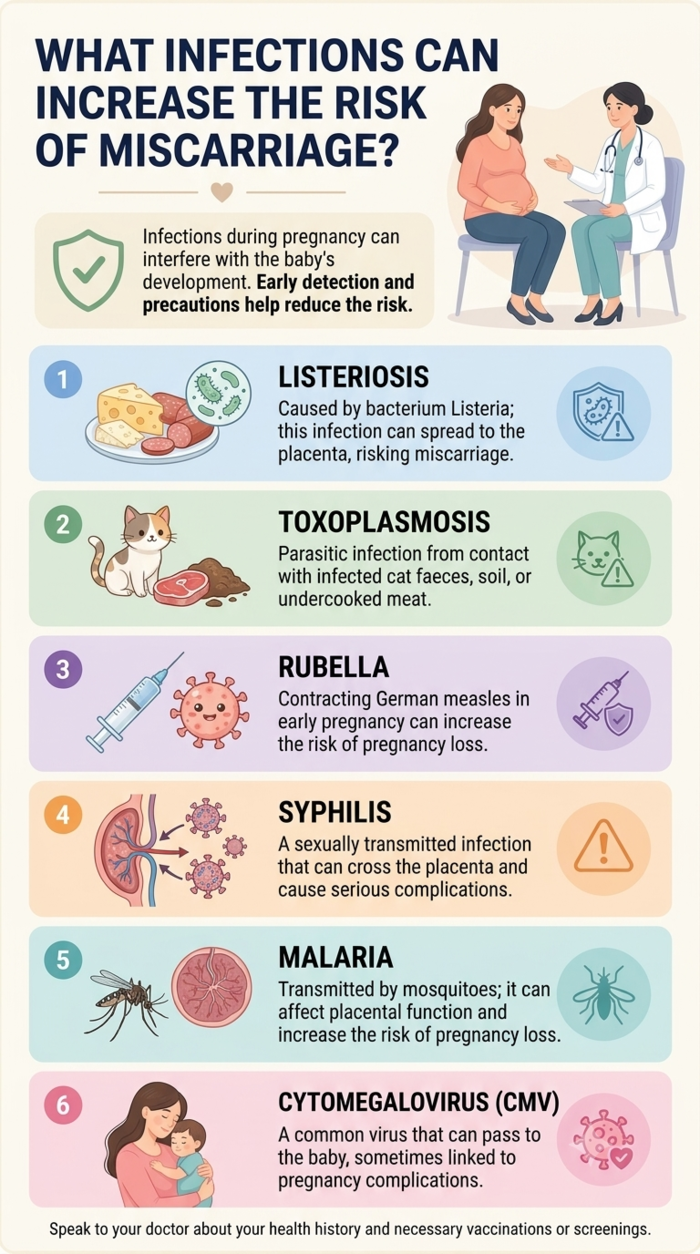
What Infections Can Increase the Risk of Miscarriage?
Some infections increasing the risk of miscarriage include the following:- Listeriosis: Caused by the bacterium Listeria monocytogenes; this infection can spread to the placenta and affect the developing baby. It may lead to miscarriage, stillbirth or premature delivery
- Toxoplasmosis: This parasitic infection can be transmitted through contaminated food, undercooked meat or contact with infected cat faeces. Infection during pregnancy can affect the developing baby and cause serious complications
- Rubella: Contracting rubella during early pregnancy can increase the risk of miscarriage and congenital abnormalities
- Syphilis: This sexually transmitted infection can cross the placenta and cause serious pregnancy complications, including miscarriage and stillbirth, if left untreated
- Malaria: Malaria during pregnancy can affect placental function and increase the risk of pregnancy loss, particularly in severe cases
- Cytomegalovirus (CMV): This viral infection can pass from the mother to the baby and cause congenital complications. Its association with miscarriage is less clearly established than some other infections
What Are The Warning Signs of an Infection During Pregnancy?
Some infections produce noticeable symptoms, while others may remain asymptomatic. Some warning signs include the following:- Fever, chills, or persistent body aches
- Burning sensation or pain while urinating
- Unusual vaginal discharge or an unpleasant smell
- Abdominal or pelvic pain
- Diarrhoea, vomiting, or flu-like symptoms
- Skin rashes or unexplained sores
- Unusual fatigue accompanied by other signs of infection
How Are Pregnancy-Related Infections Diagnosed?
Depending on the symptoms and medical history, doctors may recommend the following investigations to diagnose pregnancy-related infections:- Blood tests: To identify certain viral, bacterial, and parasitic infections
- Urine tests: To detect urinary tract infections
- Vaginal or cervical swabs: To identify specific genital tract infections
- Ultrasound examinations: To assess pregnancy development and check the baby's growth when clinically indicated
Can Treating Infections Reduce the Risk of Miscarriage?
Timely diagnosis and appropriate treatment can reduce the risk of complications associated with several infections. However, the outcome depends on the infection, its severity and how early treatment begins.For example, bacterial infections such as syphilis and listeriosis require specific medical management. Urinary tract infections should also be treated appropriately to prevent complications, particularly if they progress to kidney infections.
How Can Women Prevent Infections During Pregnancy?
Simple preventive measures can help lower exposure to infection-causing organisms. These include the following:- Wash hands regularly, particularly before preparing or eating food
- Avoid raw or undercooked meat, unpasteurised milk and unsafe food
- Wash fruits and vegetables thoroughly before consumption
- Drink clean and safe drinking water
- Practice safe sex to reduce the risk of sexually transmitted infections
- Follow recommended vaccination advice before and during pregnancy
- Attend routine antenatal appointments and complete recommended screening
FAQs on Infections and Miscarriage: Risks, Signs and Prevention
- How soon after an infection can a woman safely plan another pregnancy?
The timing depends on the type and severity of infection. Women should complete treatment, recover fully and consult their doctor before trying to conceive again. - Can a history of recurrent urinary infections increase miscarriage risk?
Recurrent urinary tract infections do not directly cause miscarriage. However, untreated infections, particularly those spreading to the kidneys, may cause complications that require prompt medical attention. - Can infections cause inflammation of the placenta?
Yes, certain bacterial and viral infections can cause placental inflammation, known as placentitis. Severe inflammation may interfere with placental function and increase the risk of pregnancy complications.