In this article:
What Is a CGM, and What Is Its Difference From the Finger-Prick Test?
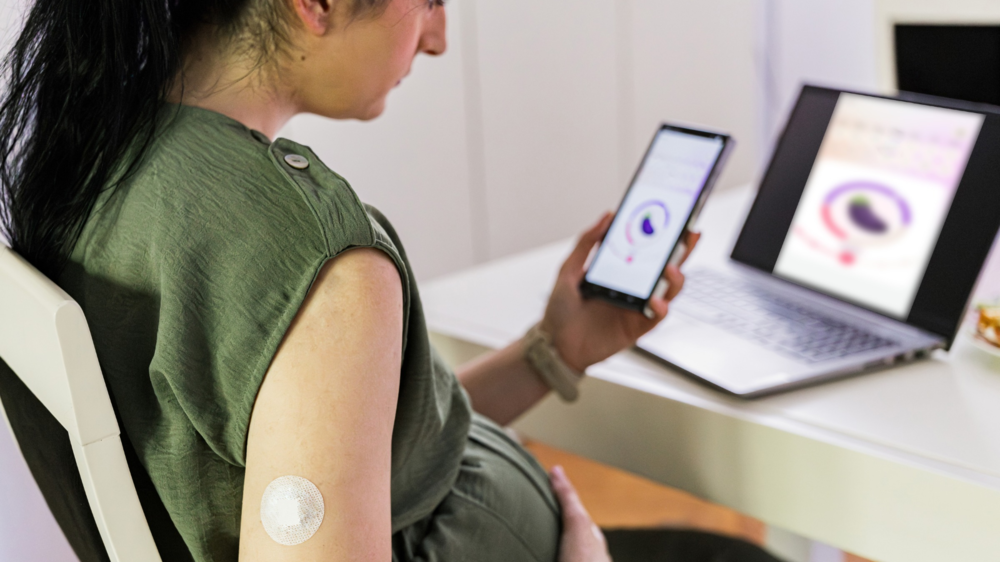
A CGM is a wearable device equipped with a sensor that monitors your glucose day and night. A finger-prick shows a single moment, while a CGM shows the pattern.As opposed to conventional finger-prick tests, where blood glucose levels are measured at certain times, CGM technology utilises a small sensor to monitor glucose levels over the entire period throughout the day and night. Information about glucose trends, fluctuations and hypoglycaemia and hyperglycaemia periods can be obtained.
Why Is It Crucial to Control Glucose in Pregnant Women?
Poorly controlled diabetes may cause pre-eclampsia, the excessive size of the child, difficulties during delivery, and hypoglycemia in newborns. Stable glucose levels reduce these risks, which is why glucose is being monitored so thoroughly.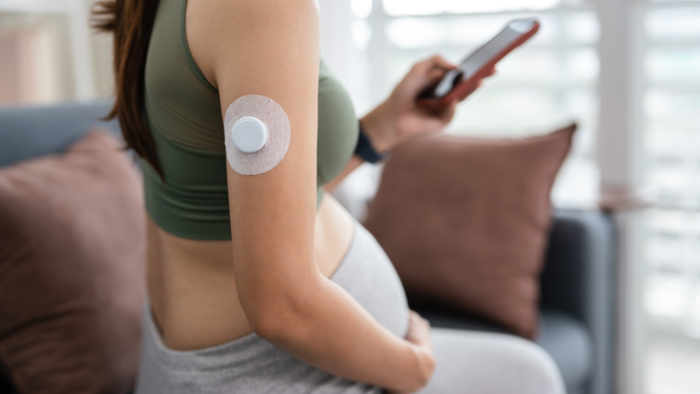
How Can a CGM Help You?
The CGM can help to determine:- What meals, exercise, medication and changes throughout the night do to your glucose
- Peaks and drops that may not be detected through finger sticks
- When your treatment regimen requires an adjustment, especially if you take insulin
What Does the Evidence Say?
Data from the CONCEPTT trial, which tested the efficacy of CGM among pregnant type 1 diabetic patients, were obtained through a randomised controlled trial and showed lower HbA1c (a test that shows average blood sugar over about three months) levels at 34 weeks. This suggests better glucose control for the mothers during the late second and early third trimesters.What Is "Time in Range"?
According to NIH, the Time in Range (TIR) index for CGM is the percentage of time when glucose measurements are within the target range of 3.9-10.0 mmol/L (70-180 mg/dL).Who Is Eligible for CGM?
This will depend on your diabetes diagnosis:- CGM should be offered to all women with type 1 diabetes who are pregnant, while intermittently scanned CGM should be offered to those unable to use it.
- CGM can be offered to insulin-treated pregnant women without type 1 diabetes in specific cases.
- Consider CGM for patients with type 2 diabetes using insulin in case of severe hypoglycemia and unstable glucose levels.
- Gestational diabetes does not provide the evidence base for the benefit of real-time CGM.
What Cannot a CGM Do for You?
A CGM is an aid to help, not a substitute for health care. Remember the following facts:- It cannot be used as an alternative for antenatal appointments, nutritional counselling, or medical supervision.
- Sensor results might be different from glucose levels in blood; thus, a finger-stick test can still be required to confirm when a reading does not correspond with your symptoms.
How to Choose Whether or Not to Use a CGM
You and your doctor can consider four factors together: the type of your condition, treatment options, affordability, and the existing guidelines. You may also ask:- Will there be any changes in my therapy because of it?
- Who will monitor my readings, and how often?
- What is the price of the product, and what is the lifespan of a sensor?
- What should I do when a reading is not accurate?
When to See a Doctor
See your doctor urgently if:- Your readings remain high or continue to fall too low
- Your symptoms do not correspond with your readings
- You experience severe thirst, dizziness or confusion
- You are uncertain about your readings or don't know what actions to take
FAQs on Continuous Glucose Monitors (CGM) in Pregnancy: How They Help
- What is closed-loop technology?
This refers to CGM used with an insulin pump, which automatically delivers adjusted amounts of insulin. - What are the advantages and disadvantages of using a CGM while pregnant?
Advantages include fewer finger pricks, more insight into nighttime and postprandial glucose levels, and early signs of hypoglycemia. The disadvantages are the costs involved, possible lack of availability in certain regions, irritation from the adhesive on the skin, and errors in sensor measurements. - Can a CGM replace finger pricks during pregnancy?
Not necessarily. While some devices can be used independently, doctors recommend using finger pricks when symptoms do not correspond to the readings from the sensor or when the readings seem abnormal.