Dr Amritha Shetty, Consultant, Obstetrics & Gynaecology, Birthright by Rainbow Children’s Hospital, says that understanding how the condition affects the ovaries, fertility, and pregnancy can lead women to the right choice in reproduction.
What is Mosaic Turner Syndrome?
Mosaic Turner syndrome is a genetic disorder that occurs when there is one normal X chromosome in some cells of the body and only one or an irregularly formed X chromosome in others. This disorder stems from the inability of cells to divide correctly during the time of fertilisation. Its effects differ from person to person and may involve abnormalities in growth and development, ovaries, hormones produced by ovarian glands, and fertility. Many women have mild symptoms and normal reproductive organs.How Does Mosaic Turner Syndrome Affect Fertility?
Mosaic Turner syndrome can affect ovarian function by causing the gradual loss of ovarian follicles, which contain developing eggs. This may reduce ovarian reserve and make natural conception difficult.Some women retain normal ovarian function and experience regular menstrual cycles. However, others may develop premature ovarian insufficiency (POI), resulting in irregular periods, reduced hormone production, and difficulty conceiving.
According to Dr Amritha Shetty, ovarian function can decline earlier than expected, even in women with regular periods. Therefore, early fertility assessment is important to understand reproductive potential and explore suitable options.
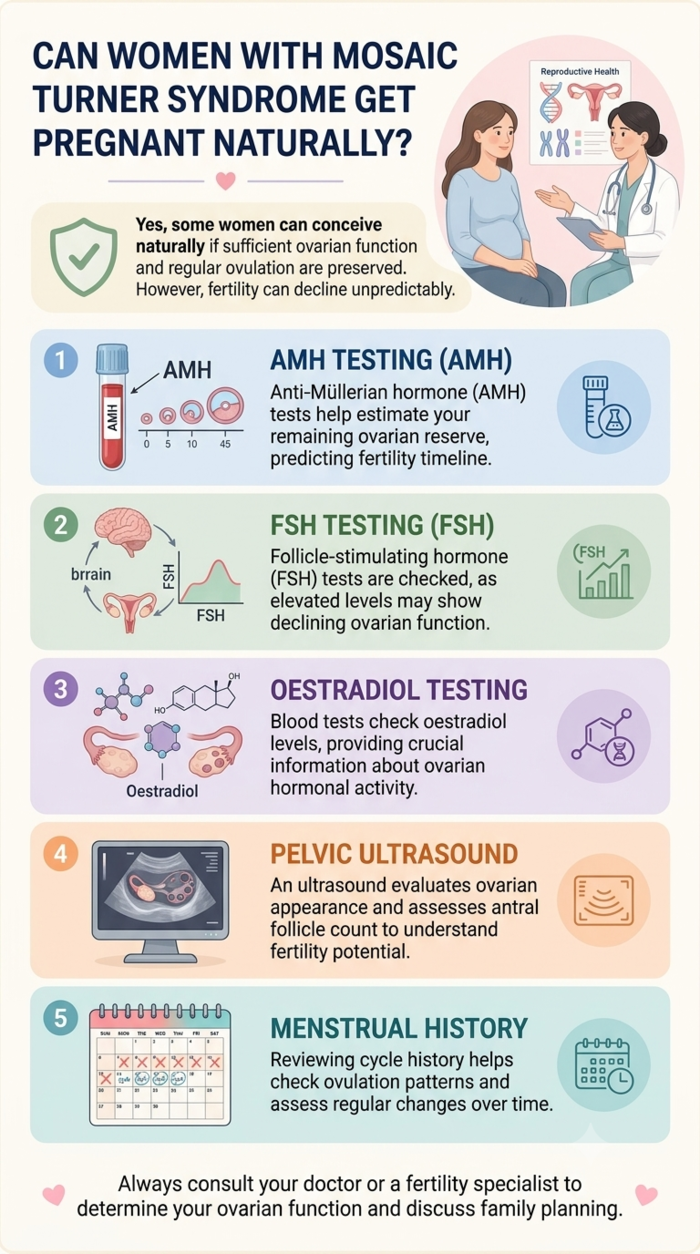
Can Women With Mosaic Turner Syndrome Get Pregnant Naturally?
Yes, some women with Mosaic Turner syndrome can conceive naturally. This is more likely when sufficient ovarian function is preserved, and ovulation occurs regularly.However, fertility can decline unexpectedly, making it difficult to predict how long natural conception will remain possible.
Dr Amritha Shetty may recommend the following investigations for women with Mosaic Turner syndrome:
- Anti-Müllerian hormone (AMH): Helps estimate the remaining ovarian reserve
- Follicle-stimulating hormone (FSH): Elevated levels may indicate reduced ovarian function
- Oestradiol testing: Provides information about ovarian hormonal activity
- Pelvic ultrasound: Evaluates ovarian appearance and antral follicle count
- Menstrual history: Helps assess ovulatory patterns and changes in cycle regularity
A multidisciplinary approach is recommended that involves fertility specialists, cardiologists, genetic counsellors and obstetricians to support safer reproductive decisions.
What Are the Fertility Treatment Options?
Treatmentdepends on ovarian reserve, age, reproductive goals, and overall health. Dr Amritha Shetty recommends the following options:Egg Freezing
Women with preserved ovarian function may consider egg freezing to preserve their reproductive options. However, the number of eggs retrieved may be limited, depending on the ovarian reserve.IVF Using Own Eggs
If ovarian function is adequate, in vitro fertilisation (IVF) may be considered. The treatment involves stimulating the ovaries, retrieving eggs, fertilising them with sperm, and transferring an embryo into the uterus.IVF With Donor Eggs
For women with premature ovarian insufficiency or severely diminished ovarian reserve, donor egg IVF may offer an alternative. The donor egg is fertilised with the partner's sperm or donor sperm, and the resulting embryo is transferred into the uterus.What Are the Pregnancy Risks Associated with Mosaic Turner Syndrome?
Pregnancy in women with Mosaic Turner syndrome requires careful monitoring because underlying cardiovascular abnormalities can increase maternal risks. Potential complications include:- Aortic dilatation: Enlargement of the aorta can increase the risk of serious cardiovascular complications during pregnancy
- Aortic dissection: A tear in the aortic wall is a life-threatening complication associated with increased cardiovascular stress
- High blood pressure: Hypertension can increase the risk of maternal and pregnancy-related complications
- Congenital heart defects: Existing structural abnormalities may place additional strain on the heart during pregnancy
- Cardiovascular complications: Increased blood volume and cardiac workload during pregnancy can worsen existing heart conditions
Why is Genetic Counselling Important?
Genetic counselling helps women understand the chromosomal aspects of the condition and possible reproductive implications.A specialist can discuss:
- The possibility of chromosomal abnormalities in pregnancy
- Available prenatal screening and diagnostic tests
- The potential role of preimplantation genetic testing in selected IVF cases
- Reproductive choices based on individual circumstances
FAQs on Mosaic Turner Syndrome: Fertility and Pregnancy Options
- Is Mosaic Turner syndrome associated with thyroid problems?
Yes, women with Mosaic Turner syndrome have an increased risk of autoimmune thyroid disorders, particularly hypothyroidism. Regular thyroid function tests help detect hormonal imbalances early and ensure timely treatment. - Is Mosaic Turner syndrome associated with diabetes?
Yes, women with Mosaic Turner syndrome may have an increased risk of insulin resistance and type 2 diabetes. Regular blood glucose monitoring, a balanced diet, and physical activity can help manage metabolic health. - Does Mosaic Turner syndrome affect sex life?
It can affect sexual health in some women due to reduced oestrogen levels, vaginal dryness, or discomfort during intercourse. Hormonal assessment, appropriate treatment, and counselling can help improve sexual wellbeing.