
We spoke to Dr Mansi Sharma, Consultant, Obstetrician and Gynaecologist, Motherhood Hospitals, Kharadi, Pune, to understand this better and get you verified information.
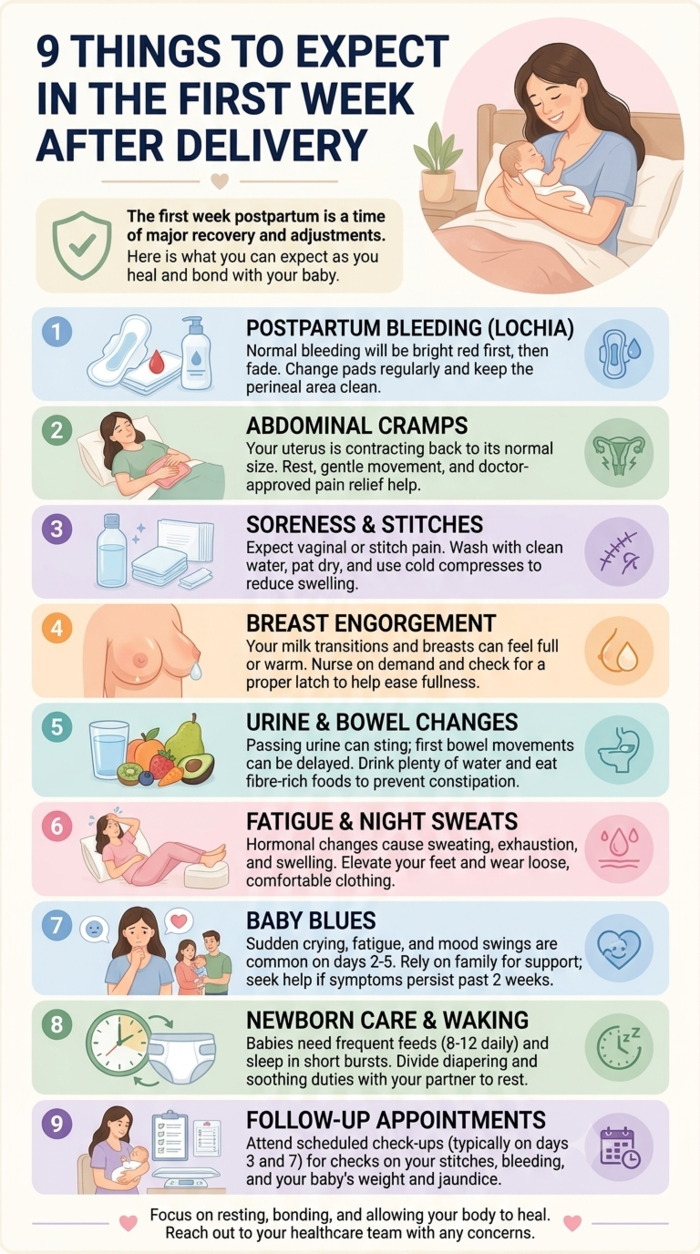
Here are the 9 Things to Expect in the First Week After Delivery
1. Postpartum Bleeding (Lochia)
Bleeding after childbirth (lochia) is normal after both vaginal delivery and a C-section. It occurs as the uterus sheds the blood, mucus, and tissue left behind after the placenta separates. It is bright red and may contain small clots.The flow gradually decreases and changes from red to pinkish-brown before becoming lighter over the following weeks.
What helps: Change pads regularly, wash your hands, and rinse the perineal area with warm water after using the toilet to reduce infection risk.
2. Abdominal Cramps As the Uterus Shrinks
The uterus contracts to return to its pre-pregnancy size. This causes cramps called afterpains, which are stronger during breastfeeding and usually ease within three to five days.What helps: Adequate rest, gentle movement, and doctor-approved pain relief can help manage discomfort.
3. Vaginal Soreness and Stitches Pain
After a vaginal delivery, the vaginal area and perineum (the area between the vagina and anus) may feel sore, swollen, or bruised. Stitches may also be present following a vaginal tear or an episiotomy.Sitting, walking, and passing urine may feel uncomfortable. The soreness should gradually improve as the tissues heal.
What helps: Wash the area with clean water and gently pat dry. Cold compresses can help reduce discomfort and swelling. Increasing pain, pus, or an unpleasant smell requires medical assessment.
4. Breast Engorgement and Changes in Milk Supply
The breasts undergo noticeable changes during the first week after delivery. Initially, they produce colostrum, a thick, yellowish milk rich in antibodies that supports the newborn's immunity.Between the second and fifth day, breast milk production generally increases. The breasts may feel fuller, heavier, warmer, and tender. This is called breast engorgement.
What helps: Frequent breastfeeding, a proper latch, and support from a lactation consultant can help. Skipping feeds when the breasts are full may worsen engorgement.
5. Changes in Urination and Bowel Movements
Passing urine can sting because of vaginal soreness or stitches. Some women also experience difficulty emptying their bladder after delivery.The first bowel movement may take a few days. Constipation and haemorrhoids are also common because of hormonal changes, reduced movement, and pressure during childbirth.
What helps: Good water intake and fibre-rich foods such as fruits, vegetables, whole grains and pulses can help prevent constipation.
6. Night Sweats, Fatigue and Body Swelling
Hormonal changes after delivery can cause excessive sweating, particularly at night.Swelling in the feet and legs can persist for a few days. Meanwhile, blood loss, physical recovery, and interrupted sleep can contribute to exhaustion.
What helps: Wear comfortable clothing, drink enough fluids, rest with your feet elevated, and ask for help with household tasks and newborn care.
7. Baby Blues and Emotional Changes
Hormonal fluctuations, sleep deprivation, and the demands of caring for a newborn can affect emotional health.Some mothers experience sudden crying, irritability, anxiety, mood swings, or feelings of being overwhelmed. These symptoms are commonly called baby blues and often begin around the second or third day after delivery.
They usually improve within one to two weeks. However, persistent sadness, severe anxiety, difficulty bonding with the baby, or feelings of hopelessness may indicate postpartum depression.
What helps: Emotional support from family members and sharing newborn-care responsibilities can help mothers cope with baby blues.
8. Frequent newborn feeding and interrupted sleep
Breastfed babies generally need 8–12 feeds in 24 hours. Some may want to feed more frequently during cluster feeding.
Newborns also sleep for much of the day, but their sleep is divided into short periods. This means mothers may wake several times during the night to feed, change, and comfort the baby.
What helps: Feeding on demand, recognising hunger cues, and involving family members in diaper changes and other newborn-care tasks can help mothers get rest.
9. Follow-up Visits and Newborn Checks
Healthcare professionals may check the mother's blood pressure, temperature, bleeding, stitches or C-section wound, and breastfeeding progress.The newborn is assessed for weight, feeding, jaundice, temperature, and other signs of illness. The National Health Mission recommends postnatal visits on the third and seventh days after institutional delivery, followed by further visits on days 14, 21, 28 and 42.
What helps: Attend all postnatal and newborn follow-ups, note the baby’s feeds, wet nappies and weight, and follow the healthcare team’s advice to support recovery.
The first week after delivery is an important recovery period, and timely postpartum care helps protect the health of both mother and baby.
New mothers should understand that recovery will take time. So, there is no need to rush back into their usual routine. Taking care of their own health is equally important as taking care of the newborn.
FAQs on 9 Things to Expect in the First Week After Delivery
- How long does bleeding last after delivery?
Lochia lasts about four to six weeks. It moves from red to pink or brown, then to pale yellow or white. - When does breast milk come in after delivery?
Mature milk usually comes in two to four days after birth. Until then, the baby feeds on colostrum.