
We spoke to Dr Anusha Rao, Consultant Neonatologist & Pediatrician, Ankura Hospital for Women and Children, Aundh, Pune, to understand this better and get you verified information.
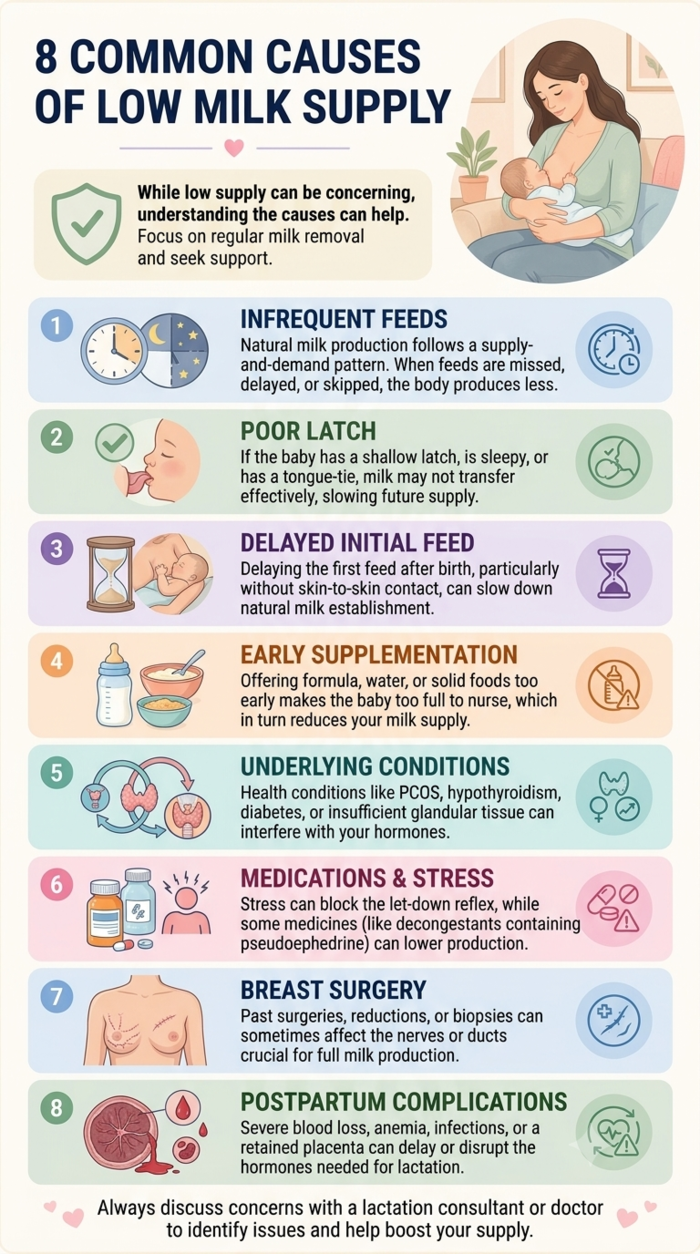
8 Common Causes of Low Milk Supply
1. Infrequent Feeds and Skipped Night Feeds
Breast milk production depends on how frequently milk is removed. When a mother feeds her baby less often, the breasts receive fewer signals to produce milk, which may gradually reduce supply.Scheduled feeding, skipping night feeds in the early weeks, delaying feeds when the baby shows hunger cues, or being separated from the baby for long periods without expressing milk can affect production.
Newborns generally need 8–12 feeds in 24 hours, although individual feeding patterns may vary.
2. Poor Latch and Ineffective Milk Transfer
A baby may appear to be breastfeeding but may not be removing milk effectively. A shallow latch, incorrect positioning, tongue-tie, prematurity, sleepiness from jaundice, and difficulty coordinating sucking and swallowing can reduce milk transfer.When milk remains in the breasts frequently, production may decrease over time. Mothers can also experience sore nipples, painful feeding, and clicking sounds during breastfeeding.
A lactation consultant can assess the baby's latch, sucking pattern, and milk transfer to identify the problem.
3. Delayed Initiation of Breastfeeding After Birth
Starting breastfeeding late after delivery can affect the establishment of milk production, particularly when early skin-to-skin contact and frequent feeding are also missed.Complications during delivery, maternal or newborn illness, separation after a caesarean birth, or admission to the neonatal intensive care unit (NICU) may delay the first feed.
Breastfeeding within the first hour, skin-to-skin contact, and regular milk expression when direct feeding is not possible can help establish supply.
4. Supplementing With Formula or Introducing Solids Too Early
When a baby receives formula, water, or other feeds in addition to breastfeeding, they may breastfeed less frequently because they are fuller. This reduces breast stimulation and can gradually decrease milk production. Introducing solids before six months can also replace breastfeeding and reduce supply.Family members may sometimes recommend giving newborns honey, ghutti, water, or other traditional feeds. These are not recommended for newborns and may interfere with exclusive breastfeeding.
If formula supplementation is medically necessary, mothers can maintain their supply by breastfeeding or expressing milk whenever the baby receives a supplemental feed, when feasible.
5. Hormonal and Medical Conditions Affecting Lactation
Certain health conditions can interfere with the hormones involved in milk production, particularly prolactin and insulin.These include:
- Hypothyroidism: Low thyroid hormone levels may interfere with milk production.
- Polycystic ovary syndrome (PCOS): Hormonal and metabolic changes associated with PCOS may affect lactation in some women.
- Diabetes: Poorly controlled blood sugar may delay milk production or affect supply.
- Insufficient glandular tissue: Some women have underdeveloped milk-producing tissue and may not produce enough milk to meet their baby's needs.
If milk supply is a concern, consult the doctor and know about the underlying cause without any delay. With the right guidance, breastfeeding techniques, and timely support, many mothers can improve milk production and feed their babies more comfortably.
6. Certain Medicines, Stress, and Dehydration
Some medicines may reduce milk production, particularly those containing oestrogen, and certain decongestants such as cold or flu tablets containing pseudoephedrine. Check every medicine, including over-the-counter and herbal products, with a doctor before use during breastfeeding.Stress hormones can block the let-down reflex that releases milk, so less milk is removed, and supply falls over time.
A new pregnancy may also cause a drop in milk supply because of hormonal changes. Acute illness, dehydration associated with illness, significant nutritional deficiencies, or smoking may affect breastfeeding or milk production.
7. Breast Surgery or Breast Injury
Breast augmentation, reduction surgery, biopsies, or other procedures can affect milk production if they damage milk-producing tissue, ducts, or nerves involved in lactation.The effect depends on the type of surgery, the amount of tissue removed, and whether the nipple and surrounding nerves were affected.
Women who have undergone breast surgery still breastfeed successfully, although some may need additional feeding support or supplementation.
8. Postpartum Complications, Including Retained Placenta
Complications after childbirth can delay or interfere with milk production. Retained placental tissue prevents the hormonal changes needed for milk production to begin properly.Significant blood loss during delivery, postpartum anaemia, severe illness, or certain infections also affect breastfeeding and maternal recovery.
If milk production has not increased several days after delivery, particularly alongside heavy bleeding, fever, weakness, or other symptoms, medical assessment is important.
Identifying the cause of low milk supply early and addressing breastfeeding difficulties or underlying medical conditions can help mothers provide adequate nutrition for their babies.
FAQs on 8 Causes of Low Milk Supply
- How can I increase milk supply naturally?
Feed 8–12 times a day in the early weeks, offer both breasts, correct the latch, and express milk after feeds if the baby feeds poorly. - When should I see a doctor for low milk supply?
See a doctor if milk has not come in by day five, the baby is losing weight, has a dry or sticky mouth, is unusually sleepy or looks yellow, or if feeding stays painful.