There are multiple factors responsible for ovulatory infertility. One of them is a hormonal imbalance.
Keeping watch on the length of your menstrual cycle and knowing what happens to your body at various points in time in your menstrual cycle may enable you to recognise anovulation.
If your menstrual cycle becomes irregular or if you experience irregular, infrequent, or absent vaginal bleeding persistently, then you should consult your doctor for medical advice for an appropriate diagnosis.
How Does Ovulation Affect Fertility?
Ovulation is a crucial process to make conception possible. For pregnancy to occur:
- An egg must be released from the ovary.
- The egg must meet the sperm in the fallopian tube.
- A fertilised egg must implant in the uterus.
As a result, your chances of conception decrease significantly.
What Causes Ovulatory Infertility?
There are numerous conditions that may cause ovulatory infertility by interfering with your normal ovulation process.
| Underlying conditions that may cause ovulatory infertility | Effect on reproductive health | Signs & symptoms |
| Polycystic Ovary Syndrome (PCOS) | Hormonal imbalances can interfere with the regular release of eggs from the ovaries. |
|
| Thyroid Disorders | Both underactive and overactive thyroid conditions can disrupt reproductive hormones and affect ovulation. |
|
| High Prolactin Levels | High prolactin levels may hinder hormone production required for ovulation. |
|
| Premature Ovarian Insufficiency (POI) | Ovarian dysfunction may happen before reaching 40 years of age; thus, women experience irregular or missed ovulation. | • Irregular periods • Reduced ovarian function • Early loss of fertility potential |
| Lifestyle and Weight Factors | Weight fluctuation, rigorous physical activity, or chronic stress can affect hormone production, thereby affecting the process of ovulation. | • Significant weight gain • Being underweight • Excessive physical exercise • Chronic stress |
What Are the Symptoms of Ovulatory Infertility?
Some people may not notice obvious symptoms.
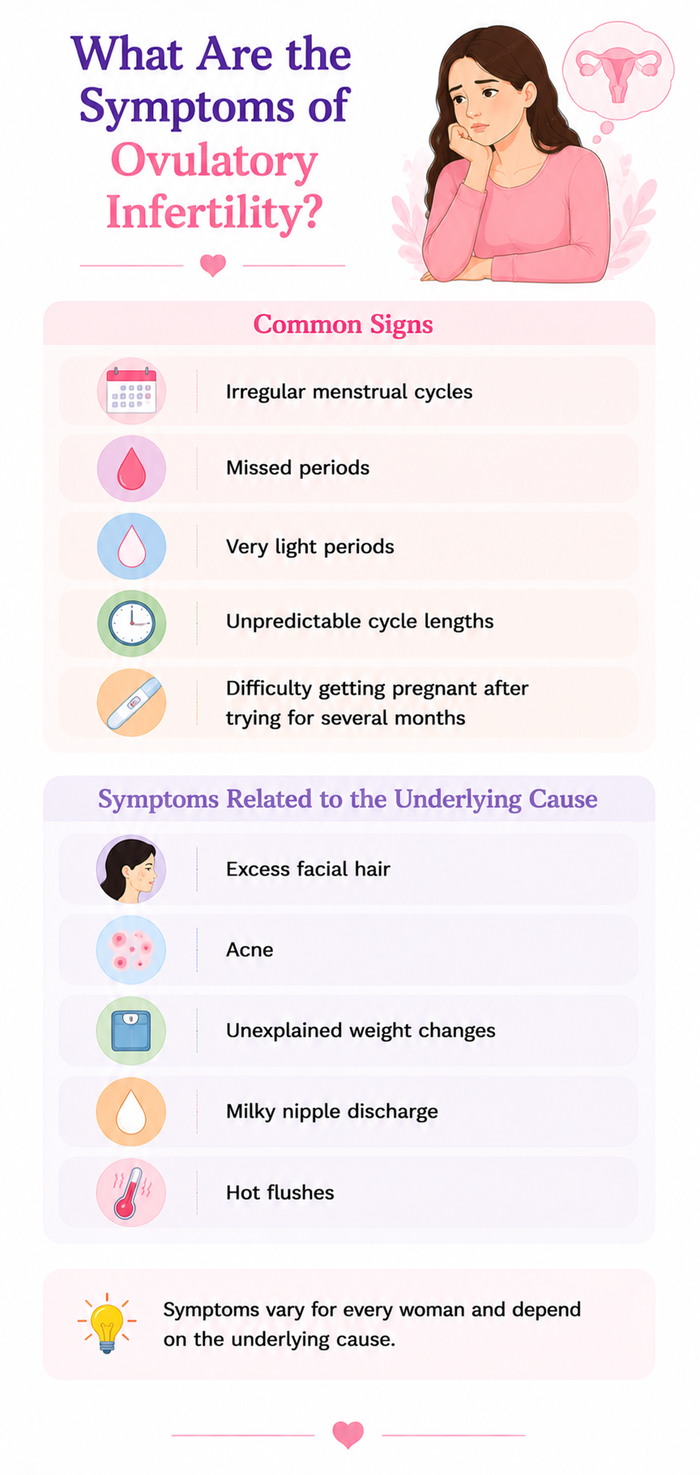
However, possible signs include:
- Irregular menstrual cycles
- Missed periods
- Very light periods
- Unpredictable cycle lengths
- Difficulty getting pregnant after trying for several months
Symptoms Related to the Underlying Cause
Depending on the condition, you may also experience:
- Excess facial hair
- Acne
- Unexplained weight changes
- Milky nipple discharge
- Hot flushes
How Is Ovulatory Infertility Diagnosed?
Your fertility specialist may recommend:
1. Medical History and Cycle Assessment
This includes questions about:
- Menstrual cycle patterns
- Previous pregnancies
- Existing medical conditions
Blood tests may help assess hormones involved in ovulation.
3. Ultrasound Examination
An ultrasound scan can evaluate:
- Ovarian structure
- Follicle development
- Features suggestive of PCOS
What Are the Treatment Options for Ovulatory Infertility?
Your treatment options mainly depend on the underlying cause.
1. Lifestyle Modifications
You may be advised to:
- Maintain a healthy weight
- Follow a balanced diet
- Manage stress levels
- Exercise in moderation
In some cases, hormone-based treatment may be recommended to help restore ovulation.
The choice depends on the underlying diagnosis and your overall health.
3. Fertility-Focused Management
If ovulation problems persist, your fertility specialist may discuss additional fertility treatment options based on your individual situation.
When Should You Consult Your Fertility Specialist?
You should consider consulting a fertility specialist if:
- Your periods are irregular or absent.
- You suspect you are not ovulating.
- You have PCOS or a thyroid disorder.
- You have been trying to conceive without success.
Many couples who are trying to conceive track ovulation to identify their most fertile days. Hormonal imbalances can sometimes interfere with ovulation, which may make it more difficult to become pregnant. If you are noticing concerning signs, consult your fertility specialist for timely care.
You’re not alone in your journey when trying to conceive. Join our supportive community to connect with others, share experiences, and find encouragement every step of the way.
FAQs on What Is Ovulatory Infertility? Causes, Symptoms, and Treatment Options
- Can you get pregnant with ovulatory infertility?
Pregnancy may still be possible if the underlying cause is identified and treated appropriately. The outcome depends on the specific reason for the ovulation problem. - Is PCOS the most common cause of ovulatory infertility?
Yes. PCOS is one of the leading causes of irregular or absent ovulation and is a common contributor to ovulatory infertility. - Can ovulatory infertility be treated?
Many causes of ovulatory infertility can be managed through lifestyle changes, hormonal treatment, or fertility-focused medical care, depending on the diagnosis.