
A woman may look and feel well while having problems with blood sugar, cholesterol or blood pressure. These risks vary, but understanding them can encourage timely health check-ups and help women manage PCOS as a long-term health condition rather than focusing only on visible symptoms.
To understand the less visible health risks associated with PCOS and why regular monitoring is important, we spoke with Dr Alka Chaudhary, Senior Consultant – Obstetrician and Gynaecologist, Madhukar Rainbow Children’s Hospital.
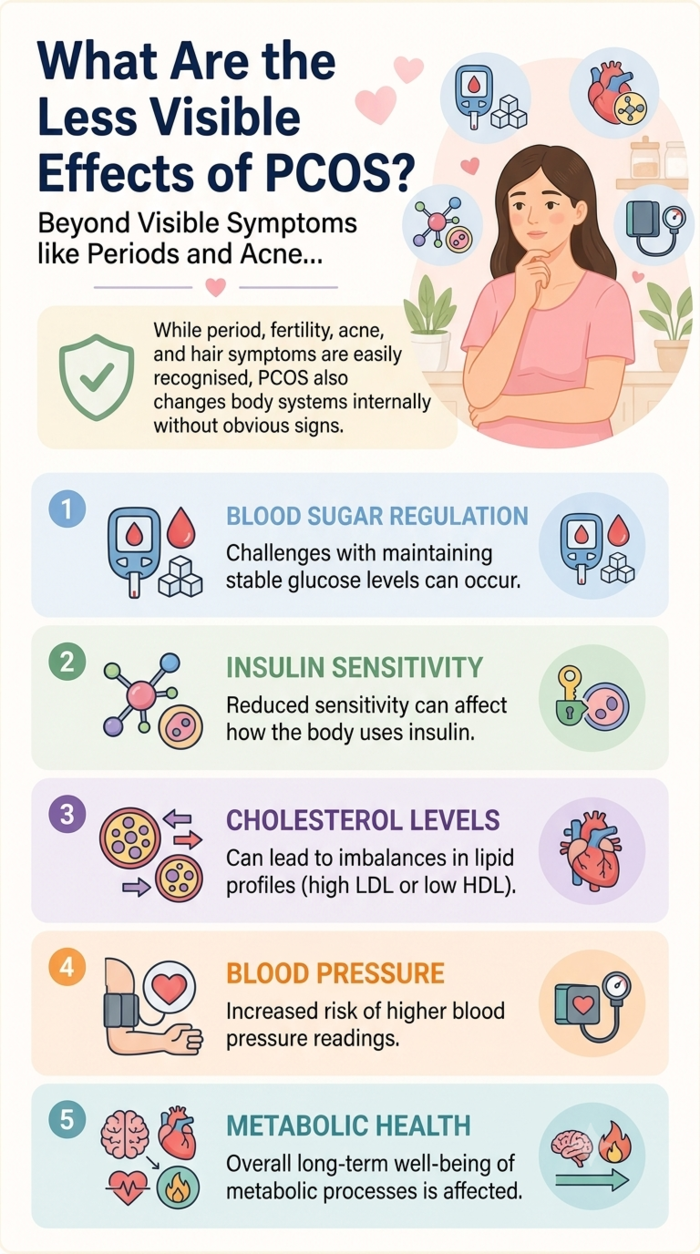
What Are the Less Visible Effects of PCOS?
PCOS is commonly discussed in relation to periods, fertility, acne and unwanted hair growth. These symptoms can be easier to recognise because a woman may notice them herself.However, PCOS can also be linked with changes inside the body that may not cause obvious symptoms.
These include problems related to:
- Blood sugar regulation
- Insulin sensitivity
- Cholesterol levels
- Blood pressure
- Long-term metabolic health
Why Can Metabolic Health Be Affected?
One important factor is insulin resistance.Insulin is a hormone that helps move glucose from the blood into cells, where it can be used for energy. When the body becomes less responsive to insulin, it may need to produce more of it to maintain normal blood glucose levels.
In some women with PCOS, insulin resistance is associated with hormonal changes and metabolic problems.
“PCOS is closely linked with metabolic changes such as insulin resistance, which can increase the risk of prediabetes and type 2 diabetes. Some women may also have unhealthy cholesterol levels.”
- Dr Alka Chaudhary, Senior Consultant – Obstetrician and Gynaecologist, Madhukar Rainbow Children’s Hospital.
Can PCOS Increase the Risk of Type 2 Diabetes?
Yes, PCOS is linked with a higher risk of type 2 diabetes, although the risk varies from person to person. This is why doctors may recommend blood sugar testing. Even women with a healthy weight can have blood sugar or metabolic changes, so weight alone does not determine diabetes risk.A meta-analysis involving more than 300,000 participants found that women with PCOS had a higher risk of type 2 diabetes compared with women without PCOS. The researchers also found that obesity was an important factor influencing this risk.
This is one reason doctors may consider glucose testing when assessing a woman with PCOS.
How Can PCOS Affect Cholesterol and Blood Pressure?
PCOS may be linked with changes in cholesterol and blood pressure because the condition can involve insulin resistance, hormonal changes and other metabolic factors. These changes may affect how the body processes fats and regulates blood vessels. High cholesterol and high blood pressure can develop without obvious symptoms, so regular checks can help identify these concerns early.Does Every Woman With PCOS Develop These Problems?
No. Having PCOS does not mean you will automatically develop diabetes, high cholesterol, high blood pressure, or heart disease. These risks can vary based on factors such as insulin resistance, family history, lifestyle, age, and body weight. Regular check-ups help doctors identify any changes early and recommend care based on your individual risk.Why Regular Health Checks Matter
Regular check-ups can help spot metabolic changes early.Depending on your risk factors, your doctor may check:
- Blood glucose: To look for prediabetes or diabetes.
- Blood pressure: To detect high blood pressure.
- Cholesterol: To assess cholesterol and triglyceride levels.
- Weight and waist: To monitor changes in body composition and metabolic health.
What Can Women Do to Protect Their Metabolic Health?
Healthy habits can support metabolic health, whether or not weight loss is needed.Try to:
- Eat a balanced, nutritious diet
- Include vegetables, fruits, whole grains, and protein
- Limit highly processed foods and excess added sugar
- Stay physically active
- Get enough sleep
- Avoid smoking
- Keep up with recommended health checks
- Take prescribed medicines as advised
When Should You Speak to a Doctor?
Consider speaking with your doctor if you:- Have a family history of diabetes
- Have significant weight changes
- Have high blood pressure
- Have abnormal blood sugar or cholesterol results
- Notice increasingly irregular periods
- Develop new or unusual symptoms
- Are planning a pregnancy
You’re not alone in your journey when trying to conceive. Join our supportive community to connect with others, share experiences, and find encouragement every step of the way.
FAQs on The Silent Side of PCOS: Health Risks That May Not Have Obvious Symptoms
- How often should women with PCOS check their blood sugar?
There is no single schedule for everyone. Your doctor can recommend testing based on your individual risk factors and previous results. - Does normal weight mean my metabolic health is normal?
Not necessarily. Body weight is only one part of health assessment. Some women with PCOS who are not overweight may still have metabolic concerns. - Can PCOS increase the risk of heart problems?
PCOS is associated with several cardiovascular risk factors, including high blood pressure and changes in lipid levels. This does not mean every woman with PCOS will develop heart disease, but appropriate risk assessment is important.