In this article:
What Is Follicular Fluid?
Follicular fluid is a clear, nutrient-rich liquid found inside the ovarian follicles in your ovaries, where your eggs grow and mature. As each follicle develops, this fluid surrounds your egg, providing the nutrients and support it needs for healthy development.What Does Follicular Fluid Contain?
Follicular fluid is made up of several important substances that work together to support your egg as it grows and matures.The table below shows the main components of follicular fluid and their roles:
| Component | Roles |
| Hormones | Support follicle growth and egg maturation |
| Proteins | Help maintain normal cell function |
| Growth Factors | Promote egg and follicle development |
| Antioxidants | Protect the egg from oxidative stress |
| Vitamins and Minerals | Provide essential nutrients |
| Enzymes and Signalling Molecules | Help regulate the follicular environment |
Why Is Follicular Fluid Important in IVF?
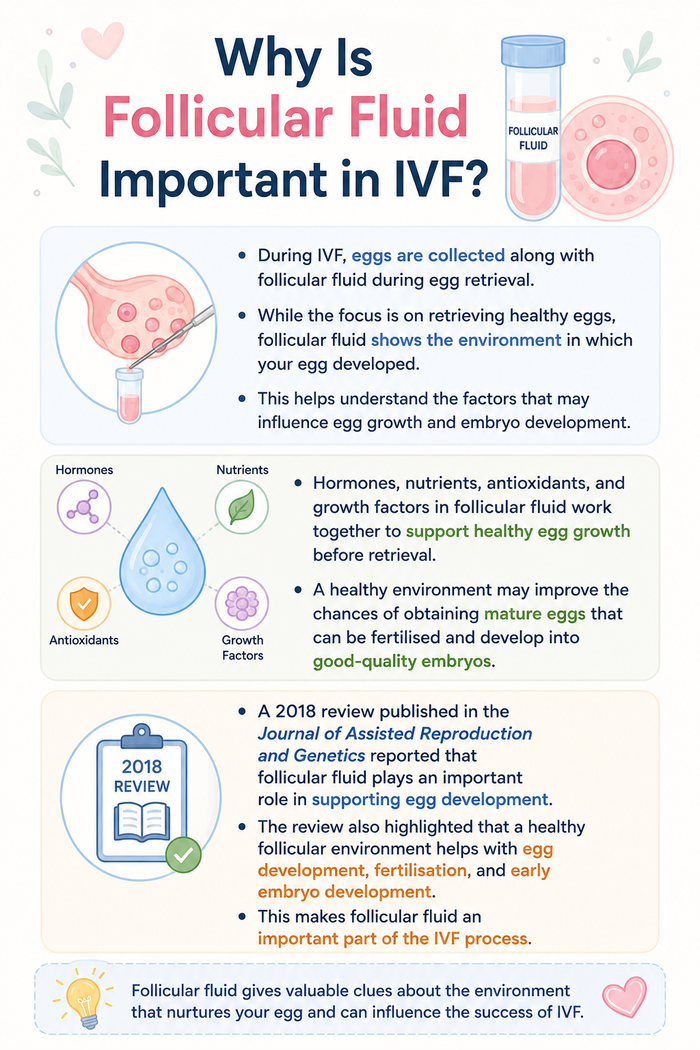
During IVF, your eggs are collected along with the follicular fluid during the egg retrieval procedure. Although the focus is on retrieving healthy eggs, the follicular fluid can also provide useful information about the environment in which your egg developed. This helps understand the factors that may influence egg growth and embryo development.The hormones, nutrients, antioxidants, and growth factors present in follicular fluid work together to support healthy egg growth before retrieval. If this environment is healthy, it may improve the chances of obtaining mature eggs that can be fertilised and develop into good-quality embryos.
A 2018 review published in the Journal of Assisted Reproduction and Genetics reported that follicular fluid plays an important role in supporting egg development. The review also highlighted that a healthy follicular environment helps with egg development, fertilisation, and early embryo development, making follicular fluid an important part of the IVF process.
Can Follicular Fluid Tell Doctors About Egg Quality?
Yes, follicular fluid can give your fertility specialist some information about your egg quality, but it cannot give the complete answer. Since your egg grows inside this fluid, changes in its composition may be linked to how well the egg develops.A 2020 study published in Reproductive Biology and Endocrinology analysed follicular fluid samples from 230 women undergoing IVF. The researchers found that age-related changes in follicular fluid were associated with lower egg quality. However, they concluded that follicular fluid should be used as one of several factors, not as a standalone test to assess egg quality.
What Factors Can Affect Follicular Fluid Quality?
Several factors can influence the quality of the follicular fluid surrounding your egg, including:- Increasing age
- PCOS
- Endometriosis
- Hormonal imbalances
- Smoking and unhealthy lifestyle habits
- Poor nutrition
- Obesity
- Oxidative stress
- Certain medical conditions
Can You Improve Follicular Fluid Health?
While you cannot directly control the quality of your follicular fluid, healthy lifestyle habits may help support your overall reproductive health and egg development.Here are some simple steps you can take:
- Eat a balanced, nutrient-rich diet
- Maintain a healthy weight
- Exercise regularly
- Avoid smoking and limit alcohol
- Manage stress and get enough sleep
- Take fertility supplements only if recommended by your fertility specialist
- Follow your doctor's advice for managing conditions such as PCOS or endometriosis
How Do Fertility Specialists Assess Egg Health During IVF?
Fertility specialists assess your egg health by looking at several factors instead of relying on a single test.These include:
- Your age
- Ovarian reserve (AMH and AFC)
- Follicle growth on ultrasound
- Egg maturity at the time of retrieval
- Fertilization rate
- Embryo quality and development
- Your overall medical and fertility history
Whether you’re trying to conceive or navigating IVF, you’re not alone. Join our supportive communities to connect, share, and find strength with others on the same journey.
FAQs on What Is Follicular Fluid and Why Does It Matter in IVF?
- Can PCOS affect follicular fluid?
Yes. PCOS can change the composition of follicular fluid due to hormonal and metabolic imbalances. These changes may affect the environment in which your egg develops. However, many women with PCOS achieve successful pregnancies with the right fertility treatment and medical guidance. - Can follicular fluid be different in each follicle?
Yes. The composition of follicular fluid may vary from one follicle to another, even within the same ovary. These differences can be influenced by the stage of follicle development and your overall reproductive health. - Does the colour of follicular fluid indicate egg quality?
Not usually. Follicular fluid is typically clear to light yellow. Its colour alone cannot determine egg quality. Fertility specialists rely on the overall clinical assessment, including egg maturity and embryo development, rather than appearance alone.