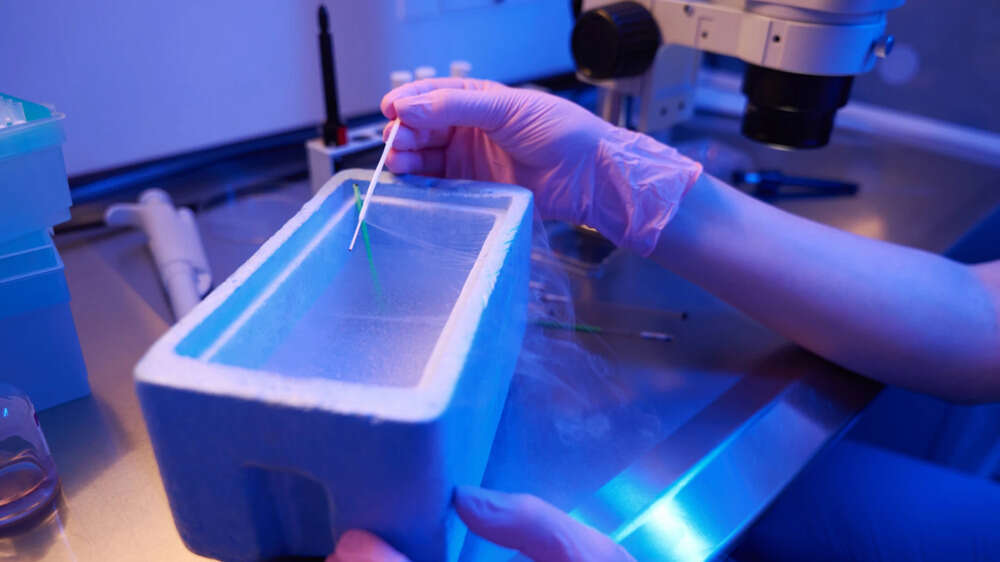
Fortunately, frozen eggs do not age when stored properly in a good lab facility.
What Does Egg Age Actually Mean?
Egg age refers to egg quality, which affects how well it can:
- Fertilise with sperm
- Develop into an embryo
- Lead to a healthy pregnancy
You are born with all the eggs you will have in your lifetime. Eggs are not produced continuously. Your egg number and quality decrease with age.
Natural decline in egg quantity
- You may have 1–2 million eggs at birth
- By puberty, around 300,000–500,000 remain
- Only about 300–400 eggs are actually released through ovulation over your reproductive years.
Natural decline in egg quality
Egg quality reduces with age mainly due to the following reasons.- Increased risk of chromosome errors
- Reduced energy production inside the egg (mitochondrial function)
- Weaker cell structures are needed for embryo development
How Does Egg Freezing Stop the Ageing Process?
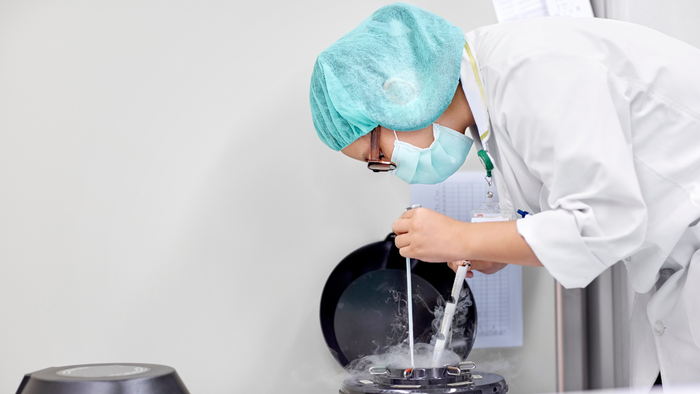
Egg freezing uses a process called vitrification, which is a rapid-freezing technique. It turns the egg’s internal environment into a glass-like state without forming ice crystals.An egg is stored in liquid nitrogen at around -196°C after vitrification. All biological activity pauses at such a low temperature.
- No cell metabolism continues
- No ongoing chemical reactions occur
- No “wear and tear” happens inside the egg
Why Frozen Eggs Don’t “Spoil” Like Frozen Food
It is understandable to compare eggs to frozen food, but they behave very differently.Frozen food can lose taste or texture over time due to the reasons mentioned below.
- Temperature fluctuations
- Freezer burn
- Dehydration
- Exposure to air
- Temperature remains stable
- Eggs stay in sealed protective containers
- They remain submerged in liquid nitrogen
- Exposure to air is controlled
Does Time in Storage Affect Egg Quality?
Time in storage does not reduce egg quality, as long as:- The storage conditions remain stable
- The lab follows proper safety standards
- Eggs remain continuously frozen
The following are important factors that should be taken into account.
- How old were you when the eggs were frozen?
- How many eggs were frozen?
- How do they respond after thawing?
- The sperm quality used for fertilisation.
- The health of your uterus when you try to conceive.
What Actually Determines Success With Frozen Eggs?
Success depends on many factors. Freezing preserves the eggs, but outcomes still rely on biology and medical steps.1. Your age at the time of freezing
Eggs frozen at a younger age tend to have higher genetic quality. This is why many doctors recommend freezing before 35 if possible.
2. The number of eggs you freeze
Not every egg will lead to a baby. Some eggs may:
- Not survive thawing
- Not fertilise
- Not develop into embryos
- Not implant successfully
3. Thaw survival rates
Survival rates can be high with modern vitrification. Many labs report thaw survival rates of 80–95%, depending on lab skill and egg quality.
4. Fertilisation method
Frozen eggs are fertilised using ICSI (Intracytoplasmic Sperm Injection), where one sperm is injected into one egg. This improves fertilisation chances after thawing.
Are There Any Risks to Egg Freezing and Storage?
Egg freezing is considered safe and widely used, but it is important to understand the real risks clearly.Freezing does not damage DNA by ageing
Eggs do not age in storage, but they can be impacted by the following aspects.- Lab handling errors
- Failure of the storage tank
- Poor freezing technique
Egg freezing does not guarantee pregnancy
Egg freezing improves your chances, but it cannot guarantee a baby. It is a fertility preservation option, not an assurance.How Can You Protect Your Frozen Eggs in Storage?
You can take a few practical steps to feel more confident:Choose a clinic with strong lab standards
Look for the following aspects when choosing a clinic:- Good success rates
- Experienced embryology team
- Transparent storage practices
- Backup systems for liquid nitrogen tanks
Ask about storage monitoring
Many high-quality clinics have:- Alarm systems
- 24/7 monitoring
- Strict protocols for tank refilling
Emotional and Social Aspects of Egg Freezing: Why This Knowledge Can Be Reassuring
Egg freezing can make you feel relief, hope, uncertainty, or even pressure from family or society. People may ask personal questions about marriage or timing.Understanding that frozen eggs do not age can be comforting. It helps remind you that you are simply giving yourself more time.
What Should You Do Next? A Simple Checklist
Here are some steps to take next:
- Confirm the number of eggs you have frozen
- Ask about the storage facility and its safety
- Understand your success rates
- Maintain a healthy lifestyle for a future pregnancy
- Talk with your doctor about timelines if you plan to conceive later
- Speak with your partner about egg freezing
You’re not alone in your journey when trying to conceive. Join our supportive community to connect with others, share experiences, and find encouragement every step of the way.
FAQs on Why Frozen Eggs Don’t “Age” in Storage
- Can frozen eggs expire after a certain number of years?
Frozen eggs do not expire if they are stored properly. The main concern is safe and continuous storage, not just time. - Is egg freezing better at 25 or 35?
Freezing at a younger age results in higher-quality eggs. However, the best time depends on your health, goals, and medical advice. - Do frozen eggs have the same success rate as fresh eggs?
Frozen eggs can have success rates close to those of fresh eggs when vitrification is used, and freezing is done at a younger age in a good lab.