In this article:
What Does Exclusive Breastfeeding Mean?
Exclusive breastfeeding means feeding a baby only breast milk for the first six months of life.The baby should not receive:
- Water
- Formula milk
- Animal milk
- Honey
- Juice
- Solid or semi-solid foods
What Does NFHS-6 Say About Breastfeeding Rates in India?
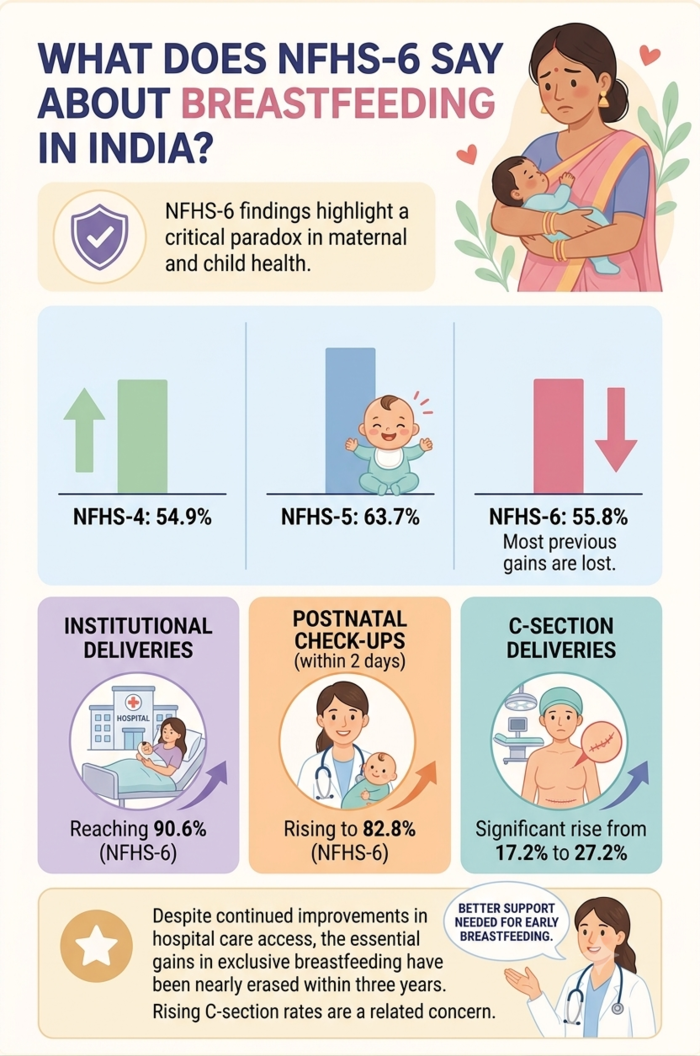
NFHS-6 recorded improvements in several related indicators.- Exclusive breastfeeding (infants under six months): 54.9% (NFHS-4) → 63.7% (NFHS-5) → 55.8% (NFHS-6)
- Institutional deliveries: Continued their upward trend, reaching 90.6% in NFHS-6
- Postnatal check-ups within two days of birth: Continued rising, reaching 82.8% in NFHS-6
- C-section deliveries: Rose from 17.2% to 27.2% nationally between NFHS-5 and NFHS-6
Why Have Exclusive Breastfeeding Rates Declined in India?
Mothers returning to work earlier
One of the biggest reasons is the growing number of women returning to work soon after childbirth. Many workplaces still lack:- Breastfeeding breaks
- Lactation rooms
- Safe milk storage facilities
- Flexible work schedules
Lack of breastfeeding support after delivery
Most mothers receive care during pregnancy and childbirth, but breastfeeding support often reduces after they leave the hospital. New mothers often experience:- Poor latch
- Breast pain
- Cracked nipples
- Concerns about milk supply
Misconceptions about breast milk
Some families believe that:- Babies need water during summer
- Formula is more nutritious
- Crying always means breast milk is insufficient
Limited family and community support
Breastfeeding requires time and support. When mothers have household responsibilities, care for older children, or limited family help, exclusive breastfeeding may become harder to continue.Aggressive marketing of formula milk
Although India has regulations on the promotion of infant milk substitutes, exposure to formula advertising through various channels may influence feeding choices in some families. Health experts continue to recommend breast milk as the first choice for healthy infants whenever possible.Rising rates of C-section deliveries
NFHS-6 data shows C-section deliveries rose from 17.2% to 27.2% nationally between NFHS-5 and NFHS-6. C-sections can delay:- Early skin-to-skin contact
- The first breastfeed after birth
- Mobility in the initial recovery period
How Can Indian Mothers Sustain Exclusive Breastfeeding?
The World Health Organization (WHO) recommends exclusive breastfeeding for the first six months, followed by continued breastfeeding with complementary foods until two years of age or beyond.Doctors recommend early, uninterrupted skin-to-skin contact after birth, including after a C-section, to support the first feed. Lactation counselling before hospital discharge, not only during pregnancy, helps mothers manage common problems such as latching difficulties or perceived low milk supply.
Workplaces with lactation rooms, along with family support that avoids early introduction of water, formula, or animal milk, also help mothers sustain exclusive breastfeeding through the six-month mark.
The decline in exclusive breastfeeding reported by NFHS-6 is an important reminder that improving maternal healthcare alone is not enough. Supporting mothers with practical guidance, workplace policies, and continued breastfeeding counselling can help more babies receive the nutrition they need during the most critical months of life.
Whether you’re pregnant, a new mom, or navigating postpartum, you don’t have to do it alone. Join our support group to connect, share, and support one another.
FAQs on Breastfeeding Rates in India Have Declined, NFHS-6 Data Shows: Here's Why
- How long should mothers exclusively breastfeed according to Indian guidelines?
The WHO and the Indian Academy of Pediatrics recommend exclusive breastfeeding for the first six months of life, followed by continued breastfeeding with complementary feeding. - Why has exclusive breastfeeding declined even though institutional births have increased?
Experts link it to rising C-section rates, short maternity leave, limited workplace lactation support, and early introduction of formula or top feeds. - What foods should a breastfeeding mother eat to increase milk supply?
A breastfeeding mother needs a balanced diet with adequate protein, iron, and fluids. Foods like dals, leafy greens, milk, nuts, and whole grains support supply and recovery.