
To know more about these and other frequently asked questions, we got in touch with Dr Manish A Balde, Consultant Paediatrician and Neonatologist, Motherhood Hospitals, Gurgaon.
Everyday Questions Parents Have
As indicated by Dr Balde, there is nothing definite about the experience of being a parent, which leads to numerous questions, such as how much food their baby gets, whether they are growing normally, why they become ill all the time, and if weather changes will have any effect on them. These are common concerns shared by new parents constantly.There is no one answer to any of the questions mentioned above because each child is different and, therefore, requires unique care and attention. It is essential to have a trustworthy source of information and a doctor to turn to from time to time rather than to rely on assumptions and comparisons.
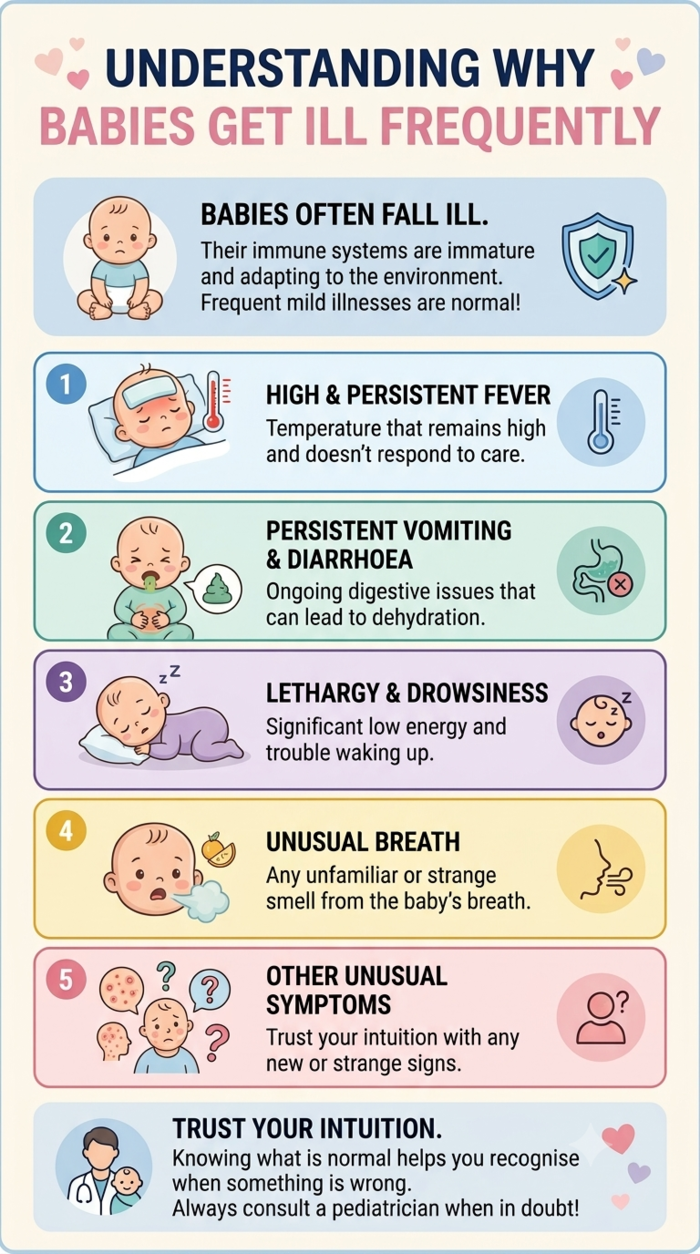
Understanding Why Babies Get Ill Frequently
In most cases, babies fall ill often, and the issue of illnesses and infections in infants is one of the most common complaints that Dr Balde receives. The truth is, children may be sick quite often in the first few years of life because their immune systems are immature.This implies that frequent mild illnesses, colds, fever, and stomach discomfort are often simply the child's immune system adapting to the environment, and they do not necessarily mean anything bad. Nevertheless, it is good to pay attention to the presence of some peculiar symptoms and be able to take action in time because recognising what is normal will definitely help you notice if there is something wrong.
There are a few conditions that deserve your special attention:
- The presence of a high and persistent fever
- Vomiting and diarrhoea that persist
- Lethargy and difficulty waking the child
- The breath that seems unusual
- Any unusual symptoms at all
Development, Learning, Behaviour and Screen Time Worries
Other common worries include development, learning ability, behaviour, and screen time. All of these issues increase as the child gets older, evolving from worries around feeding and sleeping to learning abilities, behaviour, and habits as they get older.Every child develops differently, but if there is a concern that is significant and persists, you should seek out the opinion of an expert.
Including Regular Check-Ups into Routine
Regular check-ups need to be arranged by parents to ensure that their children can develop feeling confident. These check-ups provide the chance for parents to discuss even the most minor issues promptly and monitor how the development of their kid goes in accordance with their personal rate of development.The inclusion of this procedure in a routine, rather than visiting a specialist only when it becomes extremely necessary, usually makes such issues easier to solve due to the presence of an established source of advice.
When to Seek Help from a Child’s Doctor
The following instances require consultation with a child’s doctor:- A recurring or atypical pattern of illness
- Feeding or developmental concerns that persist even with regular meals and routines
- Concerns regarding development, behaviour, or screen time which are significant and persistent
- A symptom that seems different from the usual pattern of the child
- Simple desire to reassure oneself or seek information about a worry
Being a parent means dealing with numerous concerns, and rarely is there only one way to resolve most of them. Regular visits, a focus on consistency rather than comparison, and discussion with the doctor when an issue seems significant can be beneficial for addressing such concerns.
Whether you’re pregnant, a new mom, or navigating postpartum, you don’t have to do it alone. Join our support group to connect, share, and support one another.
FAQs on Every Parent Worries: Common Fears and How to Handle Them
- How often should my baby have routine check-ups?
Routine check-ups will depend on the age of your baby. In general, the younger the child, the more frequent the check-ups need to be. However, a paediatrician will be able to suggest an appropriate schedule for each individual baby. - Are fluctuating appetites in children normal?
Appetite is not always consistent. There are many reasons for this, such as teething, growing, or some other kind of sickness. It is more important to keep to consistent and balanced mealtimes than to focus on any particular day's diet. - When should I start worrying about too much screen time and consult my doctor?
There are no particular ages at which screen time can be a problem. Nevertheless, if it affects your child's sleep or his behaviour, it would be best if you seek advice from your doctor.