In this article:
When Can a Baby Taste Food in the Womb?
A baby's taste buds begin forming by around eight weeks of pregnancy and become functional between 13 and 15 weeks. Taste receptors and other sensory systems become functional before birth, allowing the foetus to detect chemical cues in the amniotic fluid.The foetus begins swallowing amniotic fluid between 12 and 13 weeks of gestation, so by the second trimester, taste is already an active sense.
By around 34 weeks, babies swallow less amniotic fluid when it tastes bitter and more when it tastes sweet, showing a clear response to flavour rather than a passive reflex.
How Does the Mothers Diet Affect Amniotic Fluid?
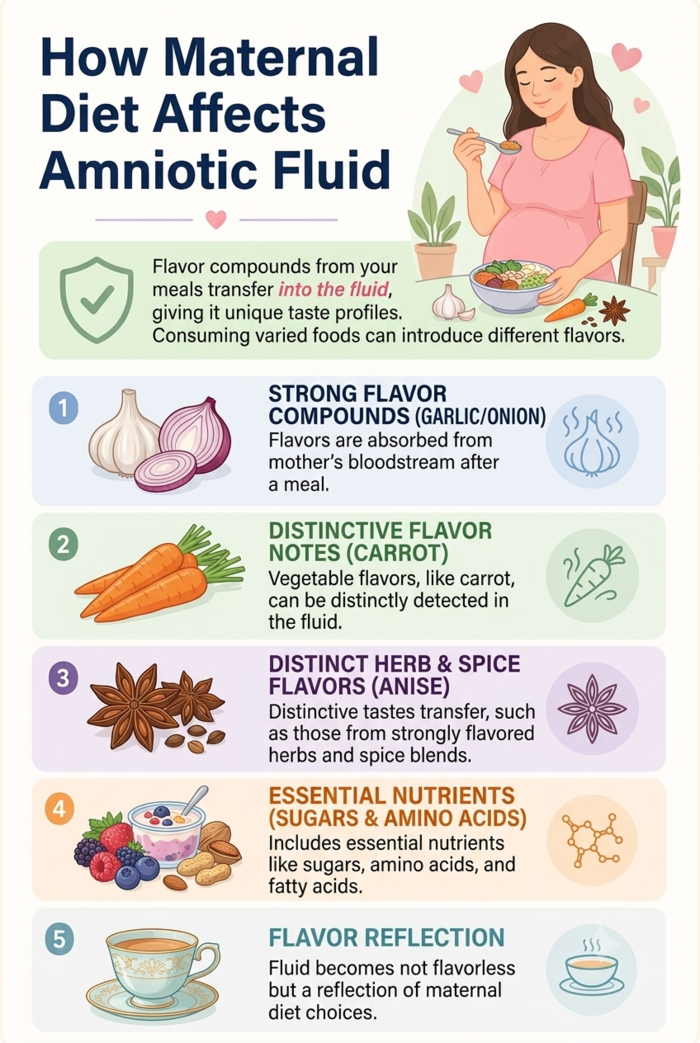
Amniotic fluid is not flavourless. It contains sugars, amino acids, and fatty acids alongside flavour compounds absorbed from the mother's bloodstream after a meal, along with flavours from the foods the mother eats.A review of the available research found consistent evidence that flavours transfer after mothers consume foods or substances containing flavours such as:
- Garlic
- Carrot
- Anise
- Certain other strongly flavoured foods
During pregnancy, the flavours from what the mother eats can change the taste of the fluid. As the baby's taste and smell systems grow, they are exposed to flavours before birth. This doesn't mean the baby is eating the food; nutrients reach the baby through the placenta, while some flavour compounds get into the fluid.
Can Eating Spicy Food Make the Baby Like Spicy Food?
Eating spicy foods during pregnancy does not mean your baby will definitely prefer spicy food after birth.Indian diets commonly include spices such as cumin, turmeric, ginger, garlic, cardamom and chilli. Some flavour compounds from a mother's diet may contribute to the flavour profile of amniotic fluid; however, there is not enough evidence to say that eating a particular spice during pregnancy will create a specific food preference in the child.
Food preferences develop through many influences, including genetics, repeated exposure to foods, family eating patterns, and experiences after birth.
Can a Varied Pregnancy Diet Shape a Child's Food Preferences Later?
Flavour learning does not stop at birth. Infants exposed to a flavour such as carrot in amniotic fluid or breast milk showed fewer negative facial expressions when later given carrot-flavoured food, compared with infants who had no prior exposure.Flavours from the mother's diet during breastfeeding can also reach breast milk; infants can detect diet-linked flavours such as garlic, vanilla, and carrot within hours of a single meal.
Can a Baby Recognise Flavours After Birth?
Flavour memory appears to last beyond birth. Newborns can recognise their own amniotic fluid. When researchers applied amniotic fluid to one breast but not the other, babies preferred the breast carrying the familiar scent, although this preference fades within a few days.In a study, infants showed greater acceptance of some flavours they had been exposed to before birth.
Babies whose mothers consumed anise during pregnancy also recognised the smell of anise on a cotton swab in their first week of life. This shows that prenatal taste exposure leaves a short-term imprint that carries into early infancy.
A mother's plate during pregnancy can introduce your baby to a changing world of flavours, but your baby's future food preferences will develop through many experiences before and after birth.
Whether you’re pregnant, a new mom, or navigating postpartum, you don’t have to do it alone. Join our support group to connect, share, and support one another.
FAQs on Can Babies Taste What You Eat During Pregnancy?
- Can the baby taste spicy food like chilli or garlic in the womb?
Yes. Flavour compounds from spices such as garlic pass into amniotic fluid, and there is no evidence that normal spice intake in a balanced diet is harmful. - Does what I eat during pregnancy affect my baby's food preferences after birth?
Research shows babies exposed to a flavour before birth, such as carrot or garlic, are more likely to accept and enjoy that same flavour in food later in infancy. - Should I avoid certain foods to protect my baby's sense of taste?
A varied, balanced diet does not need to be restricted for this reason. Any specific dietary restrictions should be guided by your doctor, not by taste-related concerns.