In this article:
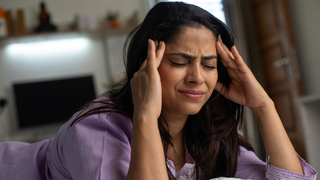
Sometimes, changes in oestrogen levels may trigger headaches after your pregnancy. Headaches due to a more serious cause happen rarely.
Fortunately, headaches experienced after childbirth can be managed. Here’s what you need to know about the causes and treatments of headaches after pregnancy.
Our experts explain different types and causes of headaches that may occur after childbirth. Also, know what to expect and when you should consult for medical advice.
What Types of Headaches Can You Have After Childbirth?
Not every postpartum headache has the same cause. Some are related to the normal recovery process (primary headaches), while others (secondary headaches) may need medical attention.
| Type of headache | What it feels like | Common cause |
| Tension headache | A dull, tight pain on both sides of the head or around the forehead | Stress, tiredness, lack of sleep or muscle tension |
| Migraine | Throbbing pain, usually on one side, sometimes with nausea or sensitivity to light and sound | Hormonal changes or a history of migraines |
| Post-dural puncture headache | Pain that worsens when sitting or standing and improves when lying down | Leakage of spinal fluid after an epidural or spinal anaesthetic |
| Headache due to high blood pressure | Severe or persistent headache, often with blurred vision | Postpartum pre-eclampsia |
| Headache caused by another medical condition | May occur with fever, neck stiffness, weakness, or confusion | Infection, blood clot, or, rarely, stroke |
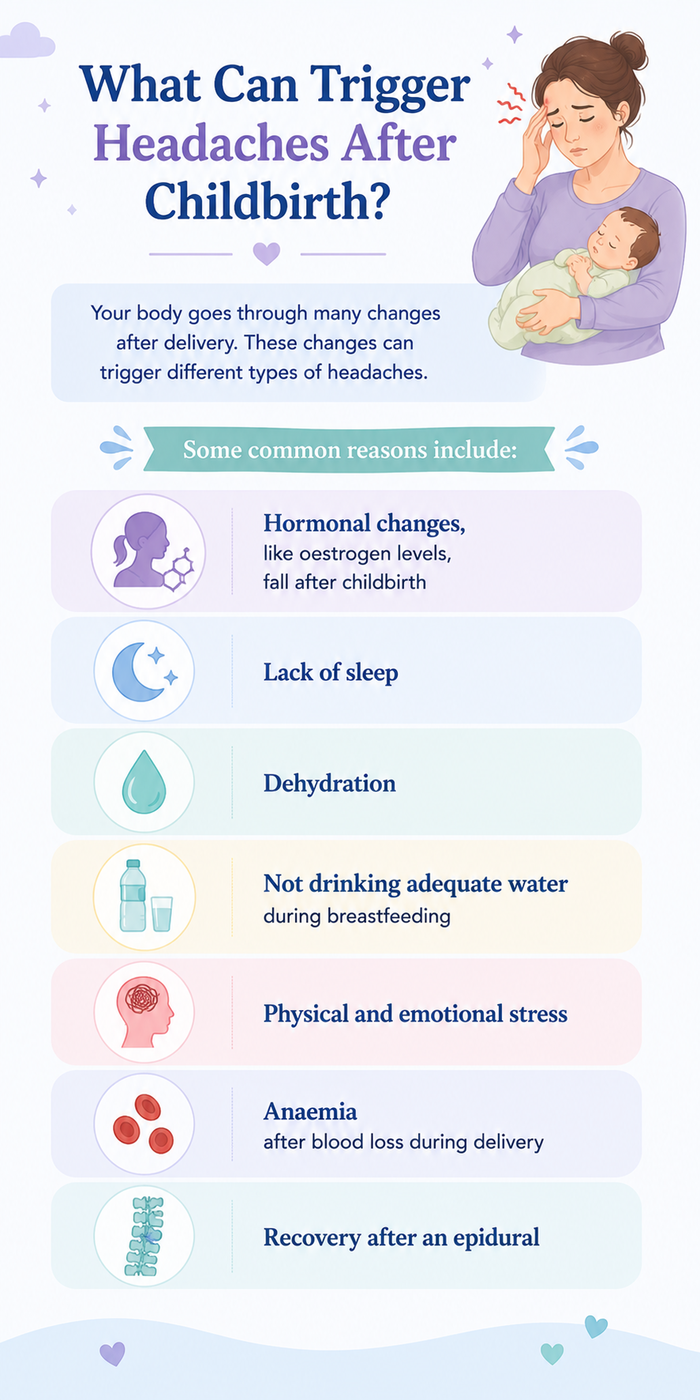
What Can Trigger Headaches After Childbirth?
Your body goes through many changes after delivery. These changes can trigger different types of headaches.
Some common reasons include:
- Hormonal changes, like oestrogen levels, fall after childbirth
- Lack of sleep
- Dehydration
- Not drinking adequate water during breastfeeding
- Physical and emotional stress
- Anaemia after blood loss during delivery
- Recovery after an epidural
When Should You Reach Out For Medical Help?
Most headaches improve with rest and simple self-care. However, some symptoms should never be ignored. These are:
- Sudden and severe headache
- Blurred or double vision
- High blood pressure
- Fever
- Seizures
- Confusion
- Weakness or numbness
- Difficulty speaking
- Postpartum pre-eclampsia
- A severe infection
- A blood clot or stroke (rare)
What Can You Do to Feel Better?
If your doctor has ruled out a serious cause, these simple steps may help ease your headache.
- Drink enough water throughout the day
- Eat regular, balanced meals
- Rest whenever your baby is asleep, if possible
- Stretch your neck and shoulders gently
- Reduce screen time if bright light worsens your symptoms
- Accept help from family or friends while you recover
- Take pain-relieving medicines only as advised by your doctor, particularly if you are breastfeeding
Can You Reduce the Risk of Headaches After Childbirth?
You cannot prevent every headache, but healthy habits may reduce the chances of getting one, such as- Staying hydrated
- Eating balanced meals
- Resting adequately
- Accept help
Prioritising your health while caring for a newborn can help you recover faster and take better care of your child. However, you can’t always prevent headaches that you might experience after childbirth. But consulting your doctor on time and following simple remedies can help you manage them.
Whether you’re pregnant, a new mom, or navigating postpartum, you don’t have to do it alone. Join our support group to connect, share, and support one another.
FAQs on What Causes Headaches After Childbirth?
- Which type of headache is most common after childbirth?
One of the most common types of headaches that may happen after childbirth is tension headaches. They are often linked to tiredness, stress, poor sleep, and muscle tension during the postpartum period. - Can an epidural cause headaches after childbirth?
Some people develop a post-dural puncture headache after an epidural or spinal anaesthesia. The pain usually becomes worse when sitting or standing and improves when lying down. - When should I worry about a headache after childbirth?
Get immediate medical care for sudden and severe headaches that do not improve with rest or occur with blurred vision, fever, seizures, confusion, weakness, or high blood pressure.