“Untreated migraine during pregnancy can increase the risk of pre-eclampsia, preterm birth, or low birth weight.”
- Dr Khushboo Saxena, Senior Consultant, Obs & Gynae, ShardaCare-HealthCity
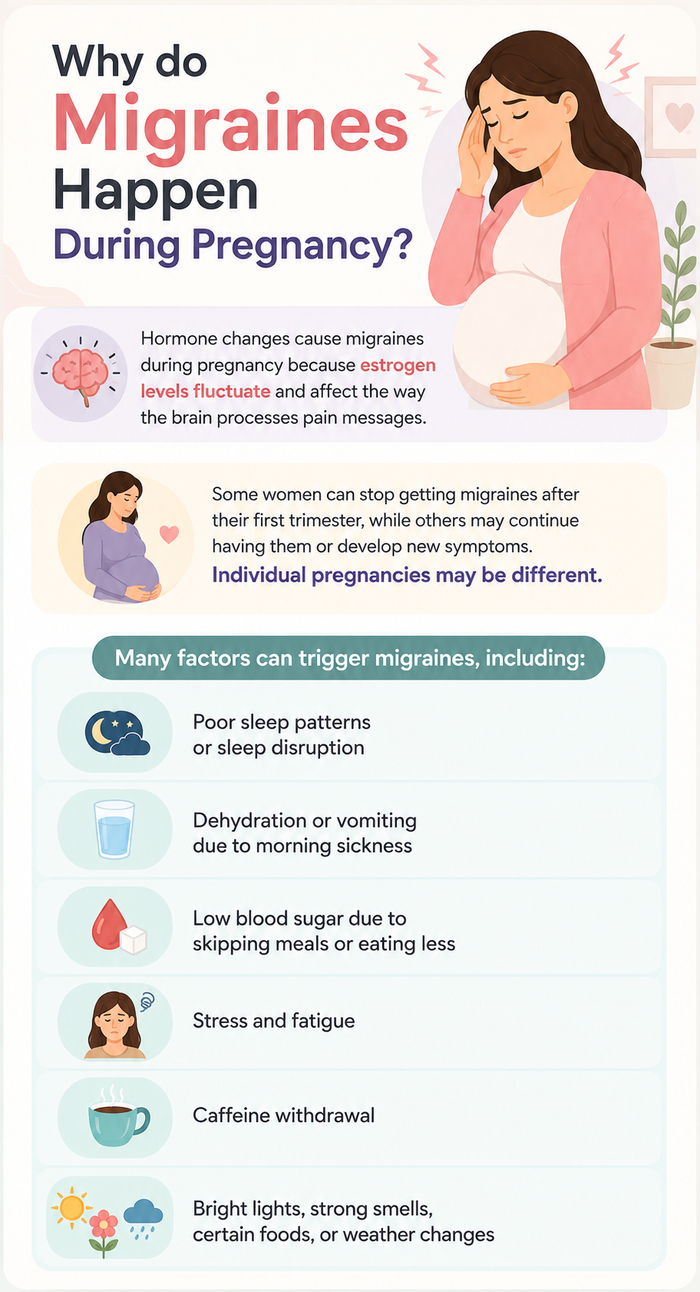
Why do Migraines Happen During Pregnancy?
Hormone changes cause migraines during pregnancy because estrogen levels fluctuate and affect the way the brain processes pain messages.Some women can stop getting migraines after their first trimester, while others may continue having them or develop new symptoms. Individual pregnancies may be different.
Many factors can trigger migraines, including:
- Poor sleep patterns or sleep disruption
- Dehydration or vomiting due to morning sickness
- Low blood sugar due to skipping meals or eating less
- Stress and fatigue
- Caffeine withdrawal
- Bright lights, strong smells, certain foods, or weather changes
What Are The Symptoms of Migraine?
Signs and symptoms of migraine during pregnancy include the following:- Severe or throbbing pain felt on one or both sides of the head
- Being sensitive to smells, sounds, or light
- Nausea, vomiting, and stomach aches
- Having trouble with appetite, sweats, chills, and sensitivity of the head
- Seeing something flashing and experiencing loss of vision, tingling or speech difficulty as a result of an aura before the headache occurs
Safe Ways to Manage Migraines During Pregnancy
Dr Khushboo Saxena recommends using safe, pregnancy-appropriate migraine treatment that focuses on relief, trigger control, and medical guidance rather than self-medicating.First-Line Relief
- Rest: Go to a quiet, dark room when the migraine starts
- Cold Compress: Use a cold compress on the forehead or neck using an ice pack
- Stay Hydrated: Drink water regularly to prevent dehydration
- Don't Skip Meals: Eat small, frequent meals to avoid low blood sugar
- Get Enough Sleep: Keep sleep and wake times consistent, aiming for 7-9 hours of sleep
- Relax: Try deep breathing, meditation, or pregnancy-safe yoga
- Gentle Massage: Neck and shoulder stretches or a light massage help with muscle tension
Medicines to Discuss
- Paracetamol is commonly considered the first pain-relief option in pregnancy
- Anti-nausea medicines may help if vomiting is part of the episode
- Some women may need doctor-approved migraine medications if symptoms are severe
- Avoid taking medicines like ibuprofen, diclofenac, or combiflam, especially after 20 weeks of pregnancy
Trigger Control
- Limit known triggers such as skipped meals, stress, bright lights, and strong smells
- Reduce caffeine (tea/coffee), keep it under 200 mg per day; that is about 1-2 cups
- Manage screen time and eye strain with regular breaks
How is Migraine Different From Other Headaches During Pregnancy?
Migraines in pregnancy are usually throbbing, one-sided headaches, while other pregnancy headaches are often dull, tight, or pressure-like. It is especially important to distinguish migraine from headaches in the last 3 months of pregnancy, because a new or severe headache may signal high blood pressure or preeclampsia and needs medical attention.When Should You Seek Medical Help?
According to Dr Khusboo Saxena, most migraines are harmless, but there are symptoms you should not ignore. Call your doctor if you:- Have a sudden and excruciating headache, which is unlike your usual migraine
- Present signs of blurred vision, speech difficulties, or trouble getting up
- Experience headaches caused by either high blood pressure or some inflammation
- Find that your headaches become frequent or hard to manage
Complications of Untreated Migraines During Pregnancy
Untreated migraines during pregnancy can lead to the following complications:- Poor sleep and exhaustion
- Stress and anxiety
- Loss of appetite
- Possible risk of pre-eclampsia or high blood pressure
- In some cases, low birth weight or premature birth
- Severe headaches may hide a more serious headaches
Whether you’re pregnant, a new mom, or navigating postpartum, you don’t have to do it alone. Join our support group to connect, share, and support one another.
FAQs on Managing Migraines During Pregnancy
- Are migraines during pregnancy dangerous for the baby?
Usually, migraines are not directly dangerous to the baby, but they can be linked with pregnancy complications like high blood pressure or preeclampsia, so new or severe headaches need medical review. - Why do some women get more migraines during early pregnancy?
Early pregnancy can worsen migraines because hormone levels shift quickly, especially estrogen, and that can make migraine pathways more sensitive. Nausea, vomiting, dehydration, low blood sugar, poor sleep, and stress in the first trimester can also trigger attacks. - Do migraines go away after delivery?
Not always. Many women improve during breastfeeding or as hormones stabilise, but migraines often return in the first days to weeks after delivery, and some people keep having them postpartum.