
In this article:
The decision to continue, stop, or change warfarin is never simple. Doctors usually balance two important concerns at the same time:
- Safety of the pregnant individual
- Safety of the developing baby
What Is Warfarin and Why Is It Used?
Warfarin is a medicine that belongs to the class of blood thinners (anticoagulants). It reduces the ability of blood to clot. Therefore, such medication can help you manage conditions, including:
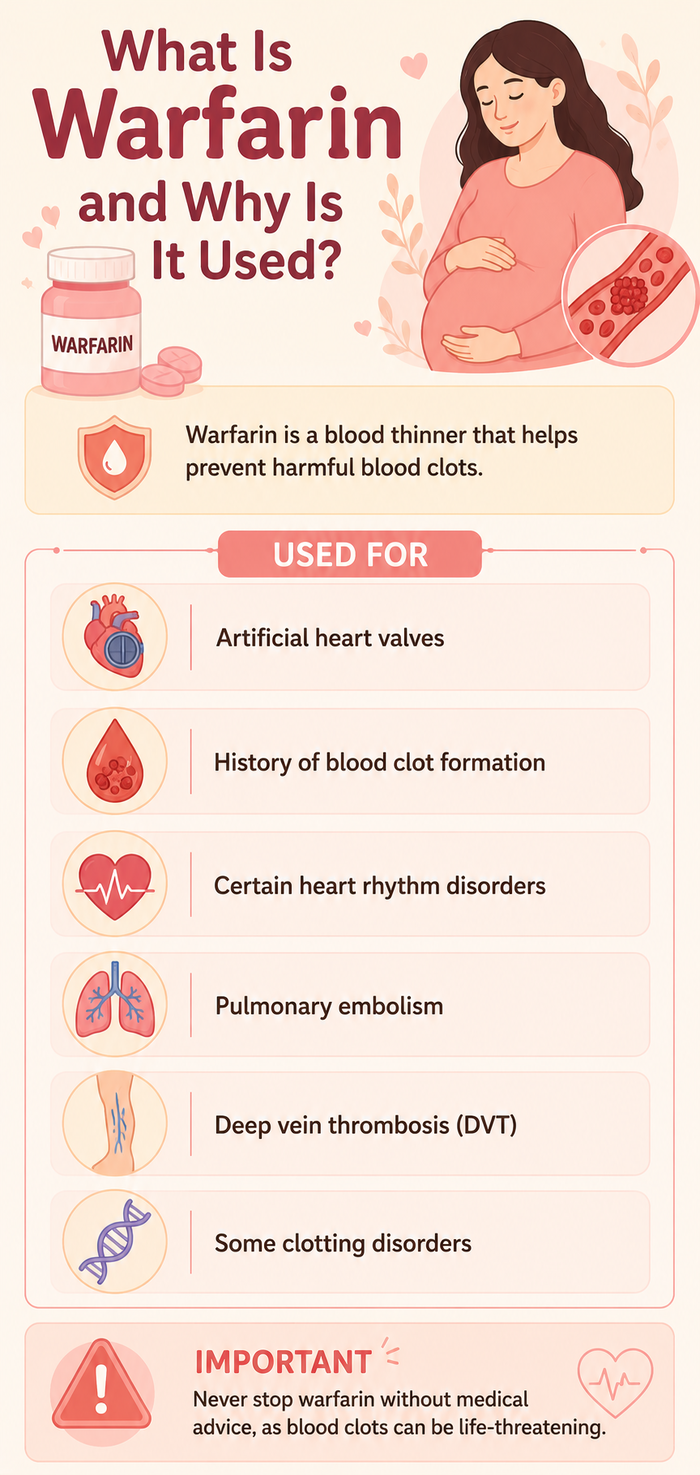
- Artificial heart valves
- History of blood clot formation
- Certain heart rhythm disorders
- Pulmonary embolism
- Deep vein thrombosis
- Some clotting disorders
Managing Pregnancy Safely While Taking Warfarin
It might be challenging to manage blood-clotting disorders during pregnancy. Every scan, medication, and even minor symptoms may raise your anxiety levels.
And if warfarin is added to your prescription, it's very natural that the fear concerning your baby’s overall safety may increase.
However, many people have safe pregnancies and deliver healthy babies even after using warfarin throughout the period with regular monitoring and timely care.
Do not, under any circumstances, make decisions about your medication on your own. Your doctor will carefully consider the hazards of taking warfarin during pregnancy in light of the risks of untreated blood clots.
Why Is Warfarin Risky During Pregnancy?
Warfarin can cross the placenta and reach the developing baby. This is the main reason it is used cautiously during pregnancy.
The risk is usually highest during the first trimester, especially between 6 and 12 weeks of pregnancy. During this stage, the baby’s organs and bones are developing rapidly.
Possible complications linked to warfarin exposure may include:
- Birth defects
- Problems with bone development
- Facial abnormalities
- Growth restriction
- Bleeding in the baby
- Pregnancy loss in some cases
- Warfarin embryopathy (rare)
- The dose of warfarin
- The stage of pregnancy
- Your underlying medical condition
- Individual pregnancy factors
Can Warfarin Ever Be Continued During Pregnancy?
Yes, your doctor may decide on this switch only after careful evaluation and thorough analysis of the possible risks.
Management usually involves:
- Constant and thorough monitoring
- Regular blood testing
- Specialist supervision
- Individual risk assessment
What Involves INR Monitoring, And Why Is It Important?
Regular INR (International Normalised Ratio) testing becomes crucial when it comes to warfarin use, especially during pregnancy. This test involves the measurement of how much time it takes to clot.
If INR becomes too high:
- Bleeding risk may increase
- Blood clot risk may increase
Safer Alternatives to Warfarin During Pregnancy
Heparin-based anticoagulants may be considered safer during pregnancy because they barely cross the placenta.
These include:
Low-Molecular-Weight Heparin (LMWH)
This is one of the most commonly prescribed anticoagulants during pregnancy. This choice is because of the following reasons:- Safer for the baby
- Action is more precise
- Fewer monitoring requirements compared to warfarin
Unfractionated Heparin
This option may sometimes be used:- Near delivery
- In high-risk pregnancies
- When there is a need for frequent dose adjustments
- Your medical history
- Pregnancy stage
- Clotting risk
- Bleeding risk
Special Care Needed During Delivery
Anticoagulation management becomes even more important close to labour and delivery.
Blood-thinning medicines may increase bleeding risk during childbirth. Because of this, doctors usually plan delivery carefully in advance.
Your healthcare team may:
- Adjust medication timing
- Temporarily stop certain anticoagulants
- Monitor clotting levels closely
- Coordinate with obstetricians and physicians together
Warning Signs You Should Not Ignore
You should seek urgent medical help if you notice:- Heavy bleeding
- Severe headache
- Sudden swelling in one leg
- Chest pain
- Breathing difficulty
- Reduced foetal movements
- Severe abdominal pain
Is Breastfeeding Safe While Taking Warfarin?
Warfarin is generally considered compatible with breastfeeding in many cases because only very small amounts pass into breast milk.
However, you should still:
- Inform your doctor that you are breastfeeding
- Attend regular follow-ups
- Watch for unusual bleeding symptoms in yourself or the baby
Emotional Concerns During Pregnancy With Anticoagulation
Sometimes, taking care of yourself and your developing baby during a high-risk pregnancy may drain you emotionally. It may be due to the following:
- New medication is being added now and then
- Frequent scans and blood testing
- Anticipated delivery complications
Many pregnancies involving anticoagulant treatment are managed successfully with:
- Early medical care
- Regular monitoring
- Clear communication with doctors
- Proper treatment planning
You can feel better supported on your way to a healthy delivery with regular check-ups, open communication with your care team, and the emotional support of loved ones.
Most importantly, you should remember that anticoagulants are prescribed only if the benefits outweigh the risks. So, trust your care providers to lead a healthy pregnancy.
Whether you’re pregnant, a new mom, or navigating postpartum, you don’t have to do it alone. Join our support group to connect, share, and support one another.
FAQs on Is Warfarin Safe During Pregnancy? Risks and Alternatives Explained
- Can the use of warfarin during pregnancy cause birth defects?
Yes, it may increase the risk. Doctors may still use it in certain high-risk situations where stopping it could seriously affect the pregnant individual’s health. The decision is usually made after careful specialist evaluation. - Which trimester carries the highest risk with warfarin?
The first trimester is often perceived as the most critical period for the possibility of warfarin-related birth defects. - Can your doctor prescribe a safer alternative to warfarin during pregnancy?
Yes. Considering your and your baby’s safety, your doctor may prescribe heparin-based anticoagulants in place of warfarin. However, this transition will be done under strict medical supervision to prevent possible complications.