In this article:
Causes of Hand, Foot and Mouth Disease in Children
HFMD is caused by a group of viruses called enteroviruses, most commonly Coxsackievirus A16 and, less often, Enterovirus 71.The virus spreads through droplets from coughing or sneezing, contact with fluid from blisters, and contact with an infected child's stool.
Toddlers frequently touch shared toys and surfaces that may be contaminated and then put their hands in their mouths, which makes nurseries and play areas common sites of transmission.
Early Signs of Hand, Foot and Mouth Disease
HFMD symptoms may appear in stages; the first signs may not immediately point to the infection. A toddler may initially have:- Fever
- Poor appetite
- Sore throat
- A general sense of unease
- Irritability
- Increased drooling
A rash follows on the palms of the hands and soles of the feet, and sometimes on the knees, elbows, or buttocks. The rash may look flat or raised, and can turn into small blisters, though it is usually not itchy.
Mouth sores can make swallowing painful, causing a toddler to refuse drinks. Fewer wet nappies, a dry mouth, no tears when crying, or unusual sleepiness may indicate dehydration and need prompt medical assessment.
Treatment of Hand, Foot and Mouth Disease
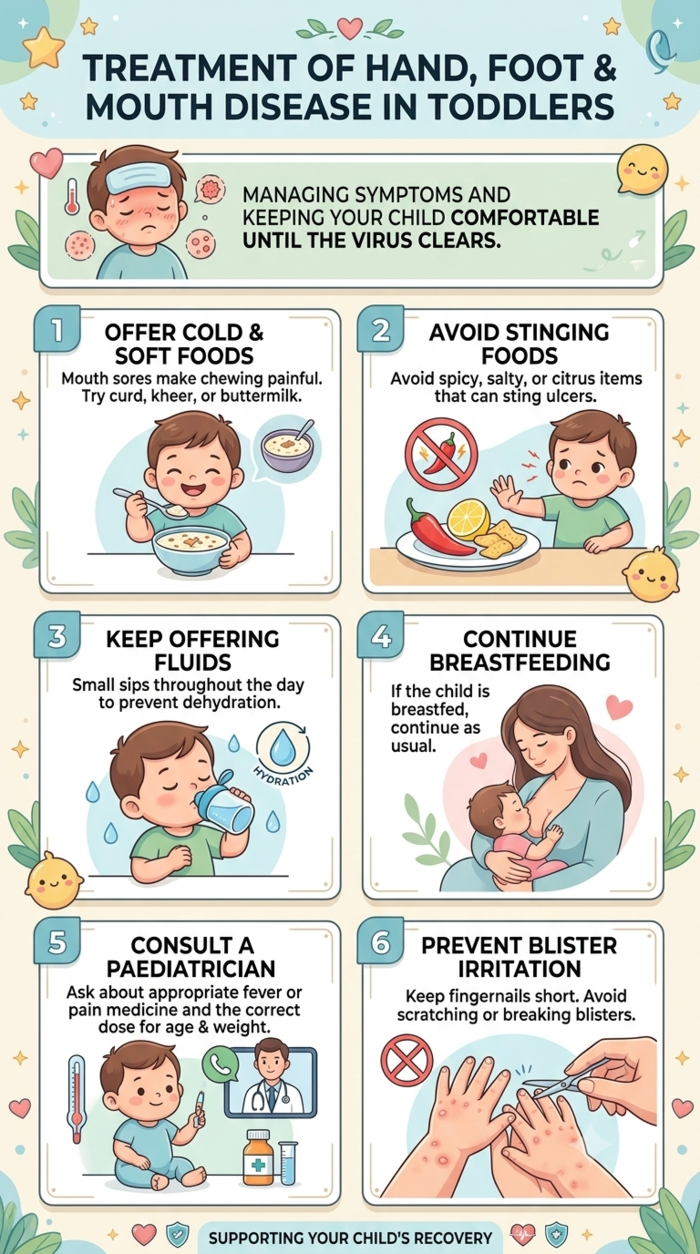
There is no specific antiviral treatment for HFMD. Care focuses on managing symptoms until the virus clears on its own. The main goals are to control discomfort and prevent dehydration:- Offer cold or soft foods such as curd, kheer, or buttermilk, since mouth sores make chewing painful
- Avoid spicy, salty, or citrus foods that can sting the ulcers
- Keep offering fluids in small sips throughout the day to prevent dehydration
- Continue breastfeeding if the child is breastfed
- Ask your paediatrician about the appropriate fever or pain medicine and dose for your child's age and weight.
- Keep the child's fingernails short and avoid scratching or breaking blisters.
When Should You See a Doctor?
Most children with HFMD recover without serious problems, but medical advice is important if your toddler is not drinking enough or shows signs of dehydration.Seek medical care if your child:
- Is younger than six months old
- Has a weakened immune system
- Shows signs of dehydration such as dry lips, fewer wet nappies, or no tears while crying
- Has persisting fever beyond three days
- Has severe mouth pain that stops the child from drinking fluids
Prevention of the Spread of Hand, Foot and Mouth Disease
Since HFMD is highly contagious, hygiene is extremely crucial for limiting its spread.- Wash hands frequently with soap and water, especially after nappy changes, before meals, and after toilet use.
- Clean and disinfect frequently touched surfaces, toys, and doorknobs.
- Avoid sharing cups, spoons, towels, and other personal items.
- Keep your child away from close contact with others while they are unwell.
Whether you’re pregnant, a new mom, or navigating postpartum, you don’t have to do it alone. Join our support group to connect, share, and support one another.
FAQs on Hand, Foot, and Mouth Disease in Toddlers: What Parents Should Know
- Can adults catch hand, foot, and mouth disease from their toddler?
Yes, though it is less common. Adults, especially parents in close contact with an infected child, can develop mild symptoms or none at all while still being contagious. - How long is a child contagious with HFMD?
A child is most contagious during the first week of illness, but the virus can remain in stool for weeks after symptoms disappear. - Is there a vaccine for hand, foot, and mouth disease in India?
Currently, there is no vaccine available in India. Prevention relies on hand hygiene, disinfecting surfaces, and limiting contact with infected children.