In this article:
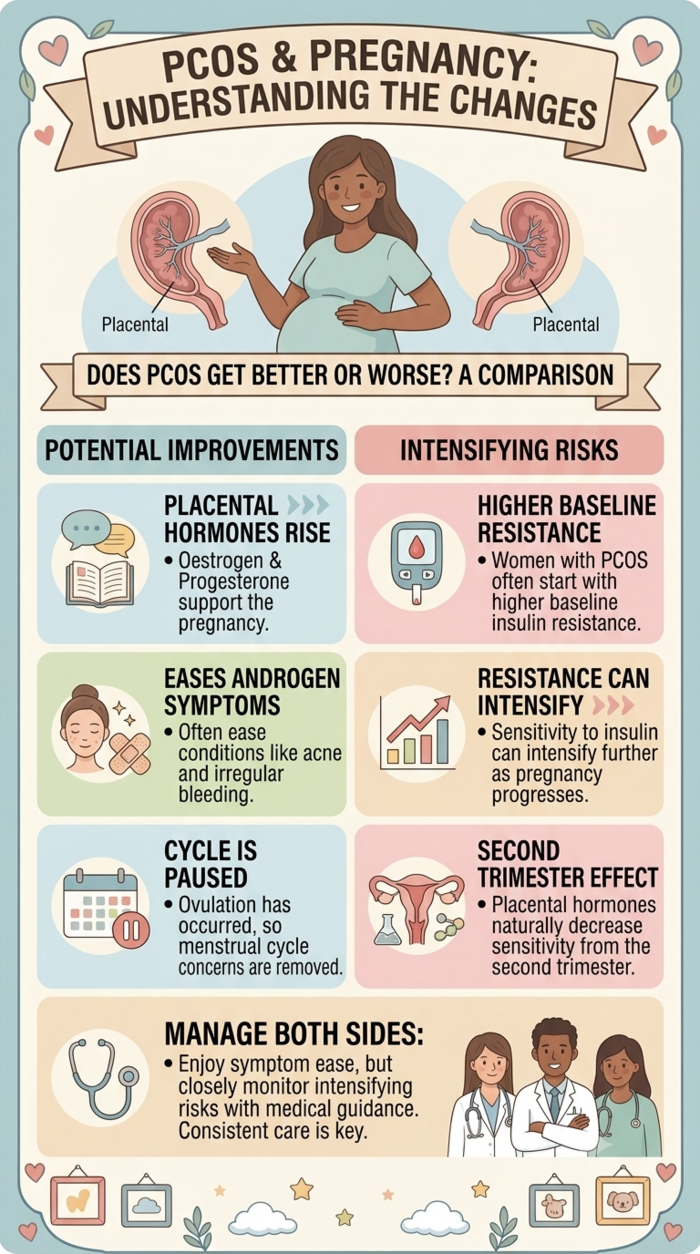
Does PCOS Get Better or Worse During Pregnancy?
Once implantation occurs, the placenta starts producing hormones that support the pregnancy, and rising oestrogen and progesterone often ease PCOS symptoms linked to excess androgens, such as acne and irregular bleeding, since ovulation has already occurred and the menstrual cycle is no longer the concern.However, women with PCOS already carry higher baseline insulin resistance, and this can intensify as pregnancy progresses. From the second trimester, placental hormones naturally reduce the body's sensitivity to insulin in all pregnant women.
Why Is Gestational Diabetes Risk Higher With PCOS?
Insulin resistance is a core feature of PCOS; pregnancy adds further strain on the body's ability to regulate blood sugar.Research shows women with PCOS have a significantly higher risk of developing gestational diabetes than women without the condition, with the risk roughly 1.6 times higher. This matters even more in India, where the prevalence of gestational diabetes in pregnant women is already estimated at 13% nationally.
A large FOGSI-DIPSI study found about one-third of pregnant women were diagnosed with GDM in the first trimester itself, and over a quarter of these women had a history of foetal loss in a previous pregnancy, underlining why early screening matters more than waiting for the standard 24 to 28 week test.
Does PCOS Increase Miscarriage Risk in Early Pregnancy?
A study links PCOS to a higher chance of early pregnancy loss, largely tied to insulin resistance and elevated androgen levels affecting the uterine lining.Another study on frozen embryo transfers found the late miscarriage rate in non-obese women with PCOS was significantly higher than in non-PCOS controls, at 4.1% versus 2.05%. However, early miscarriage rates were similar between the two groups.
Is Blood Pressure Monitoring Important in PCOS Pregnancy?
Women with PCOS have a higher likelihood of developing pregnancy-induced hypertension and preeclampsia, both linked to the same underlying insulin resistance and weight-related factors seen in PCOS.Regular blood pressure checks at every antenatal visit, along with urine protein testing from the second trimester, help catch this early. Preeclampsiasymptoms such as sudden swelling of the face or hands, severe headache, or vision changes should never be ignored and need immediate medical attention.
How Does PCOS Affect Weight Gain and Diet During Pregnancy?
Doctors usually set a more conservative weight gain target for women with PCOS, particularly if pre-pregnancy BMI was already high, since excess weight gain worsens insulin resistance and raises the odds of gestational diabetes and a larger-than-average baby.An Indian diet plan for PCOS pregnancy typically favours whole grains like jowar and bajra over polished rice, dals and legumes for protein, and smaller, more frequent meals to keep blood sugar stable. Sugarcane juice, sweetened lassi, and deep-fried snacks are best limited, if not eliminated.
With earlier screening, steady blood sugar management and regular antenatal visits, most women with PCOS carry their pregnancy safely to term.
Whether you’re pregnant, a new mom, or navigating postpartum, you don’t have to do it alone. Join our support group to connect, share, and support one another.
FAQs on PCOS and Pregnancy: What Changes Once You Conceive
- Is IVF necessary for every woman with PCOS to conceive?
No. Many women with PCOS conceive naturally or with ovulation-inducing medications. IVF is only considered if these methods do not work after a reasonable trial period. - Is gestational diabetes in a PCOS pregnancy permanent?
No, gestational diabetes usually resolves after delivery, though women with PCOS carry a higher lifetime risk of developing type 2 diabetes later and should get blood sugar checked periodically after childbirth. - Does PCOS affect labour, delivery or breastfeeding?
PCOS itself does not dictate the mode of delivery, but related factors such as gestational diabetes, a larger baby, or high blood pressure can influence whether a caesarean is recommended. Some women with PCOS also experience delayed or lower breast milk supply after delivery.