
In this article:
What Does Research Say About Junk Food and ADHD?
A study reported roughly four times higher odds of diagnosed ADHD with seven or more sweetened drinks a week.Another Brazilian study found that ultra-processed food intake in early childhood was associated with hyperactivity and inattention in adolescence.
However, this finding needs careful interpretation. The studies were observational, meaning researchers examined patterns rather than testing whether junk food directly caused ADHD. Other factors, including family habits, sleep, physical activity and existing behavioural difficulties, could influence the results.
Does Sugar Cause Hyperactivity in Children?
Foods such as sweets, biscuits, packaged cakes and sugary drinks can provide large amounts of added sugar without supplying enough essential nutrients. Parents sometimes notice changes in their child's energy or behaviour after eating these foods.However, controlled trials found that sugar alone did not change children's behaviour or thinking performance.
While a child’s diet can play a role in energy levels and health, there’s no clear evidence that junk food or processed foods can result in ADHD. Restriction in diets can also sometimes result in inadequate nutrition, especially in children who are already picky eaters.
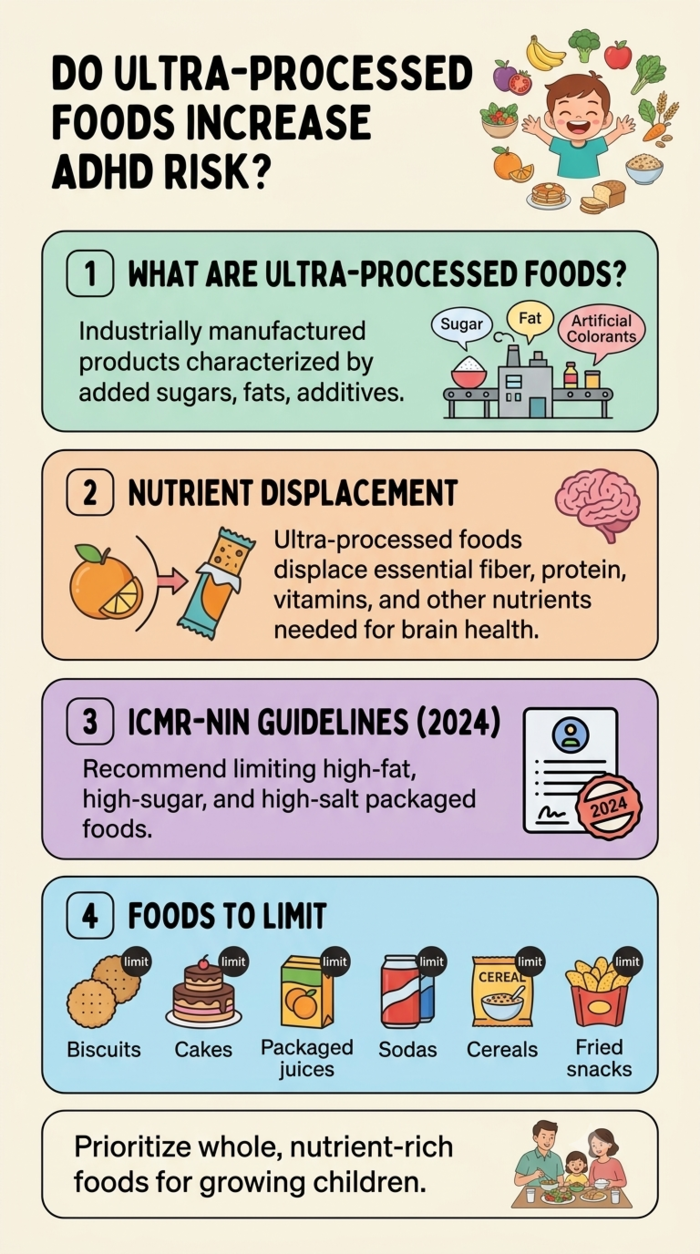
Do Ultra-Processed Foods Increase the Risk of ADHD?
Ultra-processed foods are industrially manufactured products that often contain added sugar, salt, fats, flavourings, or other additives.Frequent consumption of these foods may displace more nutritious options, reducing the variety of nutrients children receive. A diet dominated by packaged snacks may also provide insufficient fibre, protein, vitamins and minerals.
The ICMR-NIN Dietary Guidelines for Indians (2024) advise limiting ultra-processed foods and those high in fat, sugar and salt. The list includes biscuits, cakes, packaged fruit juices, cool drinks, sauces, breakfast cereals, and fried items.
Signs of ADHD in Children: When to See a Doctor
Many children have trouble focusing or sitting still at times. In ADHD, these behaviours continue and cause difficulty at school, at home, or with friends. The CDC lists these common signs:| Type | Common signs |
| Inattention | Daydreams a lot; forgets or loses things; makes careless mistakes; has trouble finishing tasks or following instructions; is easily distracted |
| Hyperactivity | Keeps moving or wriggling while seated, or taps hands or feet; talks too much; has trouble sitting still during meals or homework; feels restless; younger children may run, jump, or climb constantly |
| Impulsivity | Has trouble waiting for a turn; interrupts others; grabs things; takes unnecessary risks; has more accidents and injuries |
What Can Parents Do About Junk Food and ADHD?
Diet does not replace ADHD treatment. The American Academy of Pediatrics lists behaviour therapy and medication as first-line treatments and does not recommend dietary change as routine treatment for every child with ADHD.Practical steps for daily meals:
- Replace packaged namkeen and biscuits with roasted chana, foxnuts, fruit or curd.
- Offer water, buttermilk or coconut water instead of cola and packaged juice.
- Check labels for added sugar and colours such as tartrazine.
- Consult a paediatrician before any elimination diet.
Whether you’re pregnant, a new mom, or navigating postpartum, you don’t have to do it alone. Join our support group to connect, share, and support one another.
FAQs on Junk Food and ADHD in Toddlers: Is There a Link?
- Does junk food cause ADHD in children?
No. Studies show an association with ADHD symptoms, but they do not prove junk food causes the condition. - Can a healthy diet improve ADHD symptoms?
A balanced diet supports overall health, but it does not replace ADHD treatment. A healthcare professional can help assess suspected food-related changes and recommend appropriate care. - Do artificial food colours cause hyperactivity in children?
Food colours have not been shown to cause ADHD. A 2007 UK study linked some colour mixtures to a small rise in hyperactivity in some children.