In this article:
Is Bowling Safe During Pregnancy?
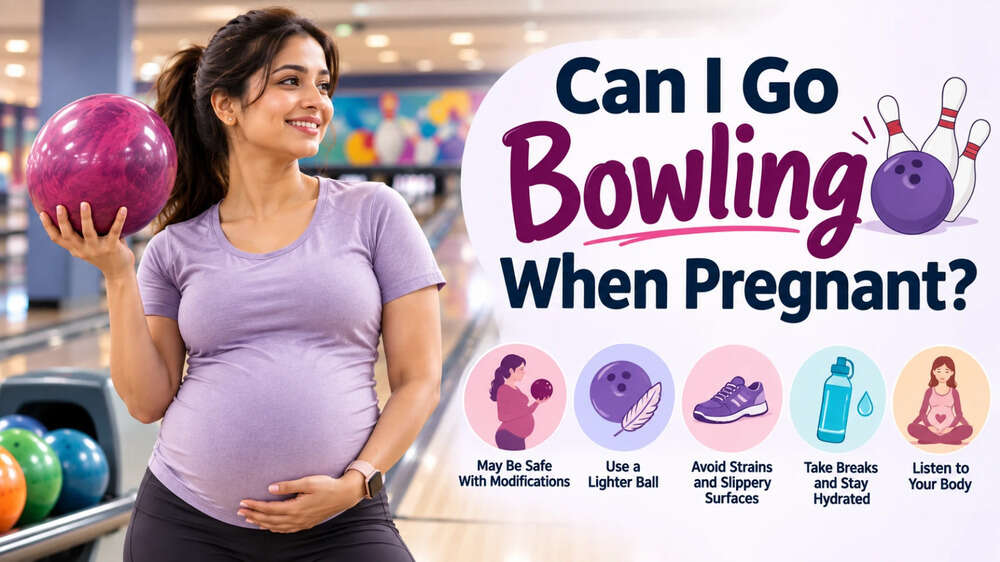
We asked the doctor to explain.Bowling may be possible during pregnancy, particularly when the pregnancy is uncomplicated, but women should adapt their technique and intensity as their body changes.
Pregnancy can alter balance and increase joint mobility, which may affect stability and injury risk. It is best to avoid jerky, bouncy or high-impact movements and activities that increase the likelihood of falling.
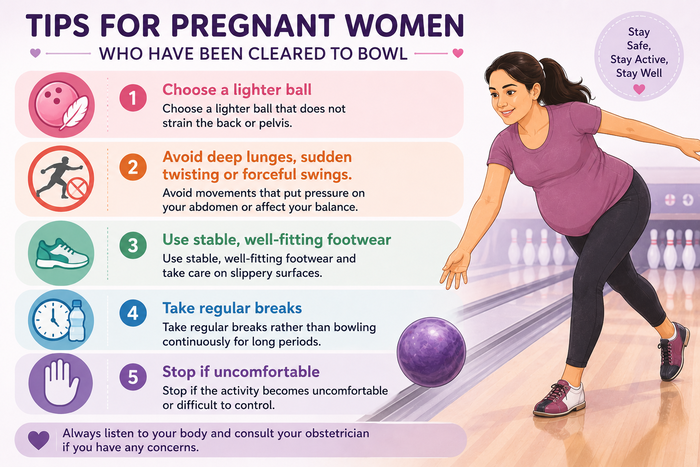
Dr Lamba advises women who have been cleared to bowl to:
- Choose a lighter ball that does not strain the back or pelvis.
- Avoid deep lunges, sudden twisting or forceful swings.
- Use stable, well-fitting footwear and take care on slippery surfaces.
- Take regular breaks rather than bowling continuously for long periods.
- Stop if the activity becomes uncomfortable or difficult to control.
When Should You Stop Bowling?
Dr Lamba explains that pain, dizziness, vaginal bleeding, fluid leakage, contractions or significant discomfort should not be ignored. These are warning signs that require exercise to be stopped and medical advice sought.Women with complications or a high-risk pregnancy should discuss recreational exercise with their obstetrician before bowling.
Bowling can be compatible with pregnancy for some women, but comfort and stability should take priority over maintaining your usual technique or intensity. If you want to continue bowling during pregnancy, discuss your individual circumstances with your obstetrician and modify the activity as your body changes.
FAQs on Bowling During Pregnancy
- Can I go bowling in early pregnancy?
Women with an uncomplicated pregnancy may be able to bowl, particularly if they were already active, but should discuss exercise with their obstetrician. - Should I use a lighter bowling ball during pregnancy?
A lighter ball may reduce strain, but the right weight depends on your comfort, strength and pregnancy. Stop if bowling causes pain or discomfort.