We reached out to Dr Manjeet Arora, Senior Director – Department of Obstetrics and Gynecology at Cloudnine Group of Hospitals, Kailash Colony, New Delhi, for a clinical perspective on this.
When Do Babies Start Smiling in the Womb?
Foetal facial movements develop gradually during pregnancy. By the second trimester, babies can make several movements with their mouth, eyes, and tongue.Smile-like movements have been recorded on 4D scans from the second trimester. A study tracked foetal facial movements between 24 and 36 weeks of pregnancy.
The frequency of some facial expressions changed as pregnancy progressed, reflecting ongoing development of the foetal brain and central nervous system.
By the third trimester, babies also yawn, blink, frown, and suck their thumbs; their face is active for most of the later months.
What Does a Babys Smile in the Womb Mean?
A foetal smile does not necessarily mean the baby is happy. The nervous system is developing rapidly during pregnancy, and babies practise many movements before birth. These movements are considered part of foetal neurobehaviour and development.The same pattern continues after birth. Newborns often smile during sleep in the first weeks, mostly in active (REM) sleep. A true social smile, in response to a face or voice, appears around 6 to 8 weeks of age.
What Makes a Baby Smile in the Womb?
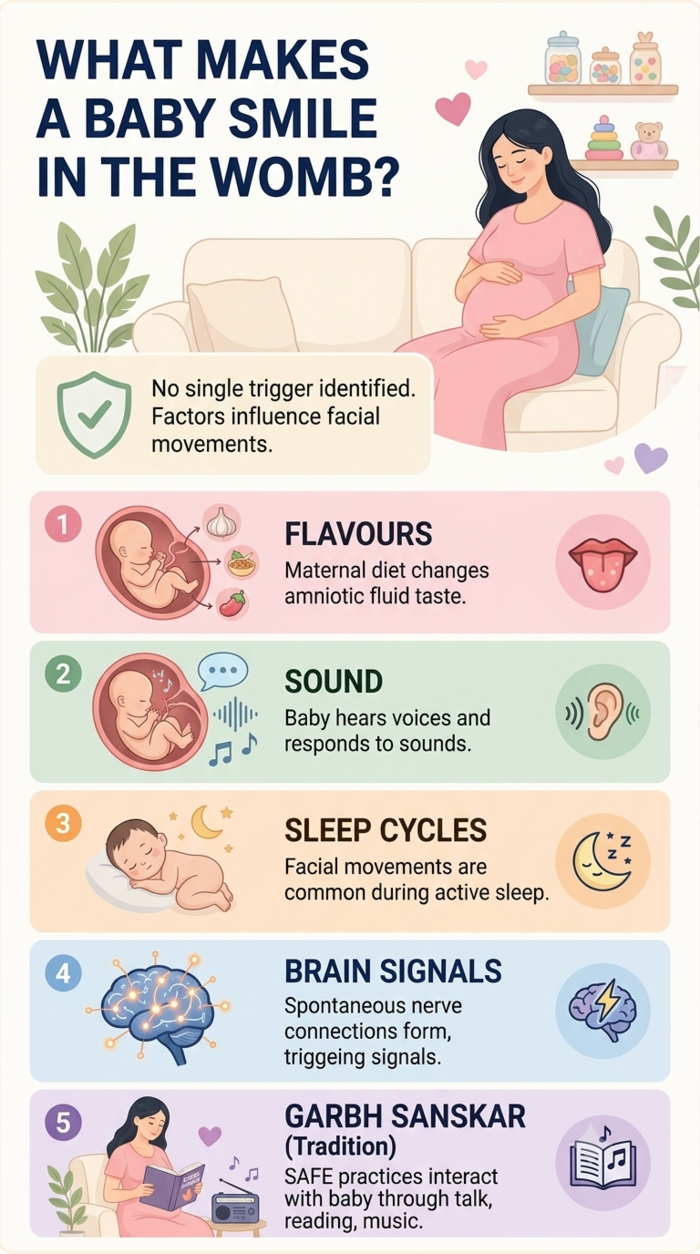
No single trigger has been identified. These factors may influence facial movements:- Flavours: Foods the mother eats, such as garlic, can change the smell and taste of amniotic fluid.
- Sound: Hearing begins around 18 weeks, and most babies respond to loud sounds by 25 to 26 weeks. After birth, babies recognise their mother’s voice and language.
- Sleep cycles: Facial movements are common during active sleep.
- Brain development: Nerve signals to facial muscles fire spontaneously as connections form.
What Other Facial Expressions Can Babies Make Before Birth?
A baby can make several facial movements before birth. 4D ultrasound studies have recorded:- Blinking
- Opening and closing the mouth
- Yawning
- Sucking
- Tongue movements
- Swallowing
- Grimacing or scowling
It is more accurate to describe a baby's smile in the womb as a foetal facial movement rather than assuming the baby is consciously smiling because it is happy. Before birth, facial movements are largely part of neurological and muscular development and spontaneous foetal activity.
Can You See a Baby Smiling on a 4D Scan?
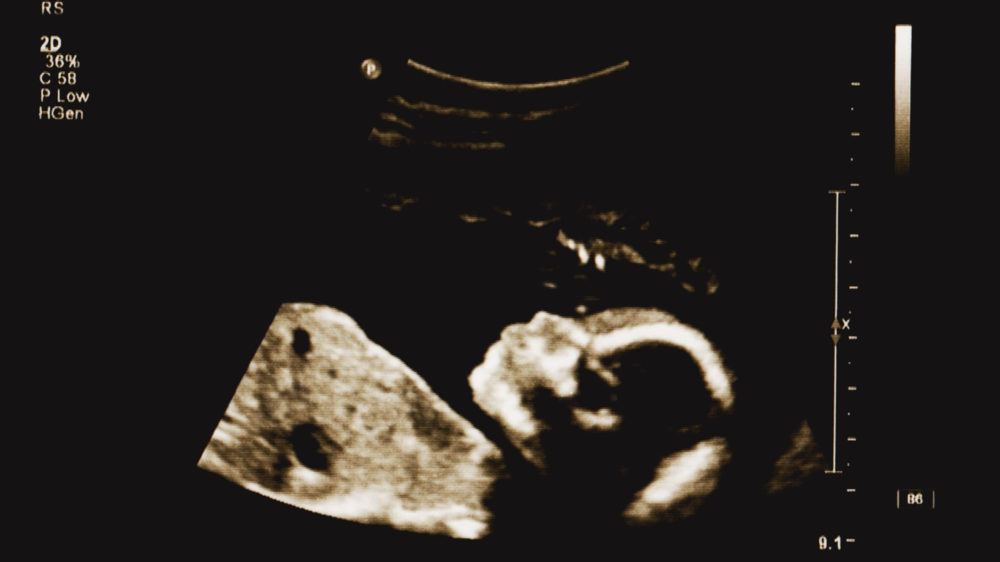
Sometimes. A clear view depends on the baby’s position, the amount of amniotic fluid, and the stage of pregnancy. Facial detail is usually clearest after about 26 weeks.Parents should know the following:
- The routine scan is 2D: The anomaly scan at 18 to 20 weeks checks the baby’s organs and growth. It is not meant to capture expressions.
- 3D/4D scans are used when a doctor advises them: To assess the face or a suspected abnormality.
- Keepsake scans are discouraged: The American Pregnancy Association and ACOG advise against ultrasound for entertainment alone, as ultrasound energy should be used only when there is a medical reason.
- Sex disclosure is illegal: Under the Pre-Conception and Pre-Natal Diagnostic Techniques (PCPNDT) Act, 1994, no sonography centre or doctor may reveal the baby’s sex.
Does a Baby's Facial Movement Mean the Baby Is Developing Normally?
Facial movements are one of many behaviours researchers can observe while studying foetal development. However, a single facial movement seen during an ultrasound cannot by itself determine whether a baby is developing normally.Doctors assess foetal health using several factors, including ultrasound findings, growth measurements, anatomy, placental and blood-flow assessments when indicated, and other aspects of the pregnancy.
A baby may appear to smile in the womb, but the movement is best understood as part of normal foetal facial activity rather than proof of an emotional response.
Whether you’re pregnant, a new mom, or navigating postpartum, you don’t have to do it alone. Join our support group to connect, share, and support one another.
FAQs on Can a Baby Smile in the Womb?
- Can a baby laugh in the womb?
Scans show “laughter-face” movements, but they are reflexes. Laughter as an emotional response develops after birth, at around 3 to 4 months. - Can babies smile at 20 weeks in the womb?
Yes. Smile-like facial movements have been observed in foetuses around 20–24 weeks using 4D ultrasound. - Which week is best for a 4D scan to see the baby’s face?
Doctors generally advise 26 to 32 weeks for clear facial detail, only when medically indicated.