In this article:
What Is the Correct Position to Burp a Baby?
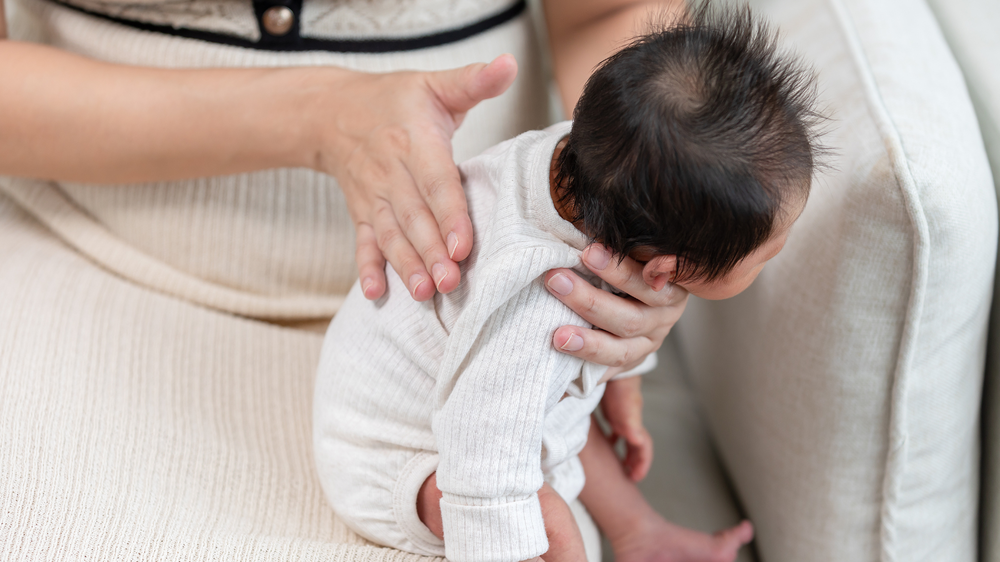
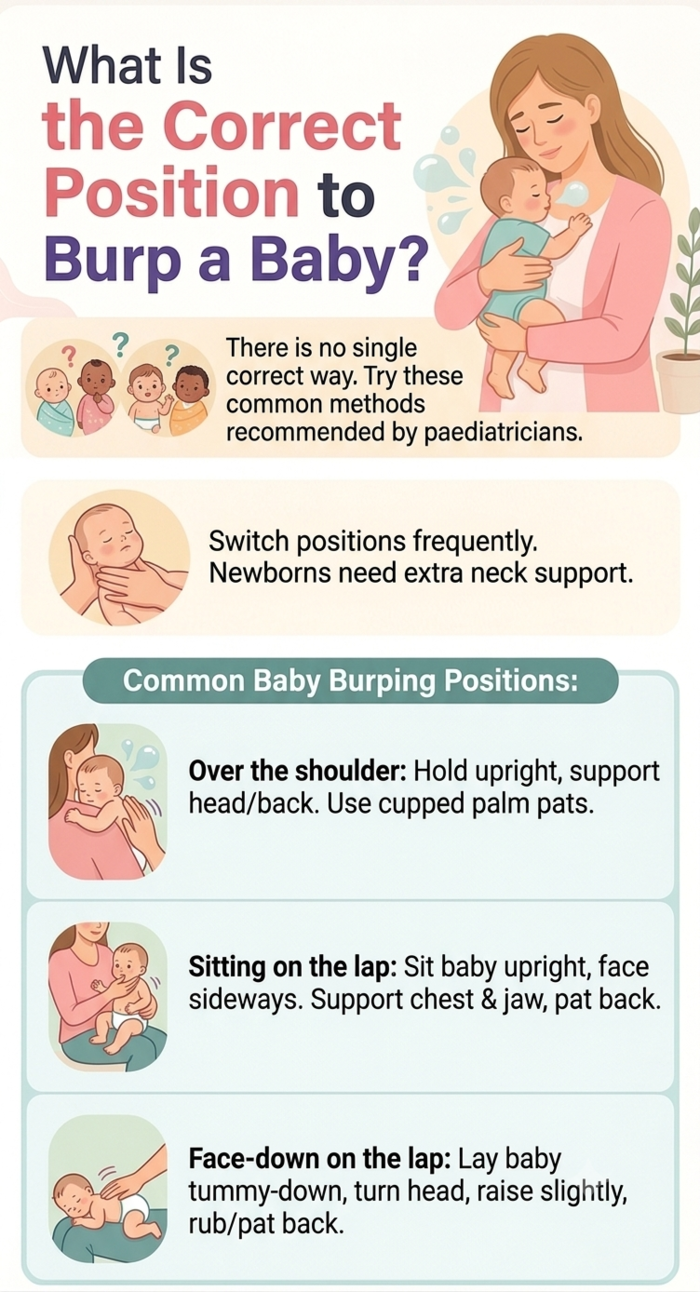
There is no single correct position; three commonly recommended positions by paediatricians include:- Over the shoulder: Hold the baby upright against the chest, chin resting on the shoulder. Support the head and back with one hand and pat gently with the other, using a cupped palm rather than flat fingers.
- Sitting on the lap: Sit the baby upright, facing sideways. Support the chest and jaw (not the throat) with one hand and pat the back with the other.
- Face-down on the lap: Lay the baby tummy-down across the thighs, with the head turned to one side and slightly raised above chest level. Pat or rub the back gently.
How Often Should a Baby Be Burped During Feeding?
For breastfed babies, burp when switching from one breast to the other. For bottle-fed babies, burp after every 60 to 90 ml. Newborns in the first few weeks tend to swallow more air and may need burping midway through a feed as well, even if they show no signs of discomfort; the pause alone slows down gulping and reduces the amount of air taken in.Babies who spit up often, have reflux, or seem gassy may need burping every 5 minutes during a feed. Not every baby swallows the same amount of air, some need less frequent burping than others.
Bottle-fed babies generally take in more air than breastfed babies, since a bottle nipple allows more air to enter with each suck. A baby who feeds calmly without pulling away or fussing may not need burping as often, regardless of feeding method.
How Long Should You Burp a Baby For?
Burp a baby for 2 to 5 minutes at a time, using gentle patting or rubbing. If no burp comes within 5 minutes, resume feeding and try again once the feed is finished; not every attempt produces a burp, and this does not mean the baby is unwell.After feeding, keep the baby upright for 10 to 15 minutes to help milk settle and reduce the chance of spit-up.
What to Do If a Baby Will Not Burp
A baby who does not burp despite several attempts is usually fine, particularly if they seem calm and are feeding and gaining weight normally.Trying a different position, using slow circular back rubs instead of patting, or briefly stopping the feed to reposition the baby can help.
In India, gripe water and other over-the-counter drops are commonly given for gas. A 2012 research paper cautions against its routine use in infants, noting it can introduce bacteria, cause allergies, or irritate a baby's digestive system, with no proven benefit for gas or colic.
When to Worry: Signs That Need a Paediatrician's Attention
Occasional spit-up during or after burping is normal and rarely a cause for concern. Consult a paediatrician if the baby shows any of the following:- Forceful or projectile vomiting
- Persistent crying or arching of the back during or after every feed
- Poor weight gain or refusal to feed
- Fewer than 6 wet nappies a day
- Green or blood-tinged vomit
- Continuous, severe hiccups accompanied by distress
Burping is a simple, learnable skill that becomes easier with practice. Most babies outgrow the need for it by 4 to 6 months of age, though babies with reflux may need it a little longer.
Whether you’re pregnant, a new mom, or navigating postpartum, you don’t have to do it alone. Join our support group to connect, share, and support one another.
FAQs on How to Burp a Baby: Techniques, Tips, and When to Worry
- Is burping necessary for breastfed babies?
Yes, burping is generally recommended for breastfed babies too, though they typically need it less often than bottle-fed babies. This is because breastfeeding usually involves a better latch, which reduces the amount of air swallowed. - Is it normal for a baby to spit up after burping?
Yes. Small amounts of spit-up during or after burping are common and are not usually a sign of illness. - Do formula-fed babies need more burping than breastfed babies?
Yes, because bottle-feeding tends to introduce more air, especially if the bottle nipple is not properly filled with milk.