In this article:
Recognising early signs can help you seek medical advice and get the right support.
What Is Bells Palsy?
Bell’s palsy is a condition that makes one side of your face feel weak or look different. You may find it harder to smile, blink, or show expressions. Although Bell's palsy may occur during pregnancy, it affects only a few women. It is more commonly seen during the third trimester or shortly after delivery.Bells Palsy vs Stroke: Whats the Difference?
Because both Bell’s palsy and stroke can cause sudden changes in the face, they may look similar at first. But they are different conditions. The following table can help you understand some of the main differences.| Feature | Bell's Palsy | Stroke |
| Affects | Usually, one side of the face | Face and often other parts of the body |
| Arm or leg weakness | Usually absent | Common |
| Speech problems | May occur due to facial weakness | Common |
| Medical emergency | Needs medical evaluation | Always a medical emergency |
| Recovery | Often improves over time | Depends on the cause and treatment |
Why Does Bell’s Palsy Occur During Pregnancy?
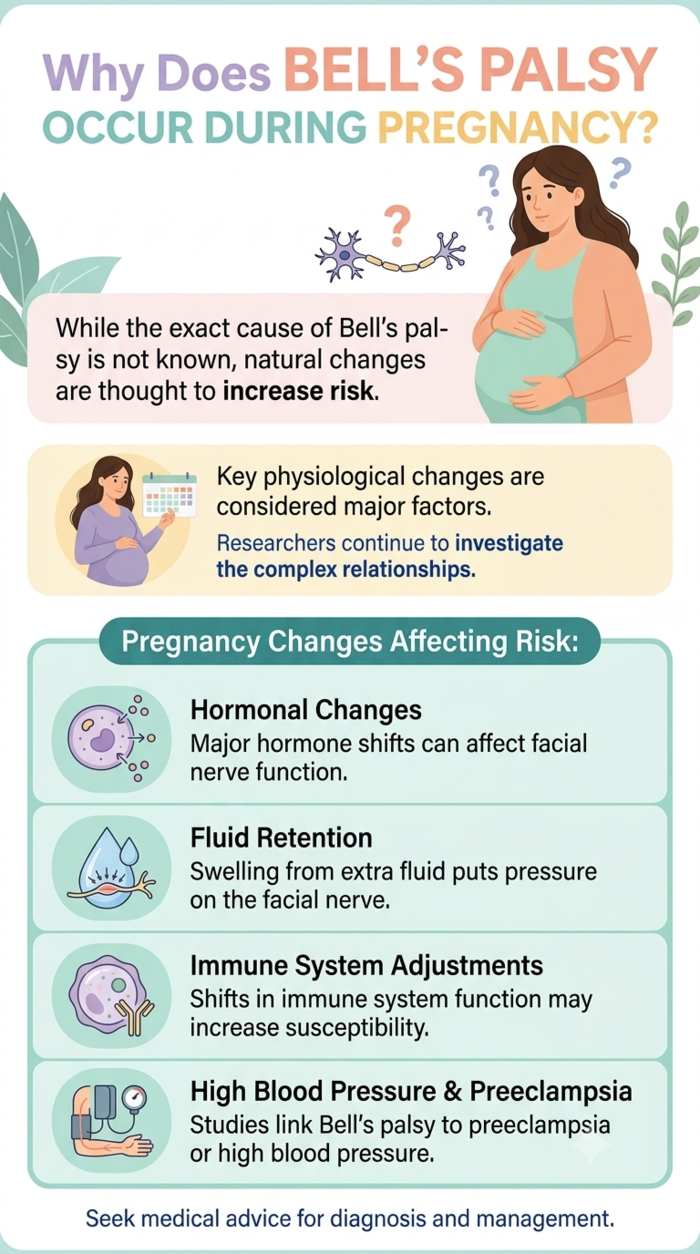
The exact cause of Bell's palsy during pregnancy is not known. But some natural changes during pregnancy may increase the risk of it, such as:Hormonal Changes
Pregnancy causes major changes in hormone levels. These changes may affect the facial nerve and contribute to Bell's palsy in some women.
Extra Fluid in the Body
Pregnant women often hold more fluid, especially in the last months. This swelling may put pressure on the facial nerve and affect its function.
Immune System Changes
During pregnancy, the immune system adjusts to support the growing baby. These changes may make some women more likely to develop Bell's palsy.
High Blood Pressure and Preeclampsia
Studies suggest that Bell's palsy may be more common in women with preeclampsia or pregnancy-related high blood pressure.
Common Signs of Bell’s Palsy During Pregnancy
Bell’s palsy symptoms often start suddenly. The severity is not the same for everyone. Some women may notice only mild changes. Others may find it harder to move their face normally.The following are common signs of Bell's palsy during pregnancy that you may notice:
- Sudden weakness on one side of the face
- Drooping of one side of the mouth
- Difficulty smiling evenly
- Trouble closing one eye completely
- Dryness or irritation in the affected eye
- Difficulty raising an eyebrow on one side
- Changes in facial expressions
- Drooling from one side of the mouth
- Changes in the sense of taste
- Increased sensitivity to sound in one ear
- Difficulty eating, drinking, or speaking clearly
- A feeling of heaviness or numbness on one side of the face
Can Bell’s Palsy Affect the Baby?
The condition affects the facial nerve and your facial movements, but it does not directly affect your baby. Most women with Bell's palsy have healthy pregnancies and healthy babies. However, it is important to contact your healthcare provider if symptoms develop during pregnancy so that both you and your baby can be monitored appropriately.Tips for Managing Bell’s Palsy During Pregnancy
The following are some tips that may help you manage Bell's palsy during pregnancy and stay more comfortable during recovery:- Take any medications exactly as prescribed by your healthcare provider
- Protect the affected eye from dryness and irritation
- Get plenty of rest and avoid overexertion
- Eat a balanced diet and stay well hydrated
- Choose softer foods if chewing becomes difficult
- Perform facial exercises only if recommended by your healthcare provider
- Attend all prenatal and follow-up appointments
- Reach out to family and friends for emotional support if you are feeling worried or stressed
When to Contact Your Doctor
If you notice sudden changes in your facial movements during pregnancy, do not ignore them. It is important to contact your healthcare provider for an evaluation.You should also seek medical advice if:
- Your symptoms suddenly worsen
- You have difficulty closing your eye completely
- You experience vision changes or eye pain
- You develop weakness in your arm or leg
- You have trouble speaking or understanding speech
- You feel dizzy, confused, or have a severe headache
- Your symptoms are not improving over time
Whether you’re pregnant, a new mom, or navigating postpartum, you don’t have to do it alone. Join our support group to connect, share, and support one another.
FAQs on Facial Weakness During Pregnancy: Could It Be Bell’s Palsy?
- Can Bell's palsy go away on its own during pregnancy?
Many women recover from Bell's palsy over time. However, it is important to seek medical advice for proper care and monitoring. - How long does recovery usually take?
Recovery varies, but many people begin to improve within a few weeks and continue recovering over the following months. - Can Bell's palsy affect my sleep?
Yes. Difficulty closing one eye completely may cause dryness and discomfort, which can affect sleep.