In this article:
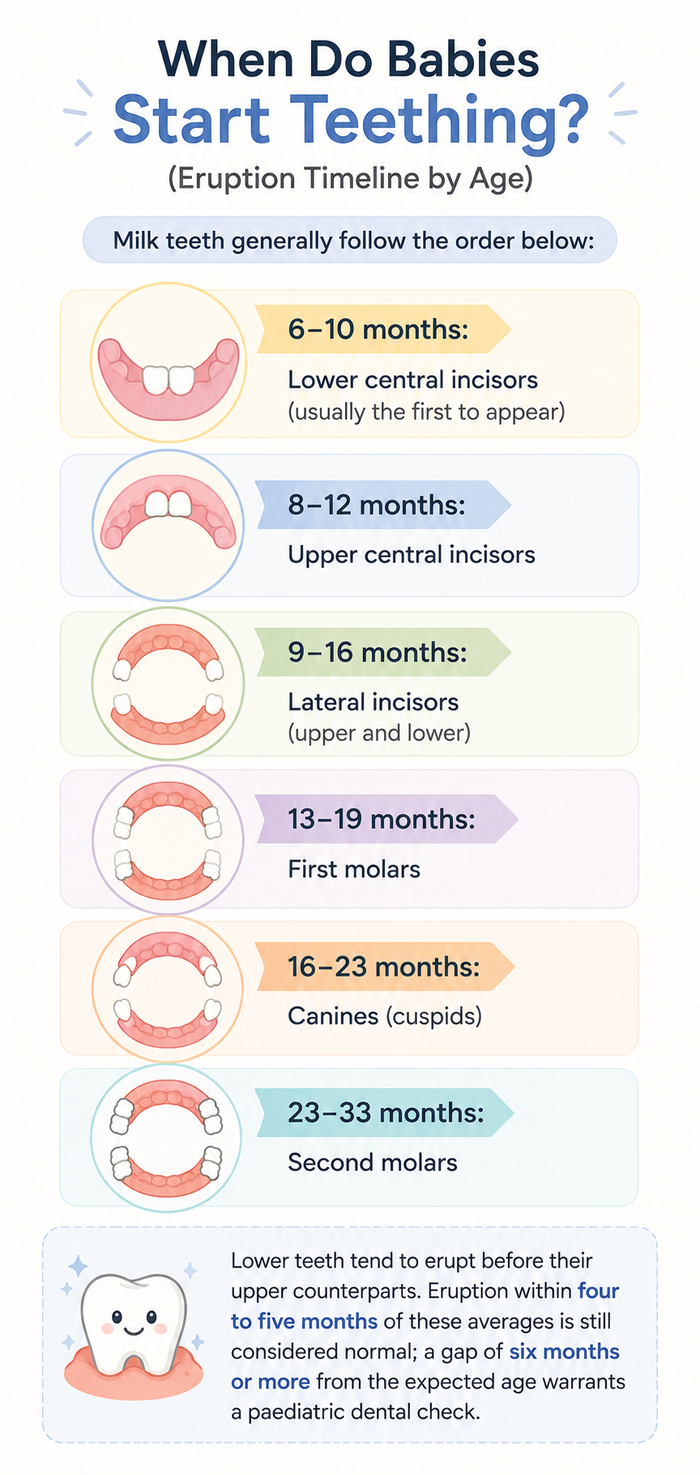
When Do Babies Start Teething? (Eruption Timeline by Age)
Milk teeth generally follow the order below:- 6–10 months: Lower central incisors (usually the first to appear)
- 8–12 months: Upper central incisors
- 9–16 months: Lateral incisors (upper and lower)
- 13–19 months: First molars
- 16–23 months: Canines (cuspids)
- 23–33 months: Second molars
What Are the Common Symptoms of Teething in Infants?
Teething symptoms vary from child to child, but commonly include:- Swollen, tender, or reddened gums
- Increased drooling
- Irritability or disrupted sleep
- Chewing or gnawing on fingers, toys, or fists
- Mild rise in temperature (below 100.4°F)
- Reduced appetite for solids
How Can Parents Soothe a Teething Baby at Home?
A few safe, doctor-approved measures can ease teething discomfort:- Cold relief: Offer a clean, chilled (not frozen) teething ring or a cold, damp washcloth to chew on.
- Gentle gum massage: Rub the gums gently with a clean finger for a few minutes.
- Chilled food: For babies already on solids, cold yoghurt, mashed banana, or chilled fruit puree can ease discomfort.
- Extra comfort: Increased cuddling and a consistent sleep routine help babies cope with disturbed nights.
- Pain relief: Paracetamol may be used only on a paediatrician's advice and at the prescribed dose for the baby's weight.
Homemade remedies like rubbing sugar, honey, or asafoetida on the gums, common in Indian households, are not recommended, as honey carries a botulism risk in infants under one year and sugar can encourage early tooth decay.
How Should Parents Care for a Baby's First Teeth?
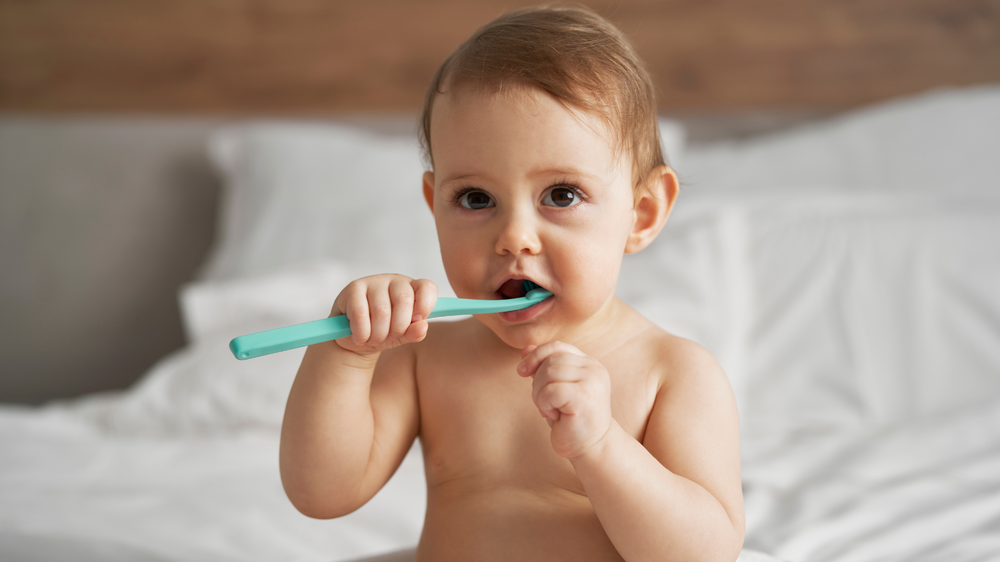
Oral care should begin before the first tooth appears. Wipe the gums with a clean, damp cloth after feeds from birth.Once the first tooth erupts, brush twice daily with a soft, infant-sized toothbrush and a rice-grain-sized smear of fluoride toothpaste (as recommended by the IAP and AAP for children under 3).
Schedule the first dental visit within six months of the first tooth erupting, or by the first birthday, whichever comes first. Avoid bottle-feeding at night once teeth appear, as prolonged milk contact increases the risk of early childhood caries, a concern noted in several paediatric dental studies given the common practice of night-time bottle feeds.
Milk teeth may be temporary, but their health directly affects a child's nutrition, speech, and the alignment of permanent teeth, making early attention to eruption and care worth a parent's time.
Whether you’re pregnant, a new mom, or navigating postpartum, you don’t have to do it alone. Join our support group to connect, share, and support one another.
FAQs on Milk Teeth in Babies: Timeline, Symptoms, and Care Tips
- At what age do babies usually get their first tooth?
Most babies get their first tooth around 6 months of age, though anywhere from 4 to 12 months is considered normal. - Does teething cause fever and diarrhoea?
No. Teething may cause a mild temperature rise, but high fever, diarrhoea, or vomiting are signs of illness, not teething, and need medical attention. - Which tooth comes in first for babies?
The lower central incisors, the two bottom front teeth, are usually the first milk teeth to erupt.