In this article:
What to Do the Moment You Feel a Contraction While Driving
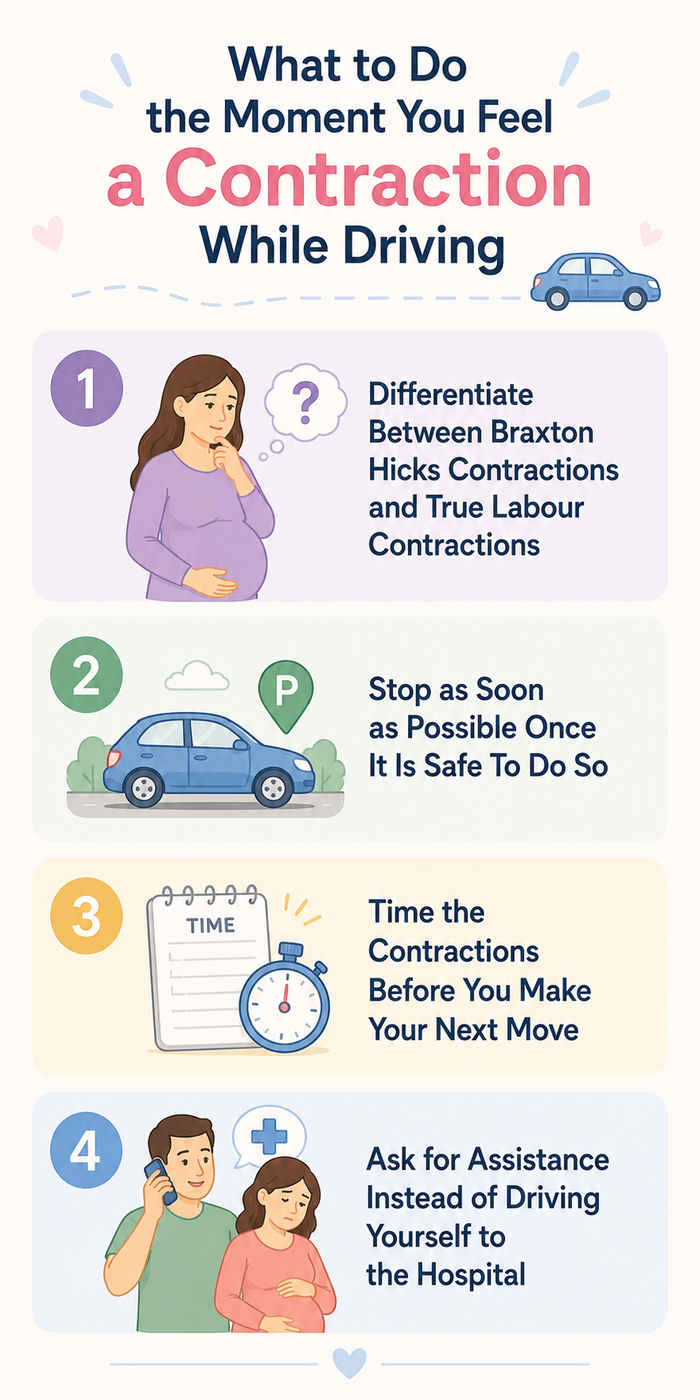
Differentiate Between Braxton Hicks Contractions and True Labour ContractionsEvery contraction that happens when driving does not necessarily mean the onset of labour. Braxton Hicks contractions, which can also be termed as practice contractions, commonly happen starting from the second trimester of pregnancy. These are normally irregular abdominal tightness sensations which are mild and do not get worse over time. Also, these are relieved when there are changes in your body position or fluid intake.
True labour contractions are different from Braxton Hicks contractions in terms of being regular, worsening through time, and not relieved by changes in your position and fluid intake. When driving, if the sensation of pain and tightness is regular and progressive and is associated with other labour signs like backache and cervical effacement, treat it as the real thing.
Stop as Soon as Possible Once It Is Safe To Do So
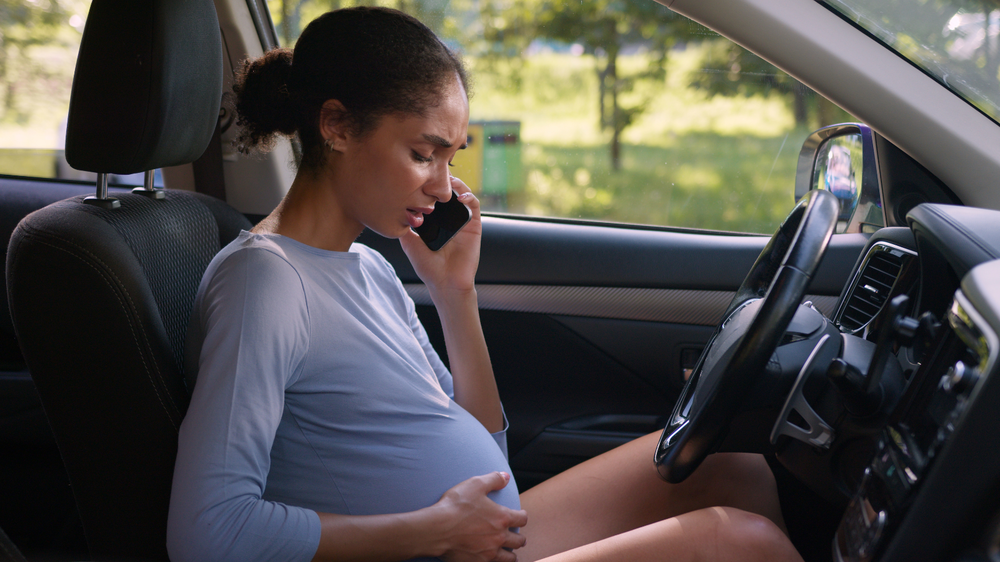
The first thing you need to do when you are experiencing contractions while driving is pull over as soon as possible in a safe way. You cannot deal with contractions and continue driving at the same time; a contraction can be distracting enough for you.
Make sure that you indicate, check your mirrors, and get to the left as soon as it is safe for you. Find an appropriate place where you can park, maybe a parking lot, a side street, or a petrol station forecourt. You do not have to be in a particular place to stop; the safer place is always preferred rather than continuing to drive and deal with distractions.
Time the Contractions Before You Make Your Next Move
After you have safely stopped on the side of the road, spend a couple of minutes timing your contractions. Record when they start, their duration, and the intervals between them.
A 5-1-1 formula is a very popular one for determining whether you should go to the hospital. Contractions every five minutes, each lasting one minute, for an hour or longer. If you fit into this category with your contractions that occur while you are stopped on the side of the road, don't get behind the wheel and go to the hospital yourself. Ask somebody to pick you up and take you there.
Ask for Assistance Instead of Driving Yourself to the Hospital
Once you experience contractions that become regular and stronger, the smart choice is not to drive yourself to the hospital. To start with, driving yourself through contractions during labour is not safe because your labour has started in all cases, but because the pain and the distraction of intense contractions make driving difficult for you.
Ask your partner, any family member, or even a friend to come and pick you up from wherever you have stopped your car. Tell them your location, and if necessary, show them where you are through the use of a map application. In the meantime, just sit inside your car with hazard lights on and try to stay hydrated and time your contractions.
How to Handle the Situation If Labour Develops Quickly While Waiting
If it turns out that labour is developing quickly while you are waiting for assistance, stay calm and remain in the car. Below are the steps you should take:- Contact emergency services.
- Put the seat as low as possible and get as comfortable as possible in the backseat if you can move to the back of the car.
- Do not attempt to go to the hospital once labour becomes evident.
- Unlock your car to allow the emergency service providers access to you.
Practical Steps to Prepare Before This Happens
The optimal time to prepare for this is when the third trimester starts. The following things can be helpful in the situation.- Share your current location with the partner or someone you trust when you are alone in the third trimester while driving.
- Save the phone number of your hospital for quick contact in case you need one.
- Have the hospital bag ready in your car from the 36th week onwards.
- Try to avoid long solo trips in the last weeks of your pregnancy; however, if you have no other choice, make sure to travel with someone else.
When to Contact Your Doctor
In case you experience contractions while driving and regardless of whether they have gone away and are just Braxton Hicks contractions, discuss it with your doctor if:- Your contractions were regular and increasing in strength before becoming less intense.
- You experienced vaginal bleeding, fluids, or pelvic pressure along with the contractions.
- You are not yet at 37 weeks and thought that it could have been contractions.
- You are unsure about whether it was Braxton Hicks or actual contractions.
Whether you’re pregnant, a new mom, or navigating postpartum, you don’t have to do it alone. Join our support group to connect, share, and support one another.
FAQs on What to Do if You Feel a Contraction While Driving Alone?
- Can I drive to the hospital once I feel the contractions?
Self-driving should not be considered once the contractions have started and are becoming strong and frequent. - When do I need to stop driving by myself during the third trimester?
It is not a hard and fast rule, but most women are recommended to avoid driving alone after 36 weeks of pregnancy. Talk to your doctor if you have any doubts.