In this article:
What Causes Stranger Anxiety in Babies?
Before this stage, babies cannot distinguish between situations that are familiar and unfamiliar to them. Around the second half of the first year, this changes. The infant's growing sense of the world means they begin to realise that the relationship with the people they spend the most time with is different from the one they have with people they don't know well.This shift is a sign of healthy cognitive growth, not a parenting issue. A baby's shift between affectionate behaviour with parents and clingy, wary behaviour with strangers is not caused by the parent's style of caregiving.
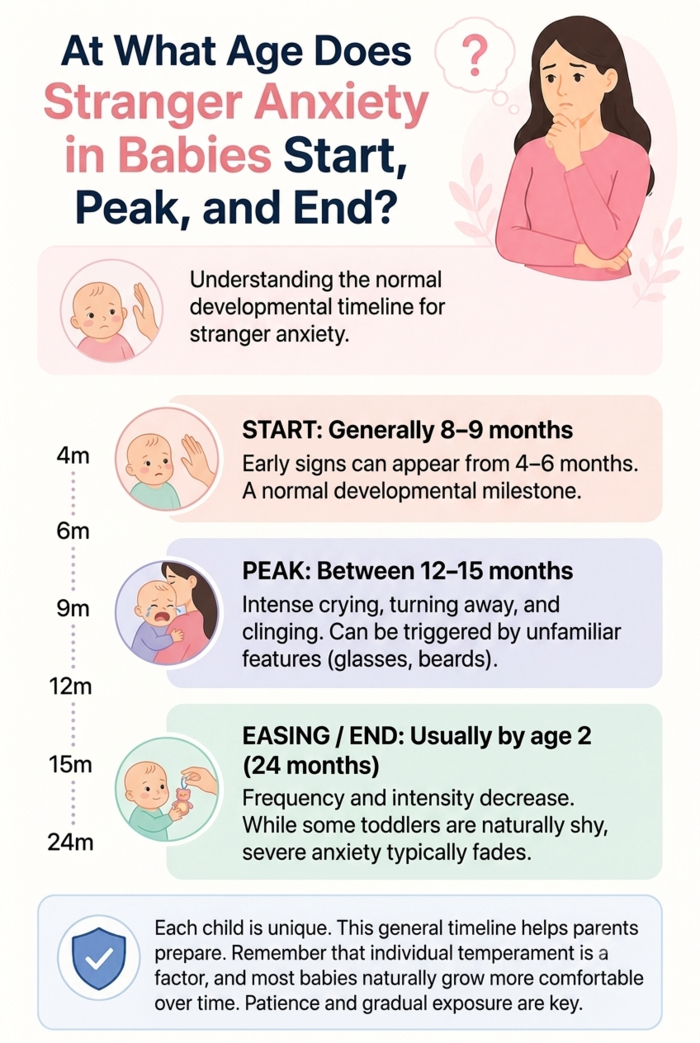
At What Age Does Stranger Anxiety in Babies Start, Peak, and End?
Start:
- Stranger anxiety is considered normal when it starts at about 8 to 9 months of age. Some infants show early signs from around 6 months, and a smaller number of babies react to unfamiliar faces even earlier, particularly if they are approached quickly or picked up without warning.
- It typically first starts to appear around four months of age, with infants behaving differently with caregivers than with strangers, though the fear response most parents recognise builds up over the following months.
Peak:
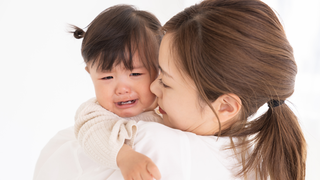
- Stranger anxiety typically peaks between 12 and 15 months of age. During this window, a baby may cry, turn away, or cling tightly to a parent when an unfamiliar adult comes close.
- The child may be particularly upset by people who look different from what they are used to, such as someone wearing glasses or a man with a beard.
- How the stranger approaches also matters; if they move slowly, keep the caregiver nearby, speak softly, and offer a toy, the baby is more likely to show interest instead of distress.
End:
- Stranger anxiety usually abates by 2 years, though both its duration and intensity vary greatly among children.
- It may recur occasionally until 24 months even after the initial peak has passed. Some toddlers continue to warm up slowly to new people well beyond this age, which falls within the normal range of temperament rather than a cause for concern.
How Is Stranger Anxiety Different From Separation Anxiety?
The two often develop together but are not the same. Both reactions stem from the same stage of cognitive development, which is why they often overlap.| Stranger Anxiety | Separation Anxiety | |
| Definition | Fear of an unfamiliar person, even when a parent is present | Distress at being away from the parent, regardless of who else is in the room |
| Onset | 6 to 9 months | About 8 months |
| Peak | 9 to 15 months | 10 to 18 months |
| Resolves by | 2 years | 2 years |
| Cause | Growing ability to distinguish familiar from unfamiliar faces | Object permanence not yet mastered, the understanding that a caregiver who leaves still exists and will return |
How Can Parents Help a Baby With Stranger Anxiety?
Babies are frequently surrounded by grandparents, relatives, and household help from birth, which can bring stranger anxiety into focus earlier than in smaller, nuclear-only setups. This reaction is often mistaken for shyness or a parenting shortfall, but it is a universal and temporary developmental stage. A few approaches help:- Ask visiting relatives to greet the baby calmly, without picking them up immediately.
- Keep the baby in a parent's lap or arms during introductions rather than handing them over at once.
- Maintain consistent caregivers for daily routines such as feeding and naps during this period.
- Avoid forcing interaction with unfamiliar people, including at family functions or during travel.
Whether you’re pregnant, a new mom, or navigating postpartum, you don’t have to do it alone. Join our support group to connect, share, and support one another.
FAQs on Stranger Anxiety in Babies: When It Starts and Ends
- Does stranger anxiety mean my baby is too attached to me?
No. It reflects normal brain development and the baby's growing ability to recognise familiar versus unfamiliar people, not overattachment. - At what age is stranger anxiety in babies the worst?
It typically peaks between 12 and 15 months of age before gradually easing. - Should I force my baby to interact with relatives during stranger anxiety?
No. Gradual, gentle introductions work better than forcing contact, which can increase distress.