In this article:
How Should Meals Be Timed and Portioned For Gestational Diabetes?
ICMR-NIN recommends at least 135 grams of carbohydrates daily, making up 35–45% of total calorie intake, divided across the day as breakfast 15%, lunch 35%, dinner 35%, and three snacks at 5% each of total daily calories.Sample gestational diabetes diet chart
| Meal | Timing | Calorie share | What to eat |
| Breakfast | 7:30–8:30 am | 15% | Vegetable-stuffed moong dal chilla or besan cheela with mint chutney |
| Mid-morning snack | 10:30–11:00 am | 5% | Sprouts or roasted chana with buttermilk |
| Lunch | 1:00–2:00 pm | 35% | One bajra or jowar roti, dal, a non-starchy vegetable sabzi, salad, and curd |
| Evening snack | 4:30–5:00 pm | 5% | A handful of nuts with a boiled egg or paneer cubes |
| Dinner | 7:30–8:30 pm | 35% | Vegetable khichdi with mixed dal and a side of sauteed greens |
| Bedtime snack | 9:30–10:00 pm | 5% | A glass of milk or a small bowl of curd |
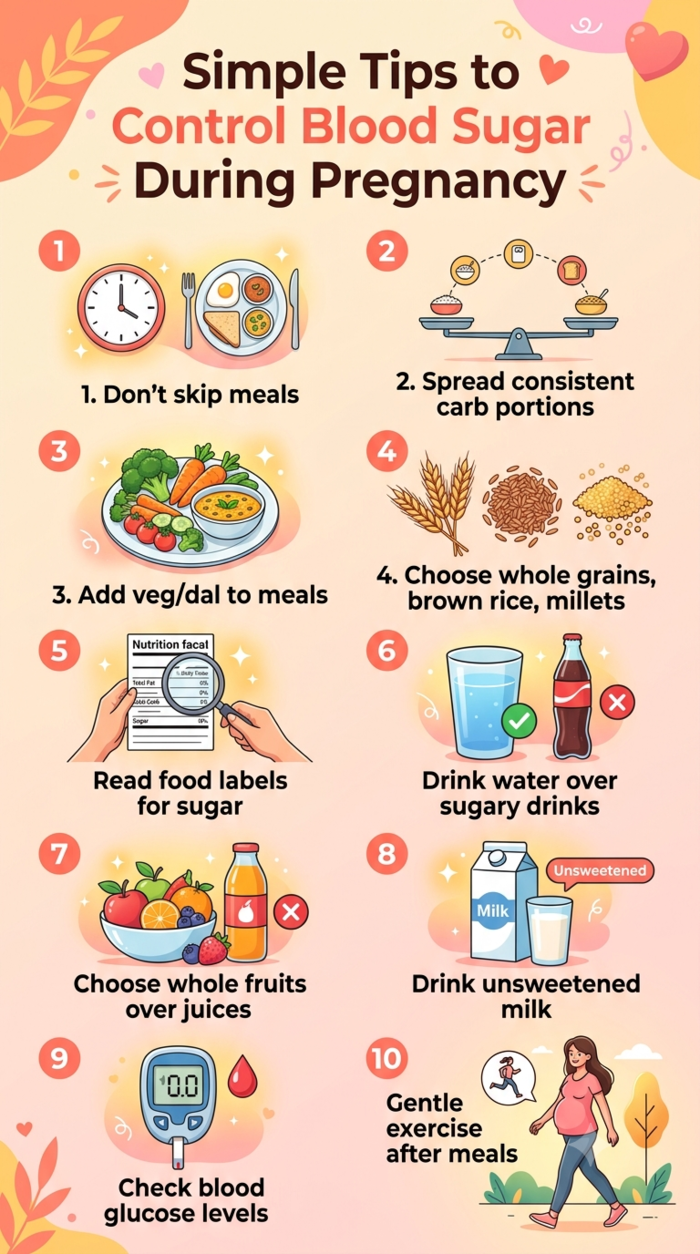
Simple Tips to Control Blood Sugar During Pregnancy
A few consistent habits can help keep blood sugar levels steady through the day:- Do not skip meals unless your healthcare team specifically advises it.
- Keep carbohydrate portions consistent and spread them across the day.
- Add a vegetable or dal to every roti or rice meal to slow digestion.
- Choose whole grains and pulses more often than refined grains.
- Replace polished white rice with brown rice and millets.
- Read food labels on packaged foods for added sugar and carbohydrate content.
- Drink water instead of sugary beverages.
- Use whole fruits, such as guavas, pears, and apples, rather than fruit juices.
- Choose unsweetened milk and avoid adding sugar, flavoured syrups or health-drink powders unless advised by your healthcare provider.
- Check your blood glucose as advised and note which meals cause higher readings.
- If your obstetrician says exercise is safe, gentle physical activity after meals may help with blood glucose management.
How Many Calories Does a Pregnant Woman With Gestational Diabetes Need?
Energy needs do not increase in the first trimester unless a woman is underweight. From the second trimester, ICMR guidelines recommend an addition of 350 kcal per day above the standard adult requirement, aimed at an average pregnancy weight gain of 10–12 kg.Calorie needs can also be calculated by body weight:
- Low BMI: 35 kcal/kg
- Normal BMI: 30 kcal/kg
- High BMI: 25 kcal/kg
When Should Blood Sugar and Diet Be Reviewed?
India follows the DIPSI single-step test, where a 2-hour post-75g glucose value of 140 mg% or above confirms GDM, and 120–140 mg% indicates a borderline result.This test is typically done at the first antenatal visit and repeated at 24–28 weeks if the first result is normal. After delivery, postpartum screening at 6–12 weeks is recommended for all women who had GDM, since a diet chart that works during pregnancy is often the starting point for long-term glucose control.
A gestational diabetes diet can include familiar foods while balancing carbohydrates, protein, vegetables and portion sizes to support healthy blood sugar levels throughout pregnancy.
Whether you’re pregnant, a new mom, or navigating postpartum, you don’t have to do it alone. Join our support group to connect, share, and support one another.
FAQs on Gestational Diabetes Diet Chart for Indian Meals
- Can I eat rice if I have gestational diabetes?
Yes, in controlled portions. Cooking rice a day ahead and refrigerating it before reheating can reduce its glycemic impact, and pairing it with dal or vegetables can further slow sugar release. - Is fruit safe during gestational diabetes?
Whole fruits with low glycemic index, such as guava, apple, pear, and papaya, are safe in moderate portions. Fruit juices should be avoided as they raise blood sugar faster. - Can diet manage gestational diabetes alone?
Many cases are managed with diet and regular activity alone. Some women may need insulin or metformin if blood sugar remains high despite dietary changes.