
In this article:
Why Is Vitamin D Important for Babies?
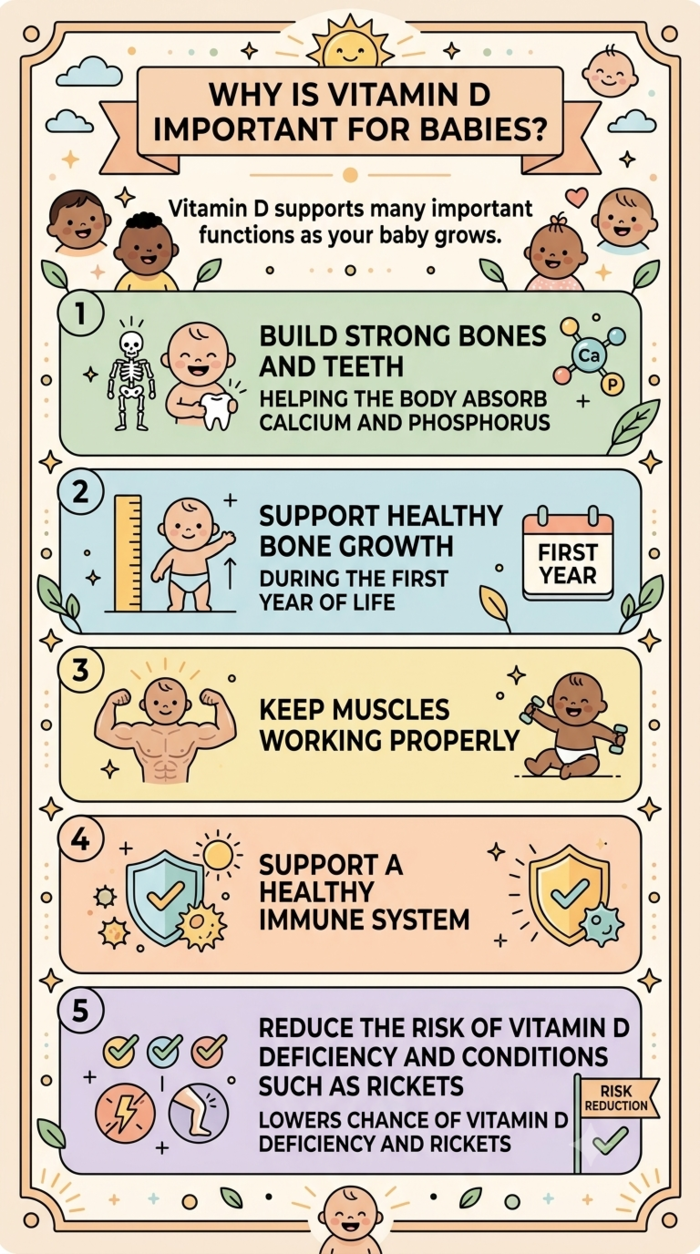
Vitamin D supports many important functions as your baby grows.It helps:
- Build strong bones and teeth by helping the body absorb calcium and phosphorus
- Support healthy bone growth during the first year of life
- Keep muscles working properly
- Support a healthy immune system
- Reduce the risk of vitamin D deficiency and conditions such as rickets
When Should You Start Vitamin D Drops for Your Baby?
The right time to start vitamin D drops depends on how your baby is fed.- If your baby is exclusively breastfed or mostly breastfed, vitamin D drops are usually recommended within the first few days after birth. Starting early helps ensure your baby receives enough vitamin D while growing rapidly.
- If your baby drinks enough infant formula every day, additional vitamin D drops may not be necessary because formula is already fortified with vitamin D.
Which Babies Need Vitamin D Drops?
Not every baby has the same vitamin D requirements.Supplementation is commonly recommended for:
- Exclusively breastfed babies
- Babies receiving both breast milk and small amounts of formula
- Premature babies
- Babies with certain medical conditions affecting nutrient absorption
- Babies whose mothers have low vitamin D levels
How Much Vitamin D Does Your Baby Need?
The table below shows the recommended daily intake based on guidance from the leading child health organisation, the American Academy of Pediatrics (AAP).| Age | Recommended Daily Vitamin D |
| Birth to 12 months | 400 IU (10 mcg) |
| 1 year and older | 600 IU (15 mcg) |
Can Babies Get Enough Vitamin D from Sunlight?
Sunlight helps the skin produce vitamin D. However, relying on sunlight alone is not recommended for babies.Young babies have delicate skin that should be protected from direct sun exposure. Factors such as clothing, weather, sunscreen, pollution, skin colour, and time spent outdoors also affect how much vitamin D the body can produce.
For these reasons, vitamin D drops remain the safest and most reliable source during infancy.
What Happens If a Baby Doesn't Get Enough Vitamin D?
Vitamin D deficiency may not cause noticeable symptoms immediately. Over time, low levels can affect healthy bone development.Possible signs include:
- Delayed growth
- Soft or weak bones
- Delayed teething
- Bone pain
- Muscle weakness
- Increased risk of fractures in severe cases
Can Too Much Vitamin D Be Harmful?
Yes. Although vitamin D is essential, giving more than the recommended amount can be harmful.Excess vitamin D may lead to:
- Poor feeding
- Vomiting
- Constipation
- Increased thirst
- Frequent urination
- High calcium levels in the blood
How Long Should Babies Continue Vitamin D Drops?
Most babies continue vitamin D supplementation until they are 12 months old.After that, the need for supplements depends on:
- How much vitamin D-rich food they eat
- Whether they drink enough fortified milk
- Their overall nutritional status
- Their doctor's recommendations
Tips for Parents Giving Vitamin D Drops
A few simple habits can make supplementation easier:- Give the drops at the same time every day
- Set a daily reminder if needed
- Store the bottle as instructed on the label
- Check the expiry date regularly
- Never give an extra dose if you accidentally miss one unless advised by your doctor
When Should You Speak to Your Doctor?
Contact your child's doctor if:- Your baby frequently spits out every dose
- You are unsure whether your baby needs supplements
- Your baby has an underlying medical condition
- You think your baby may have received too much vitamin D
- Your baby shows signs of poor growth or feeding difficulties
Whether you’re pregnant, a new mom, or navigating postpartum, you don’t have to do it alone. Join our support group to connect, share, and support one another.
FAQs on Vitamin D Drops for Babies: When to Start, Dosage, and Who Needs Them
- Should I give vitamin D drops before or after feeding?
Either time is generally fine. You can give the drops before or after a feed, as long as your baby receives the full recommended daily dose. Choose a routine that is easiest for you to remember. - What should I do if my baby spits out the vitamin D drops?
If your baby spits out most of the dose immediately, ask your paediatrician whether it should be repeated. Avoid automatically giving another full dose, as you may not know how much your baby actually swallowed. - Can I stop vitamin D drops once my baby starts eating solid foods?
Not always. Even after starting solids, many babies still do not get enough vitamin D from food alone. Your doctor may recommend continuing supplements until your baby is 12 months old or longer if needed.