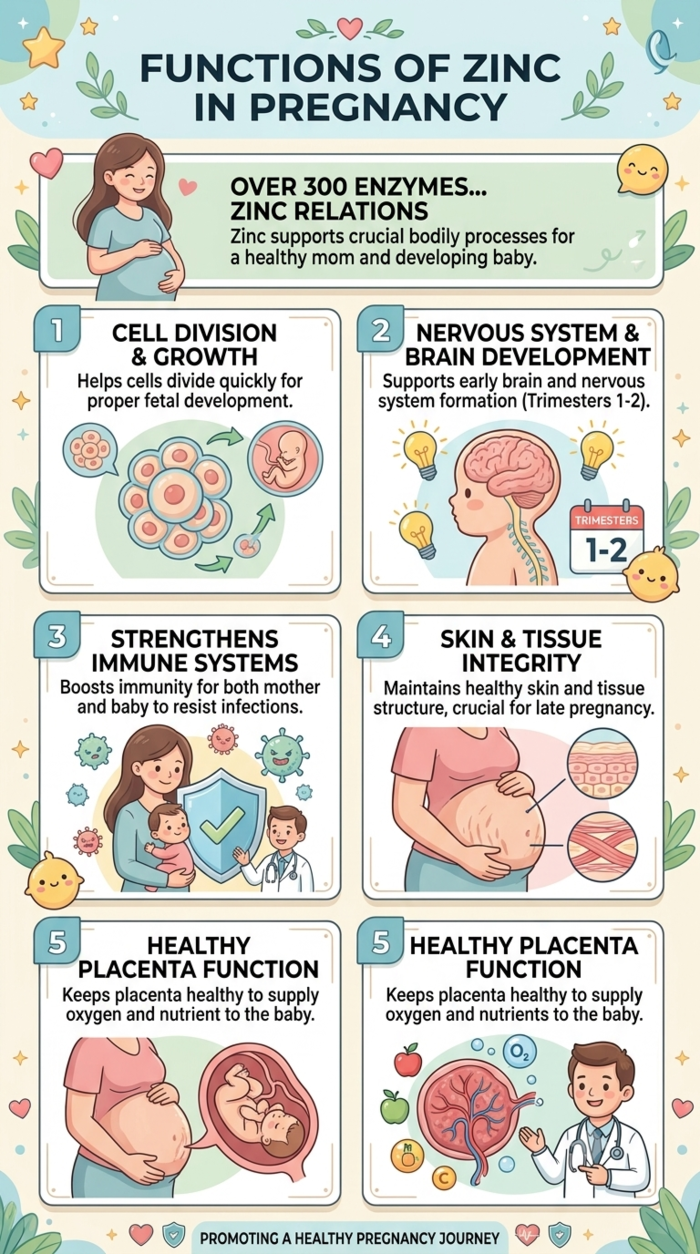
Functions of Zinc in Pregnancy
There are over 300 enzymes in the human body whose functioning is related to zinc. The functions performed by zinc in pregnancy include the following.- Zinc takes part in cell division and growth, which occur at extremely fast rates during fetal development; insufficient zinc inhibits this process.
- Zinc aids the development of the nervous system and the brain of the fetus in the first two trimesters, during which these structures form.
- The proper functioning of the mother's and baby's immune systems depends on sufficient zinc levels. Insufficient zinc during pregnancy makes the mother more susceptible to infections.
- Zinc participates in the maintenance of the integrity of skin and tissues, which is important in late pregnancy and during birth.
- Zinc helps keep the placenta healthy and supplies the baby with nutrients and oxygen.
Zinc Requirements for Pregnant Women
The daily recommended amount of zinc for pregnant women is about 11 to 12 mg per day, depending on age. Prenatal vitamins usually have zinc in them, but in differing amounts from one brand to another. You need to check what your prenatal vitamin contains regarding zinc and talk to your doctor about it.What Are the Best Dietary Sources of Zinc for Pregnant Women?
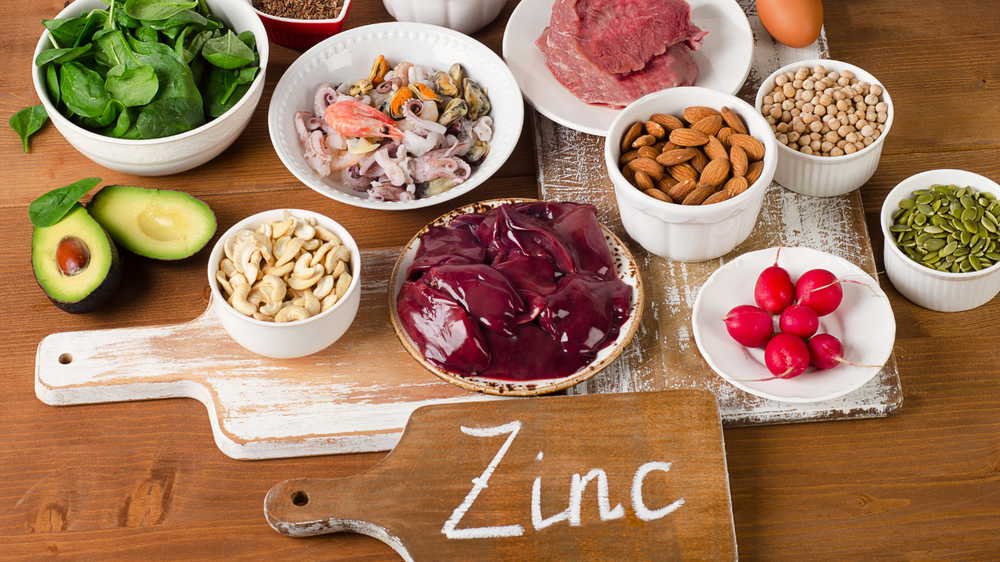
Zinc obtained from animals is much better absorbed than zinc obtained from plants, which makes a difference for vegetarian or vegan women, as they have to be more careful about their consumption.Foods rich in zinc in amounts sufficient for pregnancy include the following.
- Meat and poultry
- Seafood
- Dairy foods
- Eggs
- Legumes
- Nuts and seeds
- Grains
Signs that Zinc Intake May Be Insufficient During Pregnancy
Not having any apparent signs of zinc deficiency makes it difficult for you to detect when there is an inadequate level of zinc intake in the body during pregnancy. Indicating that zinc levels are inadequate in your body during pregnancy can be done through the following:- Recurrent occurrence of colds and infections that take time to heal
- Poor wound healing
- Hair loss or thinning
- Alterations in sense of smell or taste
- Skin changes such as drying, roughness, and difficulty in healing of skin irritation
- Persistently poor appetite beyond the first trimester
Is Zinc Supplementation Safe for Pregnant Women?
The use of zinc in appropriate dosages during pregnancy is safe. Always consult your doctor before starting any supplements during pregnancy. Extra intake of zinc from supplements besides the prenatal vitamin is unnecessary, and it will cause nausea and inhibit copper absorption. The maximum allowable dosage of zinc for pregnant women is 40 mg per day.When to Contact Your Doctor
Consult your doctor when you fall under one of the following categories.- You have a vegetarian or vegan diet and are in doubt whether your zinc consumption is up to the mark according to pregnancy needs.
- You are suffering from signs and symptoms of zinc deficiency, such as infections, delayed-healing wounds, or hair loss.
- You want to discuss your prenatal vitamins and want to check that the zinc content in them is suitable for your diet.
- You want to take zinc supplements in addition to prenatal vitamins and need help in calculating a safe dose.
Whether you’re pregnant, a new mom, or navigating postpartum, you don’t have to do it alone. Join our support group to connect, share, and support one another.
FAQs on What Is the Role of Zinc During Pregnancy?
- Is my prenatal vitamin giving me a sufficient amount of zinc?
The prenatal vitamin most likely will contain 15 to 25 mg of zinc; it will be enough because the daily intake is only 11 to 12 milligrams. So, provided that you have an adequate diet and consume both meat and plant products rich in zinc, you do not need to worry about it too much, but if you are on a vegan diet, then it might be worth discussing it with your doctor. - Does not consuming zinc affect my baby’s development?
It surely does; several studies have proven that zinc deficiency during pregnancy affects development negatively. It may result in having an underweight baby, prematurity, and neurodevelopmental problems. - Is there an interaction between zinc and iron supplements?
Zinc and iron compete for absorption within the intestines when taken together as supplements in large amounts. If you are taking a separate high-dose iron supplement, take it at a different time of day than your zinc supplement. Taking both minerals from dietary sources while using the supplements is another way of managing this interaction.