
In this article:
What Is Edwards Syndrome?
Trisomy 18 (Edwards syndrome) is a genetic condition in which a baby has an extra copy of chromosome 18 in some or all of their cells. This additional genetic material affects how the baby develops and can cause congenital abnormalities, growth restriction, and serious health complications.The condition occurs in approximately 1 in 5,000 live births, although it is more common among pregnancies than live births because many affected pregnancies end in miscarriage or stillbirth. Its effects vary depending on the type of trisomy and the organs involved.
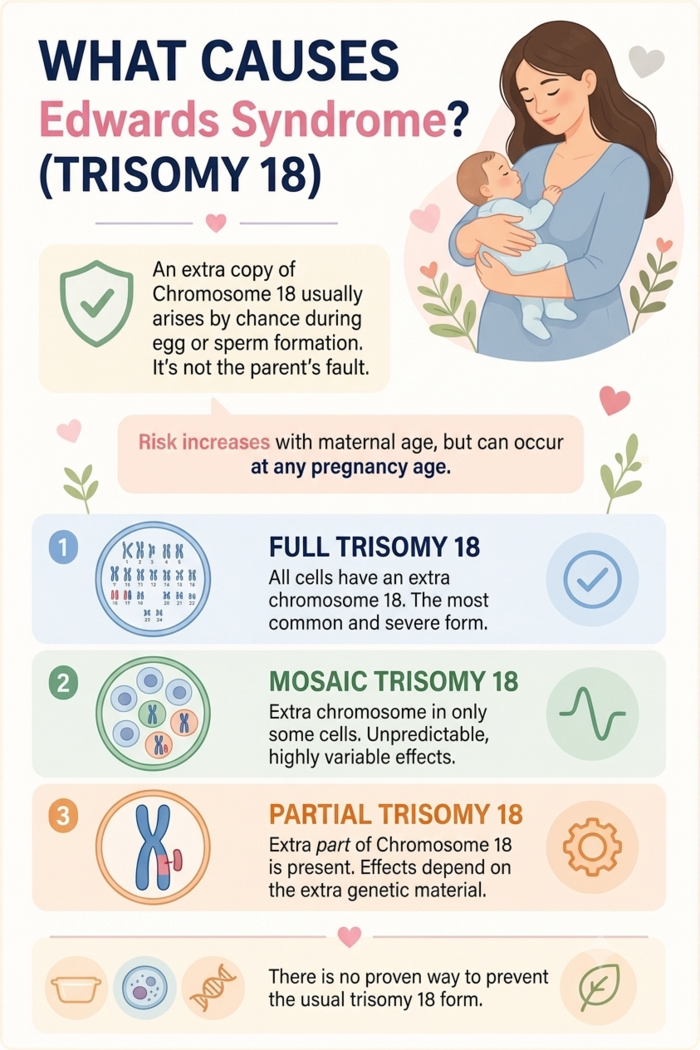
What Causes Edwards Syndrome?
The extra chromosome usually arises by chance when the egg or sperm forms, most often the egg. Nothing a parent does or avoids causes it.The risk increases with maternal age, although the condition can occur in pregnancies at any age. There is no proven way to prevent the usual form of trisomy 18.
Types of Edwards Syndrome:
- Full trisomy 18: All or nearly all cells have an extra chromosome 18. This is the most common form (about 94% of cases) and is generally associated with severe complications.
- Mosaic trisomy 18: Only some cells (under 5% of cases) have the extra chromosome. The effects vary according to the proportion and distribution of affected cells. Features range from mild to severe.
- Partial trisomy 18: Only part of chromosome 18 is present in an extra copy, often through a translocation (about 1–2% of cases). The effects depend on the genetic material involved.
What Are the Signs and Symptoms of Edwards Syndrome?
Some signs may be detected during pregnancy, while others become apparent after birth. The severity varies, and an ultrasound cannot predict every health problem a baby may experience.Findings that raise suspicion include:
- Increased nuchal translucency (fluid behind the neck)
- Slow foetal growth (smaller than expected for the stage of pregnancy)
- Clenched hands with overlapping fingers
- Heart defects
- Choroid plexus cysts in the brain
- Strawberry-shaped head, small jaw or cleft lip
- Kidneys, digestive system, and abdominal wall may be affected
- A single umbilical artery in the cord
Depending on the baby's condition and the family's decisions, care may include specialist interventions, comfort-focused support, or a combination of approaches. A specialist team can help parents understand the medical facts, prepare for possible outcomes, and make informed decisions with dignity and support.
How Is Trisomy 18 Diagnosed in Pregnancy?
Screening estimates the chance; diagnostic tests confirm it.- Combined first-trimester screening: A blood test with a nuchal scan.
- Non-invasive prenatal testing (NIPT): A blood test, generally available from 10 weeks of pregnancy, analyses cell-free DNA fragments in the pregnant person's blood to screen for trisomy 18 and certain other chromosome conditions.
- Anomaly scan: Usually performed around 18–22 weeks, this ultrasound examines the baby's anatomy and may identify features associated with trisomy 18.
- CVS or amniocentesis: These analyse foetal cells and give a definite result. Both carry a small risk of pregnancy loss.
Can Edwards Syndrome Be Treated?
There is currently no cure for trisomy 18. Treatment focuses on the baby's specific medical needs, comfort, and quality of life.After birth, care depends on the baby's condition and the family's goals. Options may include:
- Supportive care: Help with breathing, feeding, temperature regulation, and pain relief.
- Specialist treatment: Management of heart defects, seizures, or other complications, depending on the baby's condition.
- Palliative care: Support focused on comfort, symptom relief, and family needs. It can be discussed alongside other treatments.
FAQs on What is Trisomy 18 (Edwards Syndrome)? A Guide for Expectant Parents
- What is the life expectancy of a baby with Trisomy 18?
Median survival in population studies is about 9 to 14 days. Between 8% and 13% live beyond one year, and some live beyond ten years, more often with mosaic forms or after surgery. - Is Trisomy 18 hereditary?
Rarely. Most cases arise by chance, with a recurrence risk of about 1%. Translocation cases can be inherited from a carrier parent.