We spoke to Dr Shivji Ramachandra Hedgon, Senior Consultant, Neonatology & Paediatrics, Kinder Hospitals Kochi, to understand this better and get you verified information.
Why Do Newborns Need Vitamin K?
The liver needs vitamin K to make clotting factors, the proteins that stop bleeding. Newborns naturally have lower vitamin K stores than older children and adults. Several factors contribute to this:- Only a small amount of vitamin K crosses the placenta during pregnancy.
- Breast milk contains little vitamin K.
- The gut bacteria that make vitamin K take a few days to establish.
- The newborn liver is still developing its ability to process and use vitamin K efficiently.
What Is Vitamin K Deficiency Bleeding in Newborns?
When vitamin K is low, clotting factors fall, so bleeding can last longer than normal. In newborns, it can also occur inside the body without any visible injury.Vitamin K deficiency bleeding (VKDB), formerly called haemorrhagic disease of the newborn, appears in three forms:
| Type | When it occurs | Common features |
| Early | Within 24 hours of birth | Linked to certain maternal medical conditions or medicines, such as some anti-epileptic, anti-TB, and blood-thinning drugs |
| Classical | Day 2 to 7 | Bleeding from the umbilical cord, gut, or skin |
| Late | 2 weeks to 6 months | Often bleeding in the brain; more common in exclusively breastfed babies who did not receive vitamin K |
When Is Vitamin K Injection Given to Newborns?
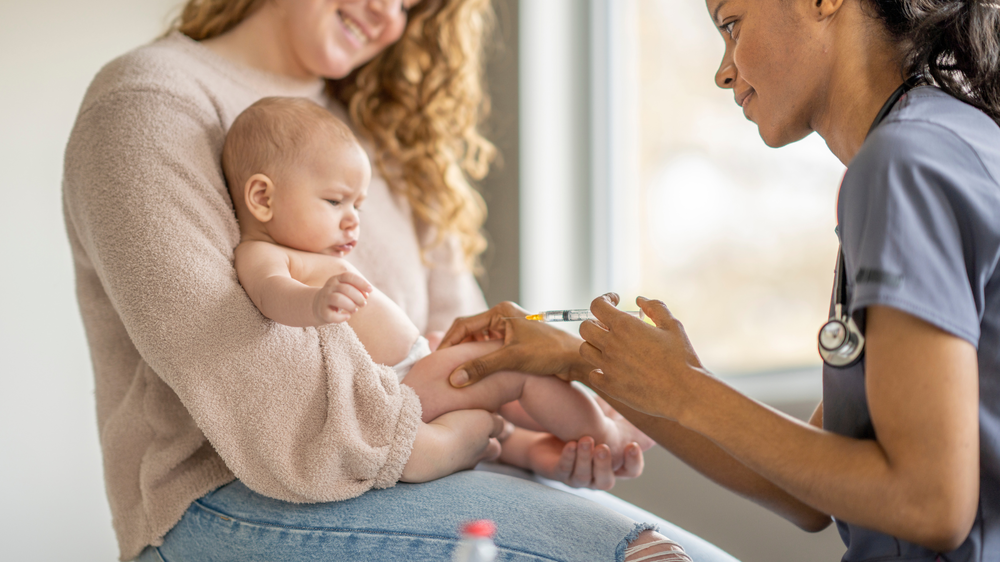
A vitamin K shot is generally given soon after birth, often within the first few hours. Hospitals may administer it after the initial examination and routine newborn care.The exact timing can vary depending on the hospital's protocol and the baby's clinical condition. Babies who are premature, unwell, or have certain medical problems may need additional assessment.
The Government of India's operational guidelines recommend the following:
- Dose: 1 mg for babies weighing 1,000 g or more; 0.5 mg for babies under 1,000 g.
- Site: The outer front part of the thigh.
- Timing: Soon after birth, once the baby is in skin-to-skin contact with the mother and breastfeeding has begun, and not later than 24 hours after delivery.
- Record: Facilities note the dose in delivery registers and discharge records.
Vitamin K deficiency bleeding can occur in the first few weeks or months and may not always show obvious warning signs beforehand. The vitamin K injection is usually given shortly after birth and provides a dependable supply of vitamin K to support normal clotting.
Is the Vitamin K Injection Safe For Newborns?
Yes. Common effects are brief pain, mild redness, or a small bruise at the injection site. Infection at the site is rare.A study in the early 1990s suggested a link between vitamin K injections and childhood cancer. Later, larger studies did not confirm it, and the NHS and the Government of India continue to recommend the injection.
What Are the Signs of Vitamin K Deficiency Bleeding in Babies?
Contact a doctor at once if a baby has:- Bleeding from the umbilical stump
- Blood in vomit or stool, or black stools
- Bleeding from the nose or gums
- Bruises without a clear cause
- Bleeding that does not stop after a heel prick or injection
- Yellow skin or eyes lasting beyond two weeks, with pale stools
- Unusual drowsiness, repeated vomiting or a bulging soft spot on the head (possible signs of bleeding in the brain)
Whether you’re pregnant, a new mom, or navigating postpartum, you don’t have to do it alone. Join our support group to connect, share, and support one another.
FAQs on Why Are Babies Given a Vitamin K Injection at Birth?
- Is the vitamin K injection compulsory for newborns?
It is a standard recommendation, not a legal requirement. The Government of India advises it for every newborn delivered in a health facility. - Can breastfed babies skip vitamin K?
No. Breast milk contains little vitamin K, so exclusively breastfed babies are at higher risk of late VKDB. - Can vitamin K be given later if it was missed at birth?
Yes. Speak to a paediatrician as soon as possible. Earlier is better, as the risk is highest in the first weeks.