In this article:
Why Do Babies Sweat More Than Adults?
A baby's sweat glands are present at birth but not yet fully functional, while the part of the brain that controls body temperature takes months to mature fully. Because of this, infants cannot regulate heat as efficiently as adults and respond faster to warmth.Babies also have a higher surface area to body weight ratio, which means they gain and lose heat more quickly. Combined with longer periods of REM sleep, during which infants don't lose thermoregulatory control the way adults do, this makes nighttime sweating common in the first year of life.
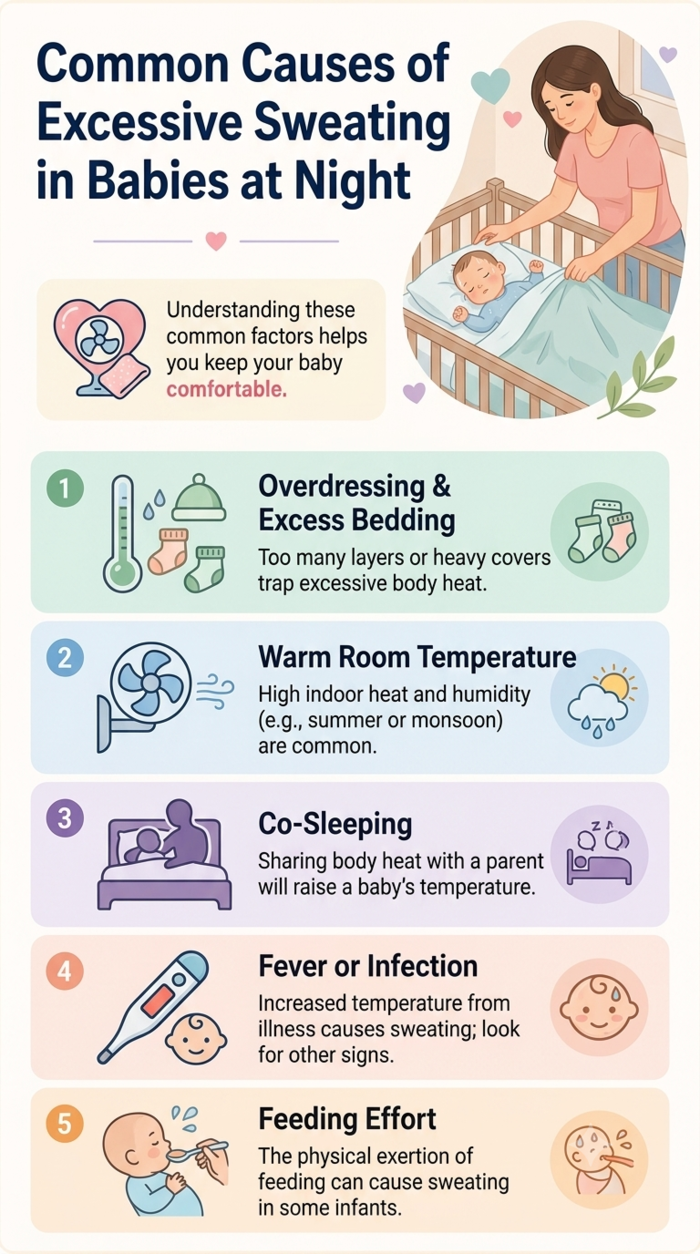
Common Causes of Excessive Sweating in Babies at Night
Several everyday factors cause a baby to sweat heavily at night:- Overdressing or excess bedding: Multiple layers, socks, and caps trap heat.
- Room temperature: Indian households, particularly during summer and humid monsoon months, often keep rooms warmer than ideal for infant sleep.
- Co-sleeping: Sharing body heat with a parent raises the baby's temperature.
- Fever or infection: Sweating often increases with body temperature during a fever, along with flushed skin, poor feeding, or irritability.
- Feeding effort: Some babies sweat while feeding due to the physical effort involved, particularly those with underlying heart conditions.
Dr Radhakrishna Hegde S, Lead Consultant, Paediatrics, Aster Women & Children
Is Night Sweating in Babies Normal or a Sign of Illness?
Occasional sweating limited to the head and neck in a baby who feeds well, gains weight, and behaves normally otherwise, is typically harmless. It becomes a concern when sweating is:- Heavy enough to soak clothes or bedding repeatedly
- Accompanied by rapid or laboured breathing
- Paired with poor weight gain or feeding difficulty
- Seen alongside a bluish tinge around the lips, fever, or lethargic baby behaviour
- Persistent even in a cool, appropriately dressed environment
How to Prevent a Baby From Sweating During Sleep?
Creating a cooler, uncluttered sleeping environment can reduce sweating and improve sleep safety.- Keep the room temperature between 20°C and 22°C using a fan or air conditioner where needed.
- Dress the baby in one light, breathable layer; avoid caps and socks indoors unless the room is cold.
- Use a light cotton sleeping bag instead of loose blankets, which also lowers the risk of Sudden Infant Death Syndrome (SIDS).
- Avoid bed-sharing; a cot beside the parents' bed is a safer option.
- Keep the baby on their back for every sleep.
- Check the back of the baby's neck, not the hands or feet, to judge if they are too warm.
Does Sweating While Sleeping Mean My Baby Is Sick?
Not necessarily. The pattern and accompanying symptoms matter more than sweating alone.If sweating happens mainly when the weather is hot or when your baby is wearing several layers, adjust the environment first and observe.
If your baby continues to sweat heavily despite being comfortably dressed in a cool environment, or if other symptoms develop, arrange a paediatric evaluation.
Baby sweating while sleeping is usually normal and eases as the temperature-regulating system matures, but persistent sweating with other symptoms needs a paediatrician's review.
Whether you’re pregnant, a new mom, or navigating postpartum, you don’t have to do it alone. Join our support group to connect, share, and support one another.
FAQs on Why Is My Baby Sweating While Sleeping?
- Is it normal for babies to sweat a lot while sleeping?
Yes. Babies sweat more than adults due to an immature temperature-control system and a greater amount of time spent in deep sleep. Mild sweating around the head and neck is usually normal. - What ideal room temperature prevents a baby from sweating at night?
A room temperature of 20°C to 22°C, with light, breathable clothing, helps prevent overheating during sleep. - Can teething cause a baby to sweat while sleeping?
Teething itself does not cause sweating, though associated discomfort or mild fever in some babies can contribute to it.