In this article:
Can You Get Pregnant with Fatty Liver Disease?
Fatty liver disease does not directly block conception. However, it commonly occurs alongside insulin resistance and PCOS, both of which can affect ovulation and make conceiving harder.Doctors recommend a liver function test and an abdominal ultrasound before trying to conceive, to identify fatty liver and manage it early rather than being discovered mid-pregnancy.
What Are the Risks of Fatty Liver Disease During Pregnancy?
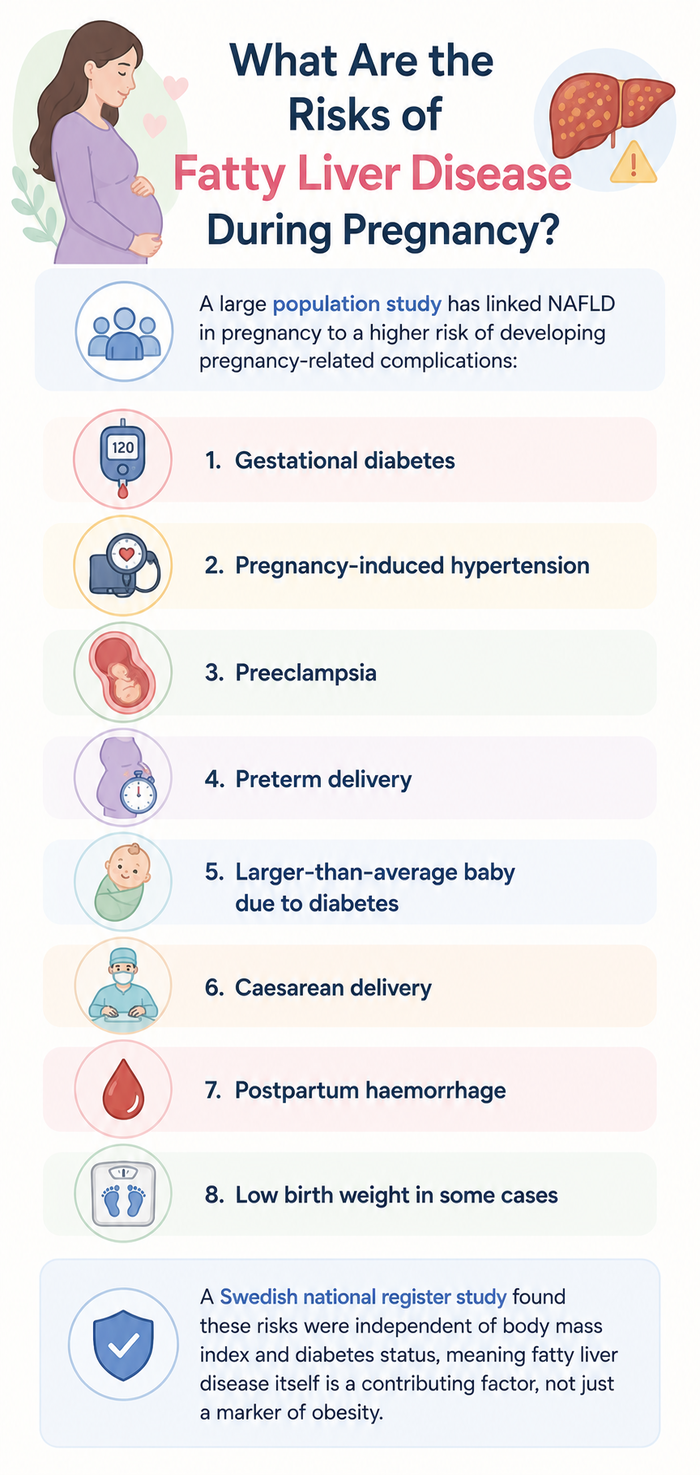
A large population study has linked NAFLD in pregnancy to a higher risk of developing pregnancy-related complications:- Gestational diabetes
- Pregnancy-induced hypertension
- Preeclampsia
- Preterm delivery
- Larger-than-average baby due to diabetes
- Caesarean delivery
- Postpartum haemorrhage
- Low birth weight in some cases
Who Is More Likely to Develop Fatty Liver During Pregnancy?
Your risk is higher if you have:- Obesity or are overweight
- Type 2 diabetes
- Gestational diabetes
- PCOS
- High cholesterol
- Metabolic syndrome
- Previous history of fatty liver disease
- Family history of liver disease
Is Fatty Liver Disease the Same as Acute Fatty Liver of Pregnancy?
Pre-existing fatty liver disease (NAFLD/MASLD) is a chronic, stable condition that a woman usually has before conception, and it does not raise the risk of acute fatty liver of pregnancy (AFLP).AFLP is a rare obstetric emergency that develops suddenly, usually in the third trimester, affecting roughly 1 in 10,000 to 20,000 pregnancies. It causes liver failure and requires immediate delivery.
Warning signs of AFLP include persistent vomiting, severe abdominal pain, jaundice, and unusual tiredness in the third trimester, and these need urgent medical attention regardless of whether fatty liver disease was diagnosed before pregnancy.
How Is Fatty Liver Disease Managed During Pregnancy?
Management starts with confirming the diagnosis through liver function tests, an ultrasound, and fibrosis scoring such as FIB-4, ideally before conception.During pregnancy, care typically includes an obstetrician working alongside a physician, with closer monitoring of liver enzymes, blood pressure, and an early oral glucose tolerance test (OGTT), since insulin resistance in pregnancy can worsen fatty liver.
Antenatal protocols already screen for gestational diabetes and hypertension in every pregnancy; women with known fatty liver disease are typically tracked more frequently for these two conditions.
What Foods Help Manage Fatty Liver Disease During Pregnancy?
Diet during pregnancy with fatty liver disease follows standard antenatal nutrition principles, with extra attention to portion control and added sugar.Choose:
- Whole grains (jowar, bajra, and brown rice)
- Fresh vegetables
- Fruits in moderate portions
- Lentils and pulses
- Lean protein
- Healthy fats such as nuts and seeds
- Sugary drinks
- Sweets
- Refined flour products
- Deep-fried and packaged foods
- Highly processed or bakery snacks
Fatty liver disease raises the risk profile of a pregnancy; however, early diagnosis, regular antenatal care, healthy lifestyle habits, and careful monitoring of blood sugar and blood pressure can significantly improve outcomes for both mother and baby.
Whether you’re pregnant, a new mom, or navigating postpartum, you don’t have to do it alone. Join our support group to connect, share, and support one another.
FAQs on Can You Have a Healthy Pregnancy with Fatty Liver Disease?
- Can fatty liver disease cause miscarriage?
Current evidence does not show that fatty liver directly causes miscarriage. However, associated conditions such as obesity, diabetes, and metabolic syndrome may increase the risks. - Is normal delivery possible with fatty liver disease?
Yes. Many women with well-controlled fatty liver disease have a normal vaginal delivery. The mode of delivery depends on the health of the mother and baby. - Is fatty liver disease during pregnancy curable?
It is not cured with medication, but it is manageable. Diet, weight management, and blood sugar control can reduce liver fat over time, including in the months after delivery.