
In this article:
In this guide, our expert explains the connection between cholesterol and male fertility and what men should know before trying for a baby.
What Is Cholesterol?
Cholesterol is a fat-like substance found in the blood. It helps build cells, produce hormones, and support several important functions.The liver makes most of the cholesterol the body needs, while the rest comes from certain foods.
There are different types of cholesterol:
- LDL (low-density lipoprotein): It is called "bad" cholesterol because high levels can build up in the blood vessels.
- HDL (high-density lipoprotein): Known as "good" cholesterol because it helps remove excess cholesterol from the blood.
- Triglycerides: A type of fat in the blood that may increase health risks when levels become too high.
How May Cholesterol Affect Male Fertility?
Cholesterol helps the body make hormones, including testosterone, which plays an important role in male reproductive health. But when cholesterol levels become too high, they may affect the body's normal functions.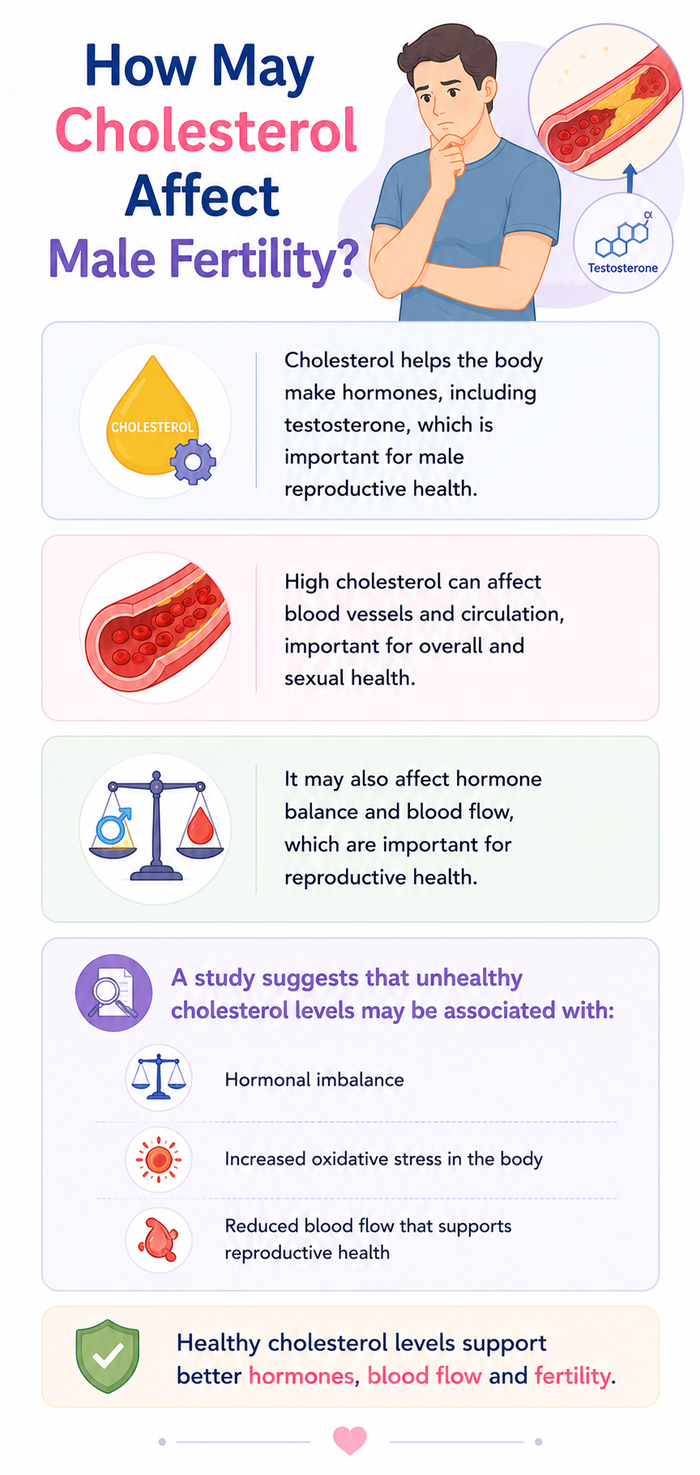
High cholesterol can affect blood vessels and circulation, which are important for overall and sexual health. It may also affect hormone balance and blood flow, which are important for reproductive health.
A study suggests that unhealthy cholesterol levels may be associated with:
- Hormonal imbalance
- Increased oxidative stress in the body
- Reduced blood flow that supports reproductive health
Are There Any Signs of High Cholesterol?
High cholesterol usually does not cause any symptoms. Many men find out they have high cholesterol only after a routine blood test.In most cases, cholesterol builds up silently over time. This is why regular health check-ups can be important, especially for those with other health conditions or a family history of high cholesterol.
Who May Have a Higher Risk of High Cholesterol?
Men may be more likely to have high cholesterol if they:- Are overweight or obese
- Have diabetes or high blood pressure
- Eat a diet high in saturated or processed foods
- Get little physical activity
- Smoke or consume alcohol regularly
- Have a family history of high cholesterol or heart disease
Can Cholesterol Levels Affect Sperm Health?
Yes. High cholesterol may affect different aspects of sperm health, including:- Sperm count: Changes in hormone levels may affect sperm production.
- Sperm movement: Sperm need to swim to reach the egg, and high cholesterol may affect their movement.
- Sperm shape: Unhealthy cholesterol levels may interfere with the normal development of sperm cells.
Can a Cholesterol Test Be Helpful Before Trying for a Baby?
A cholesterol test is a simple blood test that measures different types of cholesterol and fats in the blood. It can help identify high cholesterol even when there are no symptoms.Men with a family history of high cholesterol, diabetes, obesity, or other health conditions may benefit from discussing testing with their doctor. Knowing cholesterol levels before trying for a baby may help identify health concerns early and encourage healthy lifestyle changes.
Lifestyle Habits That May Support Healthy Cholesterol Levels
Certain lifestyle habits may help maintain healthy cholesterol levels and support overall health.- Eat a balanced diet rich in fruits, vegetables, and whole grains
- Stay physically active and exercise regularly
- Maintain a healthy weight
- Get enough sleep each night
- Avoid smoking and limit alcohol intake
- Manage stress through relaxation
When Should You Speak to a Doctor?
You should speak to a doctor in the following conditions:- Your previous blood test showed high cholesterol levels
- There is a family history of high cholesterol or heart disease
- You have other conditions, such as diabetes, obesity, or high blood pressure
- Pregnancy has not occurred after trying for several months
- You are concerned about fertility or reproductive health
You’re not alone in your journey when trying to conceive. Join our supportive community to connect with others, share experiences, and find encouragement every step of the way.
FAQs on Cholesterol and Male Fertility: What Men Should Know Before Conception
- Can cholesterol medicines affect male fertility?
Some cholesterol-lowering medicines may raise concerns about fertility, but the effects can vary. Men who are taking these medicines and planning a pregnancy should discuss any concerns with their doctor before making changes. - Can young men have high cholesterol?
Yes. High cholesterol can affect men of any age. Family history, unhealthy eating habits, lack of exercise, and certain medical conditions may increase the risk, even in younger adults. - Can cholesterol levels change over time?
Yes. Cholesterol levels may change due to age, diet, physical activity, weight changes, or certain health conditions. Regular testing can help monitor these changes.