In this article:
Possible Benefits of Eating Dry Fruits During Pregnancy
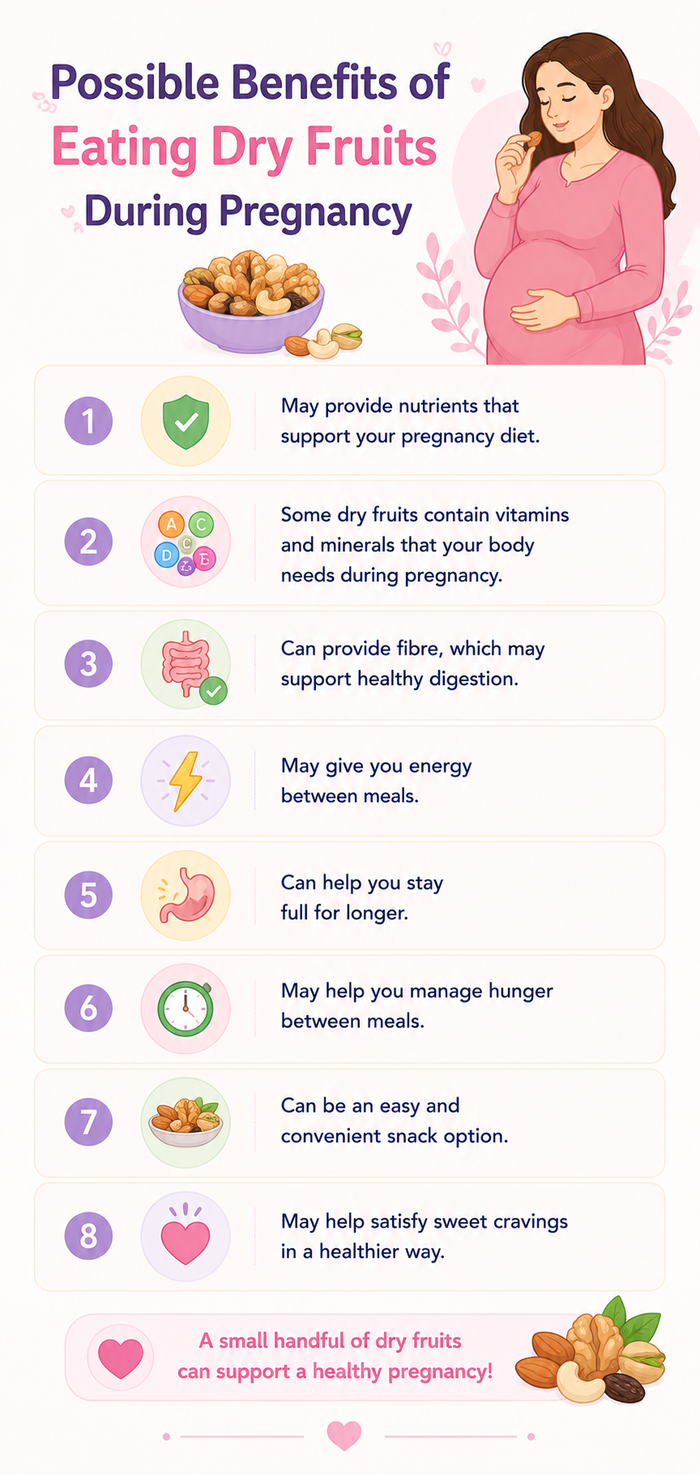
The following are the possible benefits of dry fruits during pregnancy:- May provide nutrients that support your pregnancy diet
- Some dry fruits contain vitamins and minerals that your body needs during pregnancy
- Can provide fibre, which may support healthy digestion
- May give you energy between meals
- Can help you stay full for longer
- May help you manage hunger between meals
- Can be an easy and convenient snack option
- May help satisfy sweet cravings in a healthier way
Top 10 Dry Fruits to Include During Pregnancy
The following are the most common dry fruits that you can include in your pregnancy diet:1. Almonds
- Almonds contain vitamin E, calcium, magnesium, protein, healthy fats, and fibre.
- The healthy fats and protein in almonds may help meet your increased nutritional needs.
- Their fibre content may support digestion, while magnesium contributes to normal muscle and nerve function.
- Vitamin E also acts as an antioxidant, supporting overall health.
- Calcium plays an important role in the development of your baby's bones and teeth.
2. Walnuts
- Walnuts are rich in omega-3 fatty acids, protein, antioxidants, copper, and healthy fats.
- Walnuts provide healthy fats that support your nutritional needs during pregnancy.
- They also contain antioxidants that help protect cells from oxidative stress.
- Omega-3 fatty acids may support your baby's brain and nervous system development.
3. Dates
- Dates contain natural sugars, fibre, potassium, iron, and magnesium.
- They also provide small amounts of vitamins and antioxidants.
- Dates may provide quick energy and support healthy digestion because of their fibre content.
- Potassium helps maintain normal muscle and nerve function during pregnancy.
- Iron helps carry oxygen through the blood, which supports your baby's growth.
4. Raisins
- Raisins contain iron, calcium, potassium, fibre, and antioxidants.
- The fibre in raisins may support digestion and help with constipation.
- Their natural sweetness also makes them a convenient snack option.
- Iron supports the production of red blood cells and helps deliver oxygen to your growing baby.
5. Figs
- Figs provide calcium, iron, potassium, magnesium, and fibre.
- Figs may support healthy digestion because of their fibre content.
- They also provide important minerals that support your body's increased nutritional needs.
- Calcium and iron contribute to your baby's bone growth and healthy development during pregnancy.
6. Cashews
- Cashews contain protein, magnesium, iron, zinc, and healthy fats.
- These nutrients may help support your energy needs and overall health during pregnancy.
- Magnesium also contributes to normal muscle and nerve function.
- Protein supports the growth of your baby's tissues and organs, while iron helps supply oxygen for healthy development.
7. Pistachios
- Pistachios contain protein, fibre, healthy fats, potassium, and antioxidants.
- Pistachios may help you stay satisfied between meals and add variety to your pregnancy diet.
- Their fibre content also supports digestion.
- Protein and healthy fats support your baby's developing tissues and overall well-being.
8. Dried Apricots
- Dried apricots provide iron, potassium, vitamin A, and fibre.
- They may support healthy blood levels and contribute to your daily nutrient intake.
- Vitamin A supports your baby's vision, immune system, and overall development.
- Iron helps carry oxygen to the developing baby.
9. Prunes
- Prunes contain fibre, potassium, vitamin K, and antioxidants.
- Prunes are well known for supporting healthy digestion.
- They may help relieve constipation, which is common during pregnancy.
- Potassium supports normal body functions and contributes to your baby's developing needs.
10. Brazil nuts
- Brazil nuts contain selenium, healthy fats, protein, magnesium, zinc, and antioxidants.
- They are one of the richest natural sources of selenium.
- Selenium helps protect cells from oxidative stress.
- Healthy fats may support your energy needs during pregnancy.
- Magnesium and zinc contribute to normal immune and muscle function.
- Selenium supports thyroid function and healthy cell activity, both of which are important during pregnancy.
How Much Dry Fruit Can You Eat During Pregnancy?
Eat dry fruits in small amounts, as they can be high in calories and natural sugars.Here are some general serving suggestions:
- Almonds: 6-8 almonds
- Walnuts: 2-4 halves
- Dates: 1-2 dates
- Raisins: 1-2 tablespoons
- Figs: 1-2 dried figs
- Cashews: 4-6 cashews
- Pistachios: 8-10 pistachios
- Dried apricots: 2-3 pieces
- Prunes: 1-2 prunes
- Brazil nuts: 1-2 nuts
When Should You Speak to Your Doctor?
You should speak to a doctor if you:- Have gestational diabetes or high blood sugar levels
- Have a nut allergy or a history of food allergies
- Experience itching, swelling, or any unusual symptoms after eating dry fruits
- Have been advised to follow a special diet during pregnancy
- You are unsure which dry fruits are suitable for your health condition
Whether you’re pregnant, a new mom, or navigating postpartum, you don’t have to do it alone. Join our support group to connect, share, and support one another.
FAQs on Top 10 Dry Fruits to Include in Your Pregnancy Diet
- Is it better to eat soaked or raw dry fruits during pregnancy?
Both can be included in your diet. Some women prefer soaked dried fruit because it is easier to chew and digest. - Can dry fruits be eaten during all trimesters of pregnancy?
Most dry fruits can be enjoyed throughout pregnancy, but your doctor may advise dietary changes based on your health needs.