
In this article:
How Does Excess Weight Affect Ovulation and Hormones?
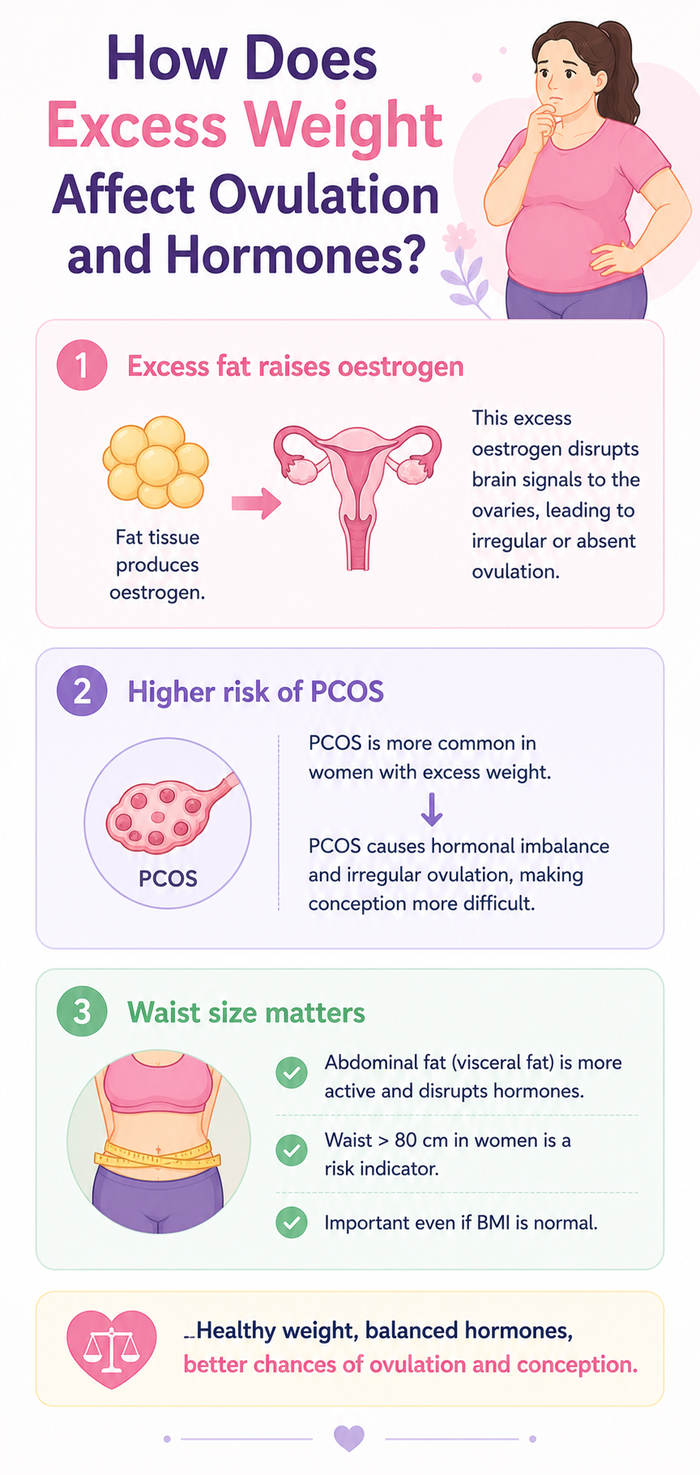
Fat tissue produces oestrogen; when body fat is higher than recommended, oestrogen levels rise beyond what a normal cycle needs. This excess oestrogen disrupts the signals the brain sends to the ovaries, which often leads to irregular or absent ovulation.Polycystic ovary syndrome (PCOS), a common cause of ovulation problems, is also more commonly diagnosed in obese women. Since PCOS itself causes hormonal imbalance and irregular ovulation, the combination of excess weight and PCOS compounds the difficulty in conceiving.
Waist circumference is a useful additional marker alongside BMI, as fat stored around the abdomen, known as visceral fat, is more metabolically active and is more strongly linked to insulin resistance and hormonal disruption than fat stored elsewhere in the body. A waist circumference above 80 cm in women is generally considered a risk indicator, even in those with a BMI in the normal range.
Can Overweight Women Still Get Pregnant Naturally?
Many overweight women conceive naturally, though it may take longer. Several studies report that the risk of infertility is around three times higher in obese women compared with women of normal weight, with effects seen in both natural conception and assisted reproduction.The likelihood of conceiving without medical help decreases as BMI rises, but it does not rule out pregnancy. Age, cycle regularity, and overall health also play a role alongside weight.
Does Weight Affect IVF and Fertility Treatment Success?
Weight can influence assisted reproduction outcomes, too. Women with obesity undergoing IVF or IUI often require higher doses of fertility medication and have more cancelled treatment cycles, along with lower egg quality.Comparative data from ovum donation cycles found pregnancy rates of 45.5% in women with a BMI under 25, compared with 38.3% in those above 25. Clinics in India increasingly recommend a pre-treatment weight assessment as part of fertility work-up for this reason.
How Much Weight Loss Improves Fertility?
A modest weight reduction can make a measurable difference. Losing 5–10% of body weight has been shown to improve fertility rates, while even a 5% reduction can lower testosterone and insulin levels and improve the frequency of ovulation.For a woman weighing 80 kg, this translates to losing roughly 4–8 kg. Gradual, sustained weight loss through diet and physical activity is more effective for fertility than rapid weight loss.
What Is the Ideal BMI for Conceiving?
According to the WHO classification, a BMI between 18.5 and 24.9 is considered ideal for conception. However, Asian-specific cutoffs used by Indian health bodies set overweight at a BMI of 23 and above, lower than the global cutoff of 25, since Indians tend to develop metabolic complications at a lower BMI than Western populations.This means many Indian women who fall in the "normal" range by global standards may already carry fertility-related risk by Indian standards. Overweight and obesity among women of reproductive age in India rose from 20.3% in NFHS-4 to 23.7% in NFHS-5, with urban, wealthier, and more educated women showing higher rates, a trend linked to sedentary urban lifestyles and increased consumption of processed food.
Maintaining a healthy weight before trying to conceive improves the chances of natural pregnancy, supports better outcomes in fertility treatment, and reduces pregnancy complications linked to excess weight.
You’re not alone in your journey when trying to conceive. Join our supportive community to connect with others, share experiences, and find encouragement every step of the way.
FAQs on Does Being Overweight Affect Your Chances of Getting Pregnant?
- How long does it take to get pregnant if overweight?
It varies, but time to pregnancy is generally longer in overweight and obese women compared with women of normal weight, even with regular cycles. - Does losing weight before pregnancy help with IVF success?
Yes, weight loss of 5–10% before starting IVF can improve egg quality, reduce the dose of fertility medication needed, and improve pregnancy rates. - Can being overweight cause miscarriage?
Excess weight is associated with a higher risk of early pregnancy loss after both natural and assisted conception, though the exact mechanism is still being studied.