In this article:
What Are Period Cramps?
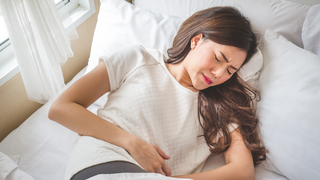
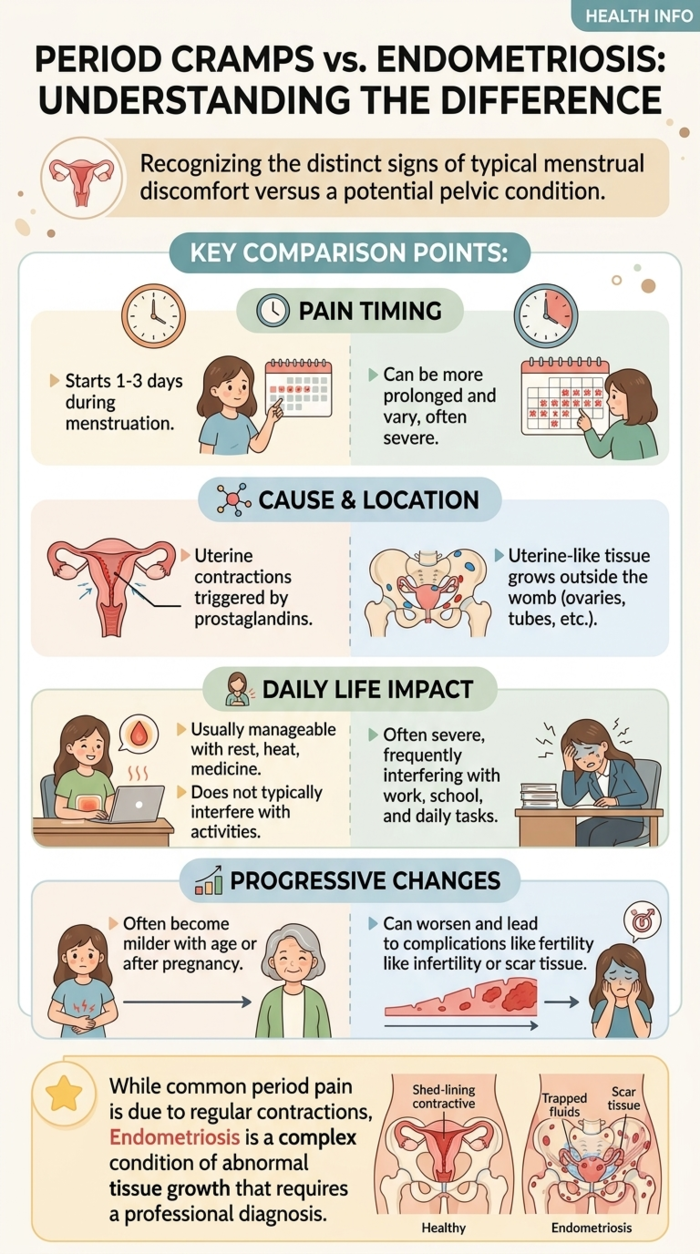
Period cramps (primary dysmenorrhoea) happen because the uterus contracts to shed its lining during menstruation. Chemicals called prostaglandins trigger these contractions.Period cramps usually:
- Begin a day before or on the first day of the period
- Last for one to three days
- Feel like cramping in the lower abdomen
- Improve with rest, heat, or pain-relieving medicines
- Do not usually interfere with everyday activities
What Is Endometriosis?
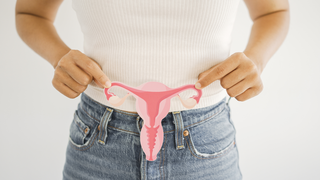
Endometriosis is a condition in which tissue similar to the lining of the uterus grows outside the womb. These growths may develop on the ovaries, fallopian tubes, bladder, bowel, or other pelvic organs.Like the uterine lining, these tissues respond to monthly hormonal changes. However, the blood and inflammation cannot leave the body normally, leading to pain, scar tissue, and sometimes infertility.
The Federation of Obstetric and Gynaecological Societies of India (FOGSI) estimates endometriosis affects nearly 1 in 10 women of reproductive age.
What Are the Symptoms of Endometriosis?
Endometriosis symptoms extend beyond the days of bleeding. Common signs include:- Pelvic pain that starts days before the period and lingers after it ends
- Pain during or after sex
- Pain while passing urine or stools, especially during periods
- Heavy menstrual bleeding or bleeding between periods
- Fatigue, bloating, nausea, or diarrhoea around menstruation
- Difficulty conceiving
Endometriosis vs Period Cramps: Key Differences
| Feature | Period Cramps | Endometriosis |
| Timing of pain | Starts with bleeding, lasts 1–2 days | Starts before periods, may continue after |
| Pain trend over years | Stays the same | Worsens with each cycle |
| Pain severity | Mild to moderate | Moderate to severe, often worsening over time |
| Duration | 1–3 days | May last several days or longer |
| Response to painkillers | Usually relieved | Often poorly relieved |
| Pain during sex | Uncommon | Common |
| Pain while passing urine or stool | Rare | Reported, especially during periods |
| Heavy bleeding | Sometimes | May occur |
| Effect on fertility | None | Linked to difficulty conceiving |
| Underlying cause | Uterine contractions | Uterine-like tissue growing outside the uterus |
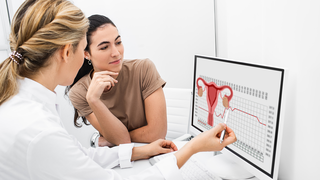
| Diagnosis | Based on history and examination | Clinical assessment, imaging, sometimes laparoscopy |
| Effect on daily life | Usually mild | May affect work, studies, and daily activities |
Why Is Endometriosis Often Missed in India?
Severe period pain is frequently normalised rather than investigated, which delays diagnosis. Research from north India estimates endometriosis prevalence at 2–10% in the general population, rising to nearly 50% among women being evaluated for infertility. Another tertiary-care study from south India found endometriosis in over one in five women undergoing laparoscopy for infertility.Limited awareness, hesitation to discuss menstrual pain openly, and reliance on surgery for confirmation have all contributed to delayed diagnosis. The American College of Obstetricians and Gynecologists (ACOG) reports that women wait an average of 4 to 11 years between the start of symptoms and a confirmed diagnosis of endometriosis. It now recommends that doctors offer a presumptive diagnosis based on symptoms, history, and imaging, without waiting for surgical confirmation, a shift that could shorten this delay considerably.
Can Endometriosis Affect Fertility?
Endometriosis can affect fertility by causing inflammation, scar tissue, blocked fallopian tubes, or reduced egg quality.However, many women with endometriosis conceive naturally, while others may benefit from fertility treatments such as ovulation induction, intrauterine insemination (IUI), or in vitro fertilisation (IVF). Early diagnosis improves treatment options and pregnancy outcomes.
Understanding the difference between endometriosis and ordinary period cramps allows women to seek timely medical evaluation instead of living with unexplained pain for years.
You’re not alone in your journey when trying to conceive. Join our supportive community to connect with others, share experiences, and find encouragement every step of the way.
FAQs on Endometriosis or Period Cramps? Key Differences Every Woman Should Know
- Can endometriosis be cured?
There is no permanent cure, but hormonal therapy, pain management, and, in some cases, surgery can control symptoms and improve quality of life. - At what age does endometriosis usually start?
Endometriosis commonly begins during the reproductive years and often starts soon after menstruation begins, although diagnosis may be delayed for several years. - Does every woman with endometriosis have infertility?
No. Many women with endometriosis conceive naturally. However, the condition can reduce fertility in some women.