In this article:
Can Women On Dialysis Get Pregnant?
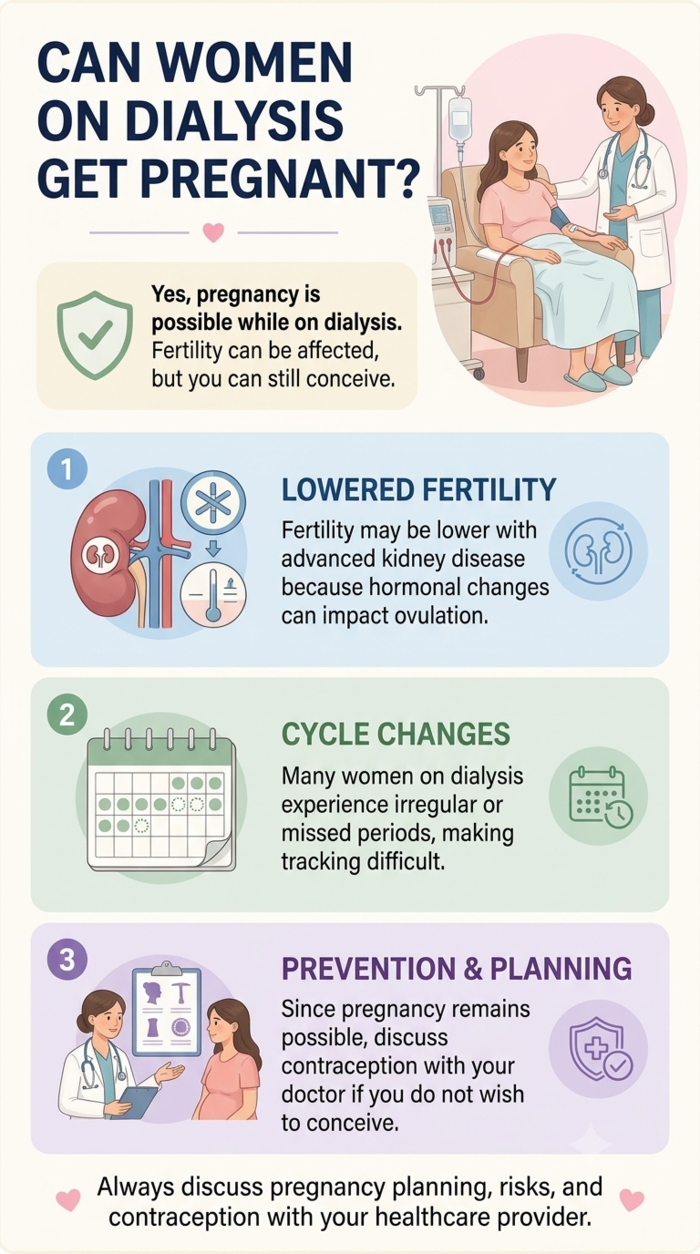
Yes, pregnancy is possible while on dialysis.However, fertility may be lower in women with advanced kidney disease because hormonal changes can affect ovulation and menstrual cycles.
You may notice:
- Irregular periods
- Missed periods
- Difficulty conceiving
Why Is Pregnancy Considered High Risk During Dialysis?
Pregnancy during dialysis requires specialised care because both maternal and foetal health need close monitoring.The following are the complications that may happen:
| For You | For Your Baby |
| High blood pressure | Premature birth |
| Anaemia | Low birth weight |
| Excess fluid retention | Growth restriction |
| Pregnancy complications | Need for neonatal care |
How Does Dialysis Change During Pregnancy?
Your doctor will adjust your dialysis schedule during pregnancy based on maternal and foetal requirements.Your healthcare team may recommend:
- Longer dialysis sessions
- More frequent dialysis treatments
- Regular blood tests
- Careful monitoring of fluid balance
Monitoring Nutrition
Good nutrition becomes even more important. So, a renal dietitian in your care team will provide a suitable meal plan. Your diet plan will help you achieve healthy weight gain with adequate intake of the following:- Protein
- Fluid
- Iron
- Essential vitamin
What Are The Signs That Need Medical Attention?
Contact your healthcare team promptly if you experience:- Severe swelling
- Persistent headaches
- Reduced foetal movements
- Vaginal bleeding
- Breathlessness
- Severe abdominal pain
- Sudden rise in blood pressure
How Can You Prepare For Pregnancy While On Dialysis?
Pre-pregnancy planning is essential.Before trying to conceive, discuss:
- Your overall kidney health
- Blood pressure control
- Current medications
- Nutritional status
- Pregnancy risks
Questions To Ask Your Healthcare Team
- Is my health stable enough for pregnancy?
- Will my dialysis schedule need changes?
- How often will I need monitoring?
- What pregnancy complications should I watch for?
What Happens During Delivery?
The timing and mode of delivery depend on your health and your baby's condition.Many women require:
- Close monitoring during labour
- Specialist obstetric care
- Neonatal support after birth if the baby arrives early
Does Kidney Transplant Improve Pregnancy Outcomes?
For some women, pregnancy after a successful kidney transplant may offer better outcomes than pregnancy during dialysis.However, every situation is different.
If transplantation is being considered, discuss future pregnancy plans with your nephrologist so that appropriate counselling can be provided.
FAQs on Pregnancy And Dialysis: What Women Should Know
- Can dialysis affect fertility in women?
Yes. Advanced kidney disease and dialysis can reduce fertility by affecting hormone levels and ovulation. However, pregnancy can still occur. - How often may dialysis be needed during pregnancy?
Many pregnant women require more frequent or longer dialysis sessions. The exact schedule depends on individual medical needs. - Is a healthy baby possible while on dialysis?
Yes. Although the pregnancy is considered high risk, many women on dialysis have successful pregnancies with close monitoring and specialised care.