In this article:
Why Does the Time of Day Matter for an Ovulation Test?
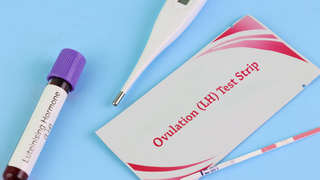
Ovulation tests detect LH in urine. Normally, LH rises shortly before ovulation. This is called the LH surge, and a positive ovulation test generally indicates that ovulation is likely to occur within roughly the next 24 to 36 hours, although the timing varies between individuals.The LH surge does not necessarily appear in urine when it begins in the bloodstream. This is why testing very early in the morning may miss a rise that becomes easier to detect later in the day. A 2017 study found that testing consistency and correct threshold levels matter more than the exact hour, but urine collected too early in the day often shows LH levels too low to register a surge. Testing at the same time each day provides the most reliable pattern.
This is different from a pregnancy test, which detects human chorionic gonadotrophin (hCG) and is often recommended with concentrated morning urine.
How Often Should You Take an Ovulation Test?
Testing once a day is often enough to monitor the LH rise. However, some women may benefit from testing twice a day, particularly if they have previously had a short LH surge.For example, you could test in the early afternoon and again in the evening during the days when you expect to be fertile. Testing more frequently can reduce the chance of missing a brief surge.
This can be particularly useful if your cycle length varies from month to month and it is difficult to predict exactly when ovulation will occur.
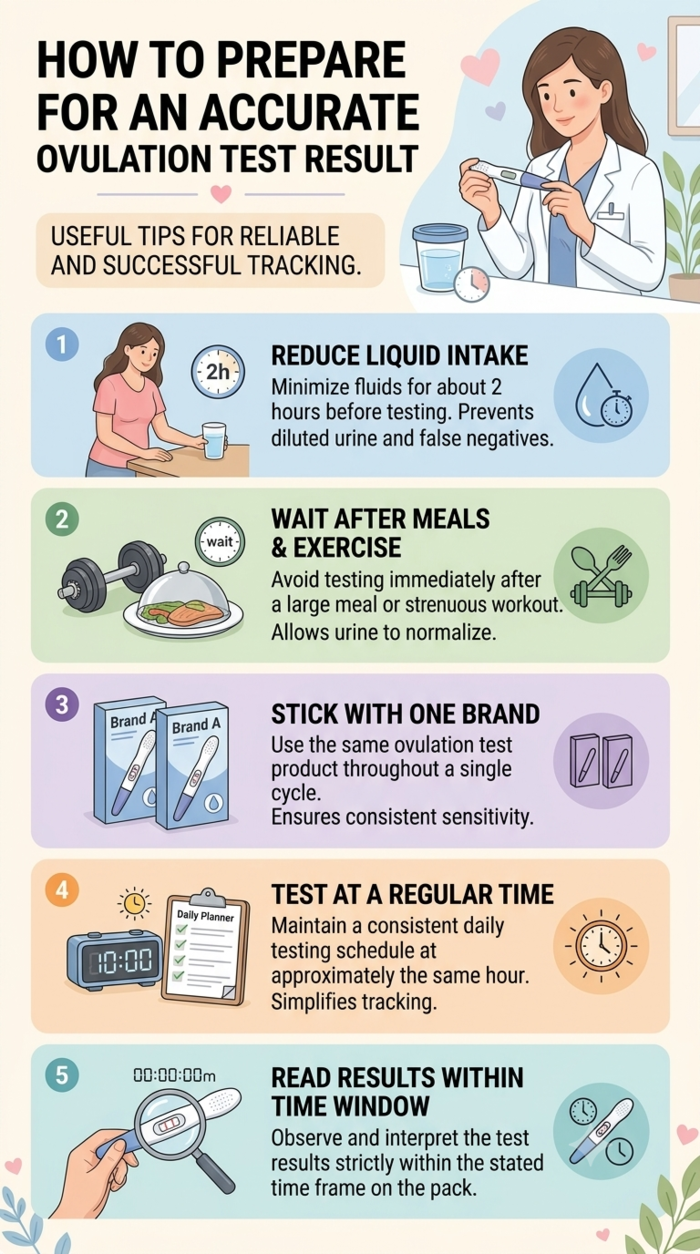
How to Prepare for an Accurate Ovulation Test Result
Useful tips include:- Reduce fluid intake for about two hours before testing, as diluted urine lowers hormone concentration and can produce a false negative.
- Avoid testing immediately after a large meal or exercise, both of which affect urine composition.
- Use the same brand of test throughout one cycle, since sensitivity thresholds vary between products.
- Test at approximately the same time each day.
- Read results within the time window stated on the pack; late reading can create evaporation lines that look like a positive result.
Dr Mannan Gupta, HOD - Obs & Gyn, Elantis Healthcare
When to Start Ovulation Testing in Your Cycle
Cycle length determines the starting day. For a 28-day cycle, ovulation typically occurs around day 14; testing usually begins around day 10 or 11.A study of 107 women across multiple cycles found that beginning LH testing earlier, around day 7, with a threshold of 25 to 30 mIU/ml, gave the best predictive value for ovulation within 24 hours.
Women with irregular cycles, common with PMOS, may need to start testing earlier and continue for a longer stretch, since ovulation timing shifts month to month.
Ovulation Testing Tips for Weather and Lifestyles
Ovulation kits are widely available in India through pharmacies and online health platforms. They may be sold as LH strips, ovulation predictor kits (OPKs), or digital ovulation tests.Heat and humidity across most of India increase daily fluid loss through sweat, which concentrates urine and can affect test readability if hydration swings are extreme. Maintaining steady water intake through the day, rather than drinking large amounts right before testing, keeps readings consistent.
For women managing PMOS, a condition affecting a significant share of Indian women of reproductive age, combining ovulation strips with cycle-tracking apps helps account for irregular surges.
Timing an ovulation test correctly, between late morning and early evening with consistent daily conditions, gives the most accurate picture of the fertile window.
You’re not alone in your journey when trying to conceive. Join our supportive community to connect with others, share experiences, and find encouragement every step of the way.
FAQs on What's the Best Time of Day to Take an Ovulation Test
- Can I take an ovulation test at night?
Yes, provided it falls within a consistent daily window, ideally before 8 pm, and urine hasn't been diluted by recent fluid intake. - How long should I avoid urinating before testing?
Holding urine for about two hours, without drinking excess fluids during that time, improves hormone concentration in the sample. - Can I use an ovulation test after eating?
Eating doesn't directly affect LH levels, but testing right after a large meal or heavy exercise is best avoided for a cleaner sample.